My Dad Banned Me From My Sister’s Wedding — Then the Groom’s Meltdown Went Viral
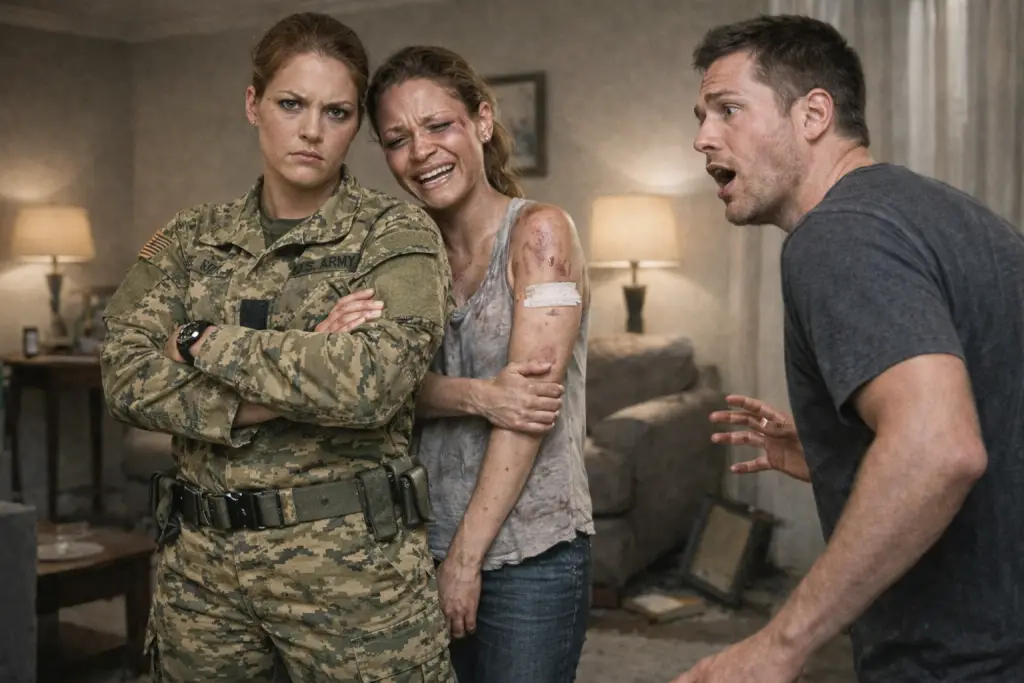
I was back at base when the temporary restraining order was approved. The email came through just after sunrise, the desert sky still pale and undecided. I read it twice to make sure I wasn’t imagining the words.
Granted. Effective immediately. No contact. No proximity.
No excuses.
I let out a breath I didn’t realize I’d been holding. Out here, the world made sense again. The rules were clear. Actions had consequences. Lines, once drawn, mattered.
I walked across the gravel path toward my building, boots crunching softly, and felt the tension in my shoulders finally ease. I wasn’t «home» in the traditional sense. But I was grounded.
Emily called that afternoon.
«It went through,» she said, relief woven through every syllable. «He’s not allowed near me. Not the house. Not my work. Nothing.»
«That’s good,» I said. «How are you feeling?»
«Tired,» she admitted. «But lighter. Like I’m not bracing for impact anymore.»
I smiled. «That’s what boundaries feel like.»
She hesitated. «Dad wants to talk to you.»
«I figured.»
«I told him he should,» she added quickly. «Not because you owe him anything. Just because he needs to say it.»
I was quiet for a moment, watching heat ripple across the horizon. «I’ll listen,» I said. «That’s all I’m promising.»
That evening, my father called. His voice sounded different—less controlled, more human.
«I owe you an apology,» he said without preamble. «For what I said. For what I’ve been saying your whole life.»
I leaned against the railing outside my building, the metal warm beneath my palms. «Go on.»
«I told you not to come because I was ashamed,» he admitted. «Not of you. Of myself. I built my identity on appearances, on what other people thought. And you? You didn’t fit into the story I was trying to tell.»
I closed my eyes. The words landed heavy, but clean.
«So I tried to manage you,» he continued. «Minimize you. And when you didn’t disappear the way I expected, I pushed harder.»
«Yes,» I said simply.
«I was wrong,» he said. «About you. About what matters.»
Silence followed, thick but not hostile. I could hear his breathing, uneven and uncertain.
«I’m not asking for forgiveness,» he added quickly. «I know that’s not how this works. I just… I need you to know that I see you now. I see your strength. I see what I missed.»
I thought about the years of quiet dinners, of standing just outside the circle of approval. About the phone call where he told me I would embarrass everyone. About the desert sun beating down on me as his «perfect day» fell apart without my involvement.
«I hear you,» I said. «But seeing me isn’t the same as respecting me.»
«I know,» he replied. «I’m trying to learn the difference.»
That was new. My father didn’t try; he dictated. The admission didn’t erase the past, but it cracked something open.
«We’ll see,» I said. «Time will tell.»
After the call, I sat there for a long while, listening to the quiet hum of the base settling in for the night. I didn’t feel triumphant. I didn’t feel vindicated. I felt… steady. Like something inside me had finally aligned.
Weeks passed. The story faded from headlines, replaced by the next outrage, the next spectacle. Marcus disappeared from public view. His family issued another carefully worded statement and then went silent. The machine moved on.
Emily started therapy. She sent me photos of her small apartment: sparsely furnished, but hers. She went back to work. She laughed more easily now, less guarded.
We talked regularly, not the polite, surface-level check-ins we’d mastered as adults, but real conversations. About fear, about guilt, about who we’d been taught to be.
«I’m figuring out who I am without trying to impress anyone,» she told me one night. «It’s harder than I thought.»
«It’s worth it,» I said.
My father made changes too. Slow and imperfect. He stopped correcting me when I spoke. He asked questions and waited for answers. Once, he even admitted he didn’t understand my work and asked me to explain it. That alone felt like an earthquake.
I didn’t move back home. I didn’t need to. My life was full where I was. Purposeful. Earned.
One evening, as the sun dipped low and painted the desert in shades of copper and gold, I found myself walking the same stretch of fence where this all began. The place where I’d stood, phone in hand, watching my family’s illusion shatter from a distance.
I thought about the girl I’d been then—quiet, conditioned to stay small, convinced that love was something you earned by not being inconvenient.
I wished I could tell her what I knew now: That being excluded isn’t the same as being unworthy. That silence isn’t the same as peace. That sometimes, the moment you’re told to stay away is the moment you finally see the truth.
I didn’t get revenge in the way movies promise. I didn’t burn bridges or humiliate anyone on purpose. I didn’t win by destroying them.
I won by refusing to disappear. By choosing honesty over harmony. By setting boundaries instead of begging for acceptance. By standing still while the people who underestimated me scrambled to catch up.
If there’s one thing this story taught me, it’s this: the people who call you awkward, difficult, or embarrassing are often just uncomfortable with the fact that you can’t be controlled. And the moment you stop trying to fit into their version of you, everything changes.