My Dad and “Deadbeat” Brother Sold My House While I Was in Okinawa — But They Had No Idea What It Really Was
The deputy at the front desk recognized me almost immediately. Retirement-age, silver hair, glasses perched low on his nose.
— Well, I’ll be, — he said. — Back in town already, Lawson?
— Came home to a problem, — I said.
He looked up fully, studying my expression, taking in the folder clutched to my chest. He nodded slowly.
— Let me get Lieutenant Donahue.
Within minutes, I was sitting across from Donahue in his office. He was younger than the deputy outside but older than me—late forties maybe—with that tired authority that comes from two decades of putting out other people’s fires. I laid the folder on his desk. He opened it, scanned the first few pages, and let out a long, quiet sigh.
— Your father signed these.
— Yes.
— And the buyer connection?
— Benson.
— You know him?
— Unfortunately, — I said.
Donahue kept flipping, his face tightening with every page.
— VA-backed property. Unauthorized POA use. Rushed sale. No attorney oversight. No court approval. This isn’t small.
He sat back in his chair.
— This is… a mess.
— I know.
He rubbed his chin, thinking.
— The sale can’t be finalized legally. And your father and brother may have… well, they may have committed more than one offense here.
— I am aware.
He closed the folder gently like it was something fragile.
— I’ll need to send this to the county prosecutor. And we’ll need statements from everyone involved. You, the buyer, your father, your brother, the middleman. What’s his name? Benson?
He shook his head.
— He’s been on our radar before.
Of course he had.
— Lawson, — he said carefully. — Are you sure you want to move forward with this? Once we start, there is no taking it back. It will be public. It will get messy. It will destroy your father’s reputation. And possibly more.
I took a slow breath.
— Lieutenant, he destroyed my trust. He used my deployment to take something I spent years building. If I let that go because it is uncomfortable, then every service member with family issues becomes vulnerable.
Donahue nodded.
— All right, then. We start today.
For the next hour, I sat with a young female deputy who transcribed my full account while Donahue made calls. I described everything—the power of attorney signing, the emails in Okinawa, the unreturned calls, the text from Chad, the balcony night when I discovered the ownership change, the rushed sale, the porch confrontation, Emily’s involvement. The deputy typed rapidly but never interrupted except to clarify dates and names. When I finished, she looked up and said quietly, «I’m sorry.» The unexpected sympathy almost cracked me. I nodded instead and said thank you.
When I stepped out of the sheriff’s building, the afternoon sun was high, warming the pavement. I felt a strange mixture of exhaustion and clarity. This wasn’t revenge anymore, not in the childish sense. This was accountability. And accountability takes work.
Emily called me later that afternoon. Her voice shook as she told me her attorney had confirmed everything: the sale was invalid, and she had grounds to pursue legal action—not just to reverse the transfer but to hold both Benson and my father liable for damages.
— I didn’t want any of this, — she said. — I just wanted a house.
— I know, — I said gently. — And you will get one. But this one… this one needs to be fixed first.
She asked if I would be willing to speak with her attorney directly. I agreed. An hour later, I was on a conference call walking through every detail again, letting the lawyer interrupt, ask questions, confirm timelines. The more I talked, the calmer I felt, like every word was lifting another weight off my chest.
But the real confrontation was still ahead.
Around eight that evening, just as the sky was fading into that deep blue between daylight and night, my phone rang again. This time it wasn’t Emily. It wasn’t the sheriff’s office. It was Dad.
For a moment, I considered letting it ring. But something inside me—maybe the part that still remembered the father he used to be—made me answer. He didn’t yell this time. His voice was small, tight, almost brittle.
— Maria… the sheriff’s office came by.
— I know.
— They said you filed a report.
— I did.
He let out a shaky breath.
— You didn’t have to do that.
I closed my eyes.
— I gave you every chance to be honest. You weren’t.
— I made a mistake, — he said again, like repeating the words would turn them into something meaningful.
— You made a series of choices, — I corrected. — And each one hurt someone.
— It wasn’t supposed to hurt you, — he whispered.
— Dad, it was always going to hurt me. You sold my home.
There was a long pause. I heard him inhale, heavy and slow.
— Can we talk in person? — he asked.
— Yes, — I said. — But not alone.
He sounded wounded by that, but he didn’t argue.
— Okay. Tomorrow morning. Your house.
— My house, — I repeated, letting the words settle into the space between us. — I’ll be there.
When I hung up, the motel room felt heavier than before. Not because of fear—no, that part had passed. What I felt now was the weight of endings and beginnings tangled together so tightly I couldn’t tell which was which.
I didn’t sleep much that night either, but I wasn’t restless. I was ready.
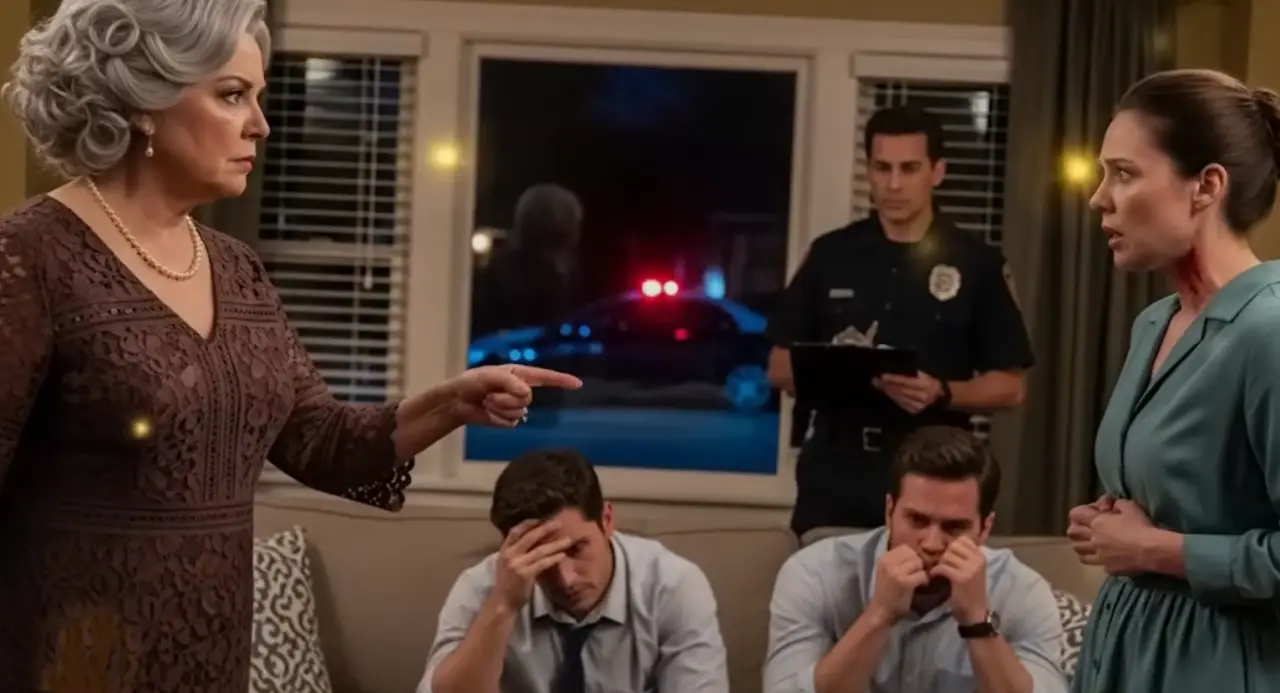
The next morning, I drove back to the house. Emily was there with her attorney. The sheriff’s deputy arrived shortly after. Then my father and Chad pulled up in Dad’s truck, both of them looking smaller than I had ever seen them look. Dad wouldn’t meet my eyes. Chad looked like he wanted to disappear into the ground.
We stood in a loose circle in the yard. No shouting. No dramatics. Just the quiet tension of a truth finally cornered with nowhere left to go.
Dad cleared his throat.
— I didn’t realize it was illegal, — he said. — I swear to God I didn’t.
— You didn’t want to realize, — I said softly. — There is a difference.
Chad mumbled something, but his lawyer—yes, he had brought one—put a hand on his shoulder, silencing him. The sheriff’s deputy explained the next steps: statements, temporary restrictions on both Dad and Chad regarding the property, forthcoming investigation, the likelihood of charges.
My father’s face went pale at the word. He looked at me, eyes watery.
— I never meant for it to come to this.
— I know, — I said. — But you brought us here.
Then I turned away because there was nothing else left to say. For the first time in days, I walked toward the front door and placed my hand on it. The paint felt cool beneath my fingertips, familiar in a way that made my throat tighten. I didn’t open it, not yet. But I stood there long enough to feel something returning—a sense of home, not because the house was safe, but because the truth was.
When everyone left that morning—the deputy, the attorneys, the neighbors who lingered near their windows pretending not to watch—I stayed in the yard long after the last car pulled away. The air was cool and still, carrying that quiet heaviness a neighborhood feels right after a storm.
My father and brother had driven off without a word. Emily and her attorney had gone to file their paperwork. And I stood alone on the small patch of grass I used to mow every Sunday morning, letting the silence settle around me like a blanket I didn’t know whether to wrap myself in or shake off.
I finally opened the front door. Slowly. Cautiously. It felt like walking into a memory that wasn’t mine anymore. The living room looked different; Emily had rearranged the furniture, added soft blankets, hung pictures of her family on the walls. But underneath the new touches, I could still see the shadow of my own life. The dent on the floor where I dropped a toolbox three years ago. The little scratch on the doorframe from when I moved my dresser alone. The faint outline on the wall where my medals once hung. Homes change, but they remember.
I walked through the place room by room, not to claim anything back that moment, but to remind myself that I hadn’t lost everything. The decision was now in the hands of the law, the attorneys, the county, and the VA. And for the first time since this nightmare started, I trusted that process more than I trusted anything my father could say or do.
The last room I visited was my bedroom. Emily had put up white curtains that fluttered in the soft breeze from the cracked window. The bed was different, the color scheme different, the smell different. But the bones of the room were the same. And when I ran my hand along the windowsill, I felt the little ridge where I had once carved my initials when I first bought the place. I had forgotten it was there. The small, raised bumps of the letters hit me like a soft punch to the heart.
I stood there for a long time before leaving. I didn’t want to intrude more than necessary—they were still living there, after all—but I needed to feel the house one more time before stepping away again.
When I walked out, I saw someone waiting for me at the bottom of the porch.
My father.
He was standing by his truck, hands in his pockets, shoulders hunched like a man carrying a weight he finally realized was his own. For a moment, neither of us spoke. It was the longest silence we had shared in years.
Finally, he said:
— Can we talk?
I stepped down the porch, keeping a careful distance.
— We have been talking.
— No, — he said quietly. — Not like this.
Something in his voice—humility, maybe, or the exhaustion of a man who had run out of excuses—made me pause. I nodded once.