My Dad and “Deadbeat” Brother Sold My House While I Was in Okinawa — But They Had No Idea What It Really Was
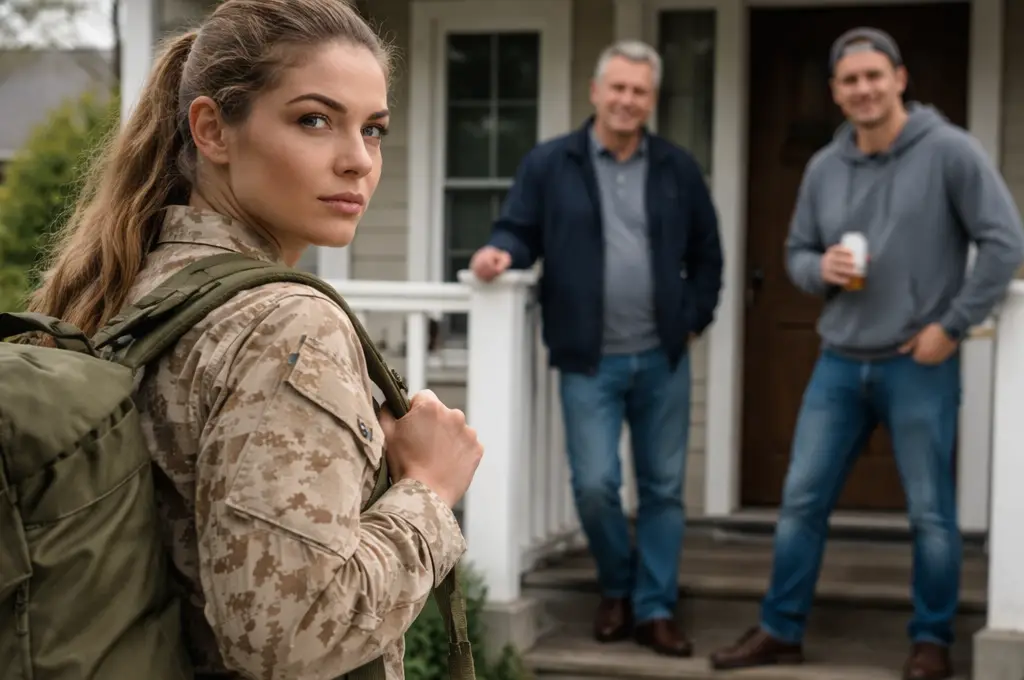
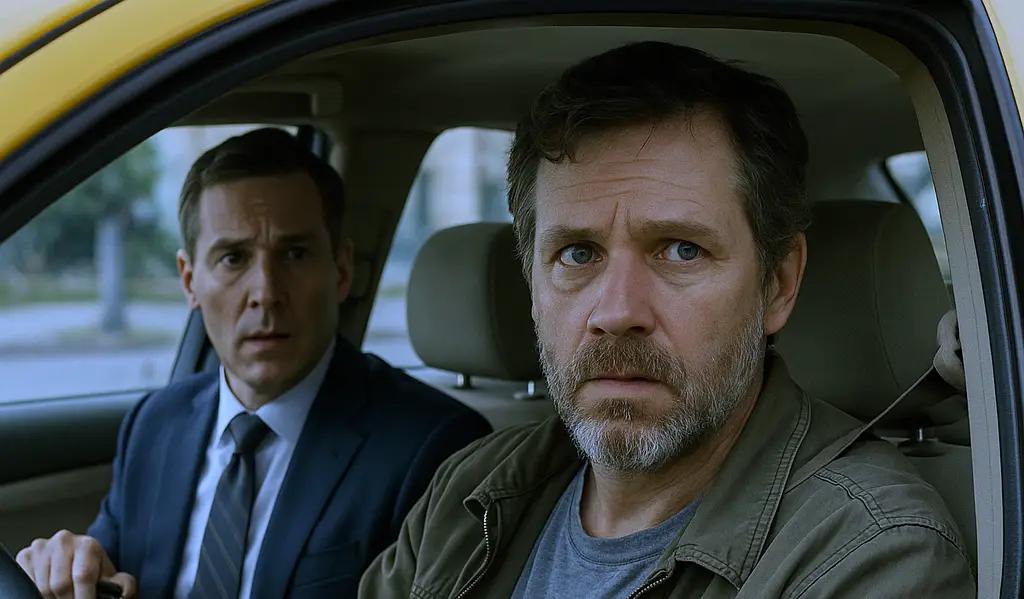
The tires of the taxi had barely stopped crunching against the gravel of the driveway when I realized something was wrong. They were already there, waiting for me. My father and my older brother stood on the porch, leaning against the railing with a look that sat somewhere between arrogance and nervous anticipation. They were smirking, the kind of expression two people share when they are in on a joke that is about to ruin your day. The strap of my sea bag dug into my shoulder, heavy with the weight of my gear, and my boots were still coated in the fine, pale dust they had collected thousands of miles away in Okinawa.
I hadn’t even taken three full steps toward the house—my house—before my father delivered the news. He didn’t say hello. He didn’t ask how the flight was. He didn’t offer a welcome home hug. He just looked at me and spoke four words that landed harder than any physical blow I had ever taken.
— You are homeless now.
He said it so casually, as if he were commenting on the weather. I froze in my tracks, my brain struggling to process the auditory input.
— What are you talking about? — I asked, my voice coming out lower and rougher than I intended.
My brother, Chad, lifted a beer can to his lips, snorted into the rim, and then wiped his mouth with the back of his hand.
— We sold your house, sis. Try to keep up.
They actually laughed. It was a dry, cruel sound. They stood there on the porch of the home I had paid for, laughing at their daughter and sister who had just returned from an overseas rotation only to find her entire world erased. My father waved a hand lazily toward the front door, dismissing the gravity of the situation as if it were a minor inconvenience.
— Your brother needed help, — he said, his tone matter-of-fact. — Family sacrifices for family. You weren’t here. You didn’t need the place.
Then he added the part that cut the deepest, the part that revealed exactly how little they respected the life I had built.
— You Marines bounce around anyway. What difference does a house make to you?
I should have exploded. The old me, the teenager who used to slam doors, probably would have. I should have cursed them until the neighbors called the police. I should have fallen apart right there on the lawn. But I didn’t. Instead, a slow, steady smile spread across my face. It wasn’t a happy smile; it was the kind of smile that makes people uncomfortable. It made both of them frown.
— What is so funny? — my father snapped, his confidence faltering for the first time.
— The house you sold was actually… — I started, but I let the sentence hang there.
Before I finish that thought, I need to take you back to how this nightmare began. Because the truth is, none of this was an accident. They didn’t stumble into this betrayal; they planned it. They just didn’t plan it as intelligently as they thought they had.
It started about three months earlier. I was stationed in Okinawa, halfway through a standard six-month rotation. Shore duty isn’t exactly glamorous—it’s a lot of paperwork and routine—but it is predictable, and predictability is a luxury Marines don’t get often. I used my off-hours to call home, checking on the house to make sure the pipes hadn’t burst and the place was still standing.
I had owned that property for eight years. I bought it myself after my second deployment, using every cent I had saved. I renovated it room by room on my own dime, tearing up carpets and painting walls until my hands were blistered. It was supposed to be my stability. My anchor. My future.
But every time I called home during that rotation, things felt… off. My father would answer the phone sounding irritated, as if my call was interrupting something far more important. My brother Chad—the family’s eternal «finding himself» project—had moved back in with Dad after losing yet another job. Whenever I asked what he was doing to get back on his feet, Dad would immediately jump to his defense.
— He just needs a little time. He is working on it. Don’t be so judgmental, Maria.
I would hear dishes clattering in the background, or voices I didn’t recognize. Once, I heard someone yell, «Did she send the money yet?» before the line went dead two seconds later. I tried not to overthink it. I tried to give them grace. After all, I had been gone my entire adult life, training, deploying, and bouncing from base to base. Maybe I just didn’t understand the rhythm of life back home anymore. Maybe I didn’t want to.
But two weeks before my homecoming, I received a message that should have been my final warning. It was a short text from my father.
— Call us before you come home.
There was no punctuation. No explanation. I stared at the screen for a long time, feeling that cold twist in my gut that every Marine knows. It’s the instinct that tells you something is wrong, that an ambush is waiting. But duty hours were insane that week. By the time I got a chance to call back, it went straight to voicemail. Twice.
I told myself it wasn’t important. My flight was booked. My leave was approved. I would be home soon enough.
And then, there I was. Standing in my driveway, staring at the people who were supposed to be my family, realizing they had sold the roof over my head to pay off my brother’s gambling debts. I didn’t know that specific detail yet—not officially—but I could already see the guilt in their eyes and the shamelessness in their posture. You can always tell when someone has done something terrible and convinced themselves it was justified.
My brother lifted his beer again, acting like he was celebrating a victory.
— Don’t look so shocked, sis. You were gone. Dad had power of attorney. Easy process. You’ll get over it.
I felt the muscles in my jaw tighten, but the smile didn’t leave my face. If anything, it grew wider.
— Is that what he told you? — I asked softly.
My father’s eyebrows knitted together.
— What is that supposed to mean?
I didn’t answer. Not yet. Because what they didn’t know—what would hit them like a freight train in about ninety seconds—was that the house they sold wasn’t what they thought it was. Legally, financially, structurally… they had no idea what they had actually put on the market. But I wasn’t ready to drop that bomb on them, not immediately. Sometimes revenge needs time to simmer just a little longer to be truly effective.
I set my sea bag down on the concrete, brushed a speck of dust off my sleeve, and walked toward the porch with an air of total unbothered calm. My father stepped aside, looking annoyed but confused. My brother scoffed.
— Look at her, acting all calm.
They thought I was calm because I was weak. They thought I was stunned into silence. They had no idea I was calm because I was already ten steps ahead of them. Marines don’t come home hoping for the best. We come home prepared for the worst. And this? This was nothing compared to what I had survived before.
I didn’t go inside right away. I just stood there on the porch with both of them staring at me, waiting for me to cry or break or crumble the way they had probably rehearsed in their heads. But nothing came. No tears. No begging. No collapsing. Just a long, heavy silence that made my father shift uncomfortably in his shoes and made my brother tap his beer can against the railing like he couldn’t stand the sound of his own nerves. That silence was the only power I needed in that moment.
Finally, my father cleared his throat.
— Well, aren’t you going to say something?
I tilted my head, studying him. This was the man who used to wake up at five every morning to make me breakfast before school. The man who stood in the front row at my boot camp graduation with tears in his eyes. The man who hugged me so tight before my first deployment that I almost couldn’t breathe. I wondered when exactly he had stopped being that man. I wondered when I stopped being his daughter and became his backup bank account instead.
— When did you sell it? — I asked, my voice steady.
— Three weeks ago, — he said. — It was the right thing to do. Your brother needed help.
There it was again. Needs. Always needs. It was always about Chad. Always about his next fix, his next crisis, his next temporary setback.
— And you didn’t think to call me? — I asked.
He scoffed.
— You were overseas. Busy. You Marines have your heads in the clouds. Always too busy to pick up a phone.
— That’s interesting, — I said, — because I called every week.
Chad rolled his eyes.
— Oh, here we go.
I turned to him.
— Did you know? Did you actually sit there and watch him sign away my home?
He shrugged, lazy and unbothered.
— Dad said it was fine. I believed him. Why wouldn’t I? He is Dad.
I almost laughed at that, at how completely unselfaware a grown man could be. But instead of arguing, I walked down the steps and took a slow lap across the yard, letting the cold Washington air clear my head. The house looked the same from the outside—the white siding, the trimmed hedges, the flagpole I had installed after re-enlisting—but it didn’t feel the same. Something important had been broken. Something deeper than a deed or a signature.
Behind me, my father called out.
— We put the money to good use. Your brother’s debt is handled. He is safe now.
Debt. That word sat in my stomach like a stone. Chad wasn’t the type who paid off debt. Chad was the type who created debt like it was a hobby. And Dad… he enabled him every step of the way.
I walked back toward them, step by step, until I was standing at the bottom of the porch stairs.
— You two want to tell me the whole truth, — I said, — or do you want me to find it myself?
My father’s jaw tightened. Chad drank the last of his beer and crushed the can in his hand.
— What truth? — he said. — You are blowing this way out of proportion.
— Really? — I asked. — Because when I left, the house was paid off. I had no debt, no liens, nothing pending. For you to sell it fast, you would have needed cash buyers. That means desperation. Whose desperation was it?
Chad’s eyes flickered just for a second, but I caught it.
— My brother’s, — I said softly. — So let’s hear it. Gambling? Drugs? Loan shark? Which was it this time?
My father exploded.
— Stop interrogating your brother like he is some criminal!
— I am interrogating, — I said calmly, — because my house is gone.
— You were gone! — he shot back. — Always gone. Always Marine Corps this, Marine Corps that. You think you are better than everyone. You think you don’t need this family.
— I have been serving this country for thirteen years, — I said, feeling the anger rise in my chest. — And every single assignment, I came home to this house. My house. The one thing I worked for. The one thing that was mine.
He waved a hand dismissively.
— You will buy another one. You make good money. Better than him.
He pointed at Chad like Chad was a helpless child, not a thirty-nine-year-old man who had been bailed out by the family more times than I could count. I felt something inside me crack. Not break, but shift. I saw them both clearly in that moment, like a lens had finally come into focus. Dad wasn’t helping Chad because he was kind; he was helping him because he needed someone to need him. And Chad wasn’t apologizing because he never had to. Dad always took the fall for him, and now they had taken something from me because they assumed I was strong enough to lose it. Strong enough to bounce back. Strong enough to survive betrayal.