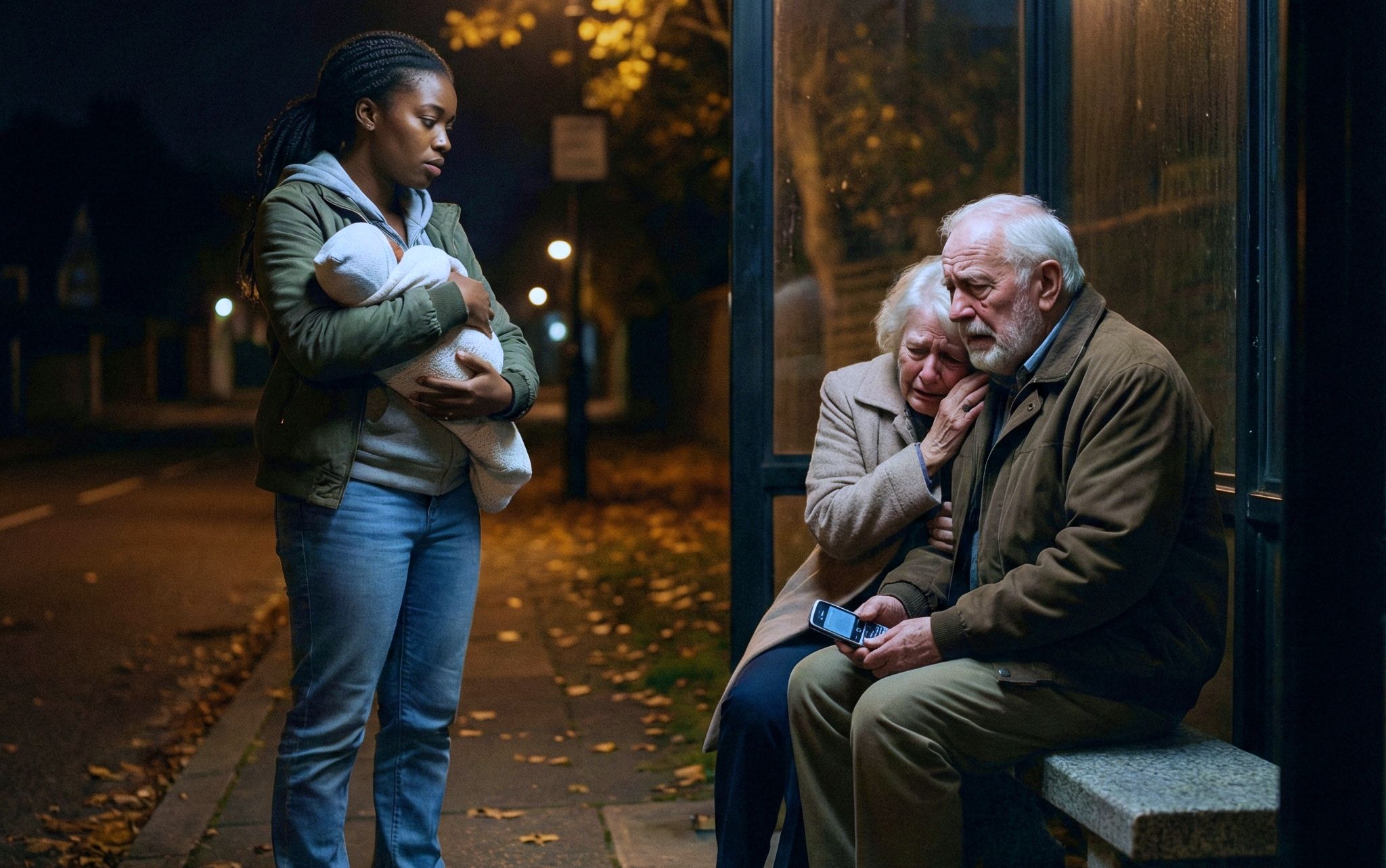
They Took Her Commander Hostage — She Went Alone Behind Enemy Lines to Stop the Massacre
The radio call at Aero 342 flipped everything.
«They’ve got the colonel, repeat. Hostile forces have captured Colonel Robert Keane.»
The transmission was followed by gunfire and shouts in Arabic. Then, a crushing silence fell as Captain Hadley Cross stared at the dead radio, her brain racing through the worst possibilities. The battalion commander had been snatched by a group that specialized in filmed executions for propaganda.
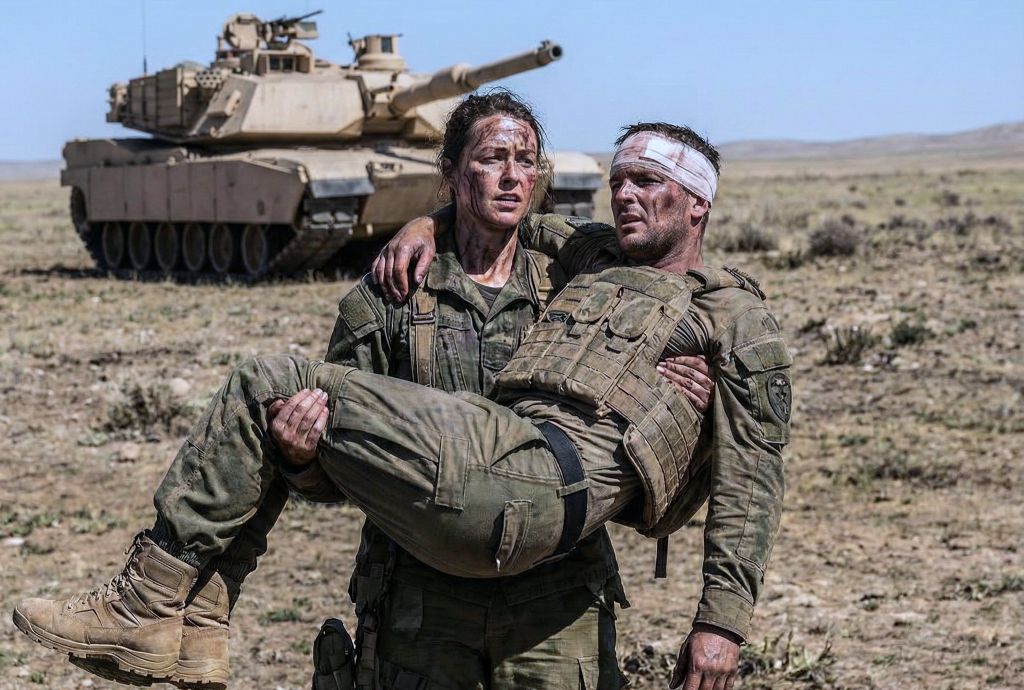
The textbook answer was to assemble a rescue force, spend hours planning, and coordinate with higher command. By that point, Keane would likely be dead. Hadley traced the tactical map to a hostile compound fifteen kilometers out. She thought of the colonel who’d mentored her for three years, slung her rifle and every magazine she owned, and walked out without asking for permission.
Sometimes you had to walk alone into darkness and show the enemy that taking an American hostage would be their last mistake.
Three years earlier, when Hadley Cross first met Colonel Robert Keane, she was a lieutenant fresh from Ranger School. She was fighting to prove she belonged in a combat arms unit that still doubted women. Keane was a 30-year veteran with two combat deployments and the quiet competence that pulled better officers out of those around him.
Their first exchange was blunt.
«Lieutenant Cross, I don’t care if you’re male, female, or Martian. Can you lead soldiers in combat?»
«Yes, sir.»
«Then prove it.»
People in that battalion often assumed she didn’t belong, but Hadley proved them wrong. For three years, she led her platoon through two deployments, earning the respect of soldiers who had once doubted her. She proved that gender didn’t matter when bullets flew and split-second choices had to be made.
Keane had been there the whole time—mentoring, pushing, and sharpening her. Now he was a hostage for enemies who would torture him for intel, film his execution for propaganda, and dump his body in a desert where it might never be found.
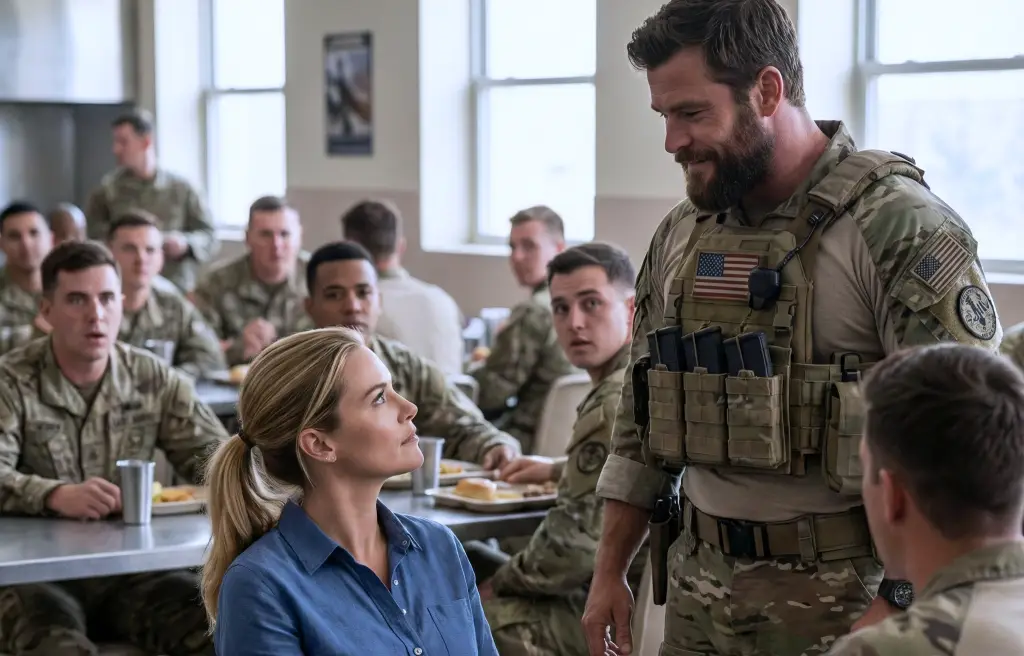
The secure facility in the Careth Basin was officially an observation post, a small American presence watching remnants and blocking resurgence. But in practice, it was a staging ground for deniable operations, run by names that lived in classified files even most generals couldn’t see. Hadley had been the site’s operations officer, coordinating intel and managing assets.
Keane had flown in for a routine inspection with his security detail. He planned to stay forty-eight hours reviewing operations, but his return convoy was ambushed. It was professional, coordinated, and executed with a precision that suggested the route and timing had been leaked.
The security team fought hard. Hadley monitored radio traffic, hearing calm voices calling contacts and directing fire. But they were outnumbered and outmaneuvered. When the shooting stopped, Keane was gone.
The site commander, a major steeped in intelligence analysis with no experience leading troops in direct combat, immediately launched the standard hostage recovery playbook. Contact higher headquarters. Assemble available forces. Develop courses of action and request special operations support.
Everything was by the book, and all of it took time Keane didn’t have. Hadley studied the facts with the cold clarity her training had taught her. Her intel placed Keane in a compound in a village fifteen kilometers northeast, a location her network had identified within an hour of the capture.
The compound sat reinforced, watched over by roughly twenty fighters. It was surrounded by civilians who either sided with the enemy or were too frightened to talk. A standard rescue would need heavy force, careful planning, and hours to organize.
That was a delay that would likely leave his body staged in a propaganda clip. The site commander read the same intel and reached the obvious call.
«Wait for special operations assets. This exceeds our capability.»
Hadley Cross looked at that same picture and made a different call. Fifteen kilometers was close enough to hit before dawn. Twenty fighters could be wiped out with bold planning and fast execution. «Beyond our capability» only meant what conventional units usually wouldn’t attempt.
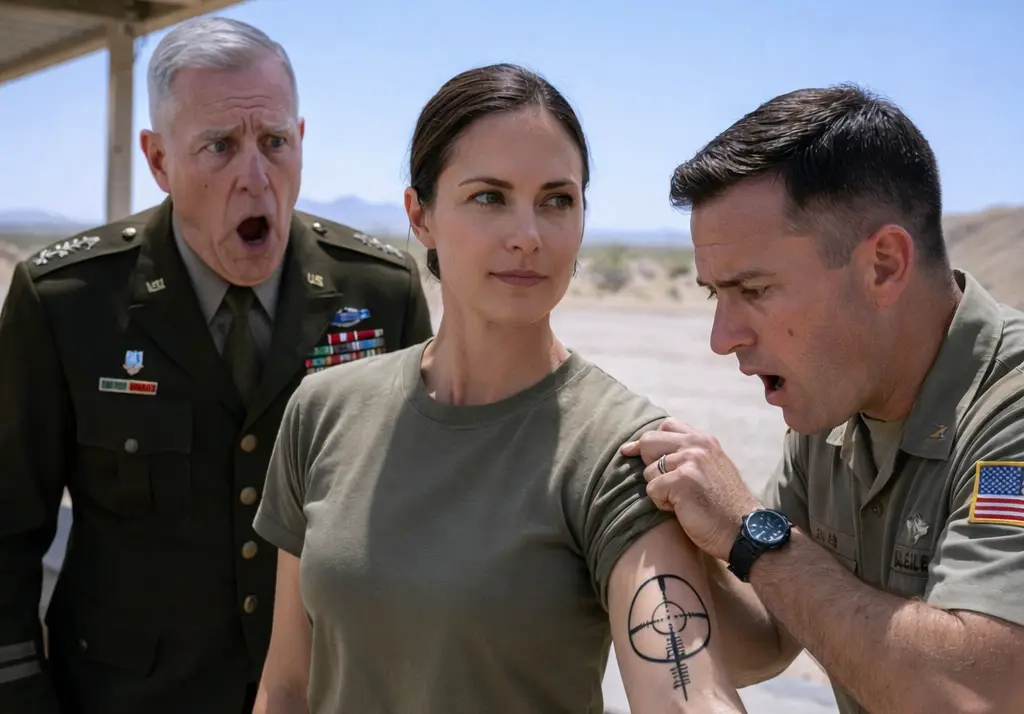
Hadley hadn’t spent three years earning a Ranger tab and proving herself in combat to sit in an operations center while someone she respected was killed. She left the command post at 0400 hours, unofficially and without authorization. She shouldered her personalized M4 carbine, loaded six magazines for a total of 210 rounds, grabbed night vision and a combat medic kit, and walked to the motor pool.
The gate guard blinked and asked, «Ma’am, you aren’t on the movement log?»
«Emergency supply run to Outpost Vega,» she said smoothly. «Just got the call, back before morning formation.»
The guard hesitated, then waved her through. Junior enlisted rarely challenged captains who strode with purpose and spoke with certainty. That pause bought her the ten-minute head start she needed.
She drove an unmarked civilian pickup northeast through terrain that varied from «probably hostile» to «definitely trying to kill you.» Night vision turned the Careth Basin into a green maze of roads, villages, and barren desert. Hadley drove with her rifle across her lap, windows down despite the cold, ears tuned for other vehicles or movement that might signal danger.
She’d worked this region long enough to know which roads were safe and which villages to avoid. The trip took forty minutes over terrain that would have taken hours on foot. She parked two kilometers from the compound behind a low ridge, then went on alone through absolute dark outside her NVG.
It was two kilometers of careful movement, checking every shadow and listening to every sound. She moved with the patient rhythm that separates those who survive from those who don’t. She reached an overwatch on a small rise three hundred meters from the target as dawn began to pale the eastern sky.
Through binoculars, Hadley studied the compound. It was traditional regional construction: mud-brick walls around a central courtyard, single-story rooms, and flat roofs turned into fighting positions. She counted six guards visible on the walls and estimated at least that many more inside.
Vehicles filled the yard, including two technicals with heavy machine guns in their beds. Through a window in the main building, she saw a figure her gut told her was Keane. He was hands-bound and watched by two fighters with AK-47s.
The tactical picture was brutal and simple: one operator against at least twenty enemies inside a fortified location. Conventional military wisdom called it suicide. Special operations doctrine said you needed a team, support, and coordination.
Hadley looked at the compound, thought of Keane, and decided that sometimes conventional wisdom could go to hell. She spent the next thirty minutes laying out the assault with the kind of methodical precision Ranger School had beaten into her. She picked key targets: the wall sentries, the technical gun crews, and anyone who looked like leadership.
She built a sequence of engagement. Who to shoot first, second, third. How to route movement. Where to take cover, and the breach plan.
The scheme was straightforward and brutal, giving her roughly a thirty percent chance of survival. But it gave a ninety percent chance Keane would walk out alive. That was the math that mattered.
Hadley ran a final check on her rifle. Two hundred and ten rounds across six mags was not enough for a protracted fight, but enough if she made every shot count. Her hands were steady, breath controlled. Her mind settled into that peculiar calm that comes when you accept you might die but decide to make it count.
She keyed a small radio that likely wouldn’t reach the operations center but might be heard by monitors.
«This is Captain Cross. I am conducting solo direct action on hostile compound at grid reference November, Victor 478321. Multiple hostiles attempting hostage extraction. If you’re monitoring this net, send support. If not, tell my family I went down swinging. Cross out.»
She shut it off, left it behind the ridge where it could be recovered later, and began her approach. The first guard fell without knowing he’d been targeted. A single suppressed round from two hundred meters toppled him from the wall.
The second guard spun toward the collapse, and Hadley cut him down too, shifting targets with practiced speed. Two down, eighteen to go. She closed in, using a dry irrigation ditch for concealment, rifle up and ready.
A third sentry surfaced on the wall, scanning with growing alarm. Hadley settled behind cover, steadied her breath, and fired. He dropped.
Three down, seventeen left. The compound started to react. Shouts erupted as fighters moved toward the walls. Someone had realized they were under attack, even if they didn’t know from where.
Hadley reached the outer wall and set a small thermite breaching charge that would burn through mud brick without the blast of a standard charge. She took cover, detonated it, and counted the burn seconds until the hole was big enough to enter. She flowed through fast and hard, rifle searching for targets.
The courtyard was chaos. Fighters were running, snagging weapons, and trying to form a defense against an assault they didn’t understand. Hadley shot the first three she saw center mass, dropping them before they could respond.
Six down, fourteen to go.
A technical’s machine gun opened up, tracers tracking her position. She rolled behind a vehicle as rounds sprayed where she’d been standing. She came up on the far side, acquired the gunner, and put three rounds into him. He slumped over his weapon.
Seven down, thirteen to go.
Two fighters came from a doorway with weapons raised. Hadley engaged the first and dropped him, then shifted to the second. Her rifle clicked empty, the first magazine spent.
She ran a tactical reload, the empty mag hitting the ground as a fresh one snapped home. Practiced muscle memory made it automatic. Hadley engaged the second fighter as he tried to find cover, two rounds to the torso dropping him.