My Twin Sister Married My Husband for His Millions, But His Final Will Revealed a Secret She Never Expected
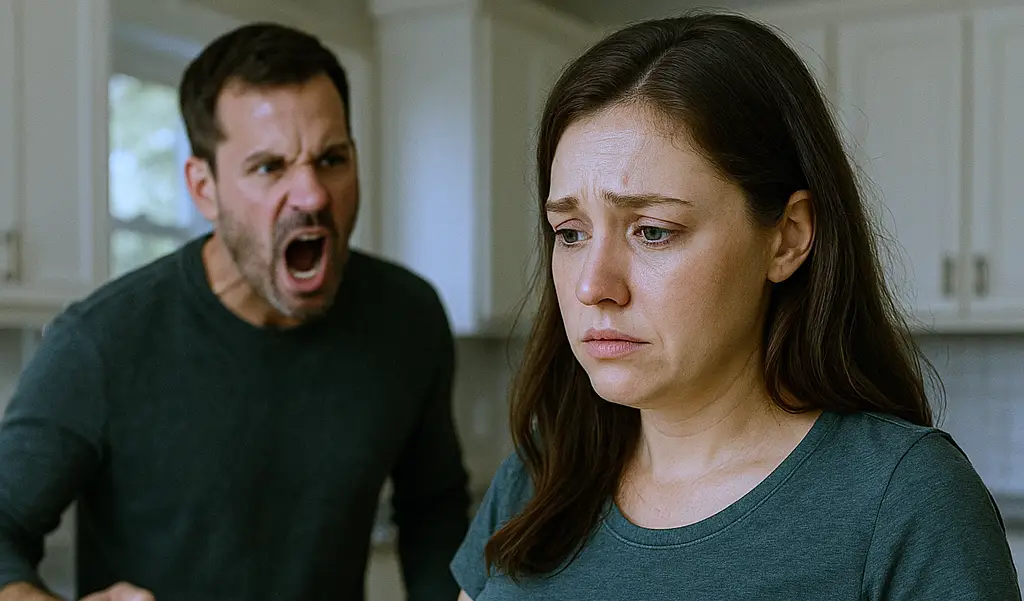
«Arthur and I are getting married,» she announced, her voice dripping with a smug satisfaction that turned my stomach.
The floor disappeared from under me. I gripped the edge of the dining table to keep from collapsing. My sister. My husband. The two central pillars of my life, conspiring together to destroy me.
I looked from Beatrice’s gleeful face to Arthur’s empty one, searching for any sign that this was a sick joke, a terrible mistake. There was nothing. Then Beatrice spoke again, her voice like sweet poison, twisting the knife.
«It’s no joke, Audrey. You’ve always lived in my shadow. I think it’s time you stayed there for good.»
The weeks that followed are a gray, foggy memory. It felt like I was watching my life happen to someone else, from a great distance. The process of the divorce was brutally efficient.
Arthur wanted it done quickly, and I didn’t have the will to fight. A thick manila envelope arrived by courier the very next day containing the divorce papers. His lawyer, a man with a cold, impersonal voice over the phone, explained the terms of the settlement.
It was generous. He was giving me the majority of our savings, more than half. At the time, I thought it was guilt money. I signed everything he put in front of me, my hand moving like an automaton. I just wanted it to be over.
The hardest part was leaving our home. Every object was a landmine of memory. Packing up my books, I found a faded receipt he’d used as a bookmark from our first anniversary dinner. In the closet, I found the old, soft sweatshirt of his I always wore on lazy Sundays.
Each item was a fresh stab of betrayal. I hired movers because I couldn’t bear to see Arthur again. I left the house key on the kitchen counter and walked out the door without looking back, leaving ten years of my life behind.
I found a small, soulless apartment in a large, anonymous complex across town. For the first month, the moving boxes remained an unopened fortress in my living room. I couldn’t bring myself to unpack the remnants of a life that no longer existed.
I called in sick to work, telling the principal I had the flu. The truth was, I couldn’t face the sympathetic, questioning eyes of my colleagues, and I certainly couldn’t face the innocent, happy faces of my students.
Most days, I just sat on the couch, which was still wrapped in plastic from the movers, and stared at the beige wall. I didn’t watch TV. I didn’t read. I just sat.
The phone would ring—friends from work like my dear friend Carol, calling to check in. I’d watch her name flash on the screen and let it go to voicemail.
«Audrey? Honey, it’s Carol. Just calling to see how you are. We’re all worried about you. Please call me back.»
I couldn’t. What would I say? How do you explain a betrayal so profound it feels like it has hollowed you out from the inside?
Meanwhile, Beatrice was putting on a victory parade. A friend, meaning well, sent me a screenshot from Beatrice’s social media. It was a picture of her and Arthur, clinking champagne glasses on a balcony overlooking the ocean. The caption read: Finally with my true soulmate.
I threw up after I saw it. I deactivated all my accounts that day. I couldn’t take it. Each smiling photo, each celebratory post, was a public testament to my failure, my erasure. I had been so easily and happily replaced.
About a month into my self-imposed exile, I finally ran out of food and was forced to venture out to the grocery store. I must have looked a sight: pale, hair uncombed, wearing the same sweatpants I’d had on for three days.
As I was fumbling with my keys to get back into my apartment building, a sleek black Mercedes pulled up to the curb. My heart stopped. It was Beatrice’s car.
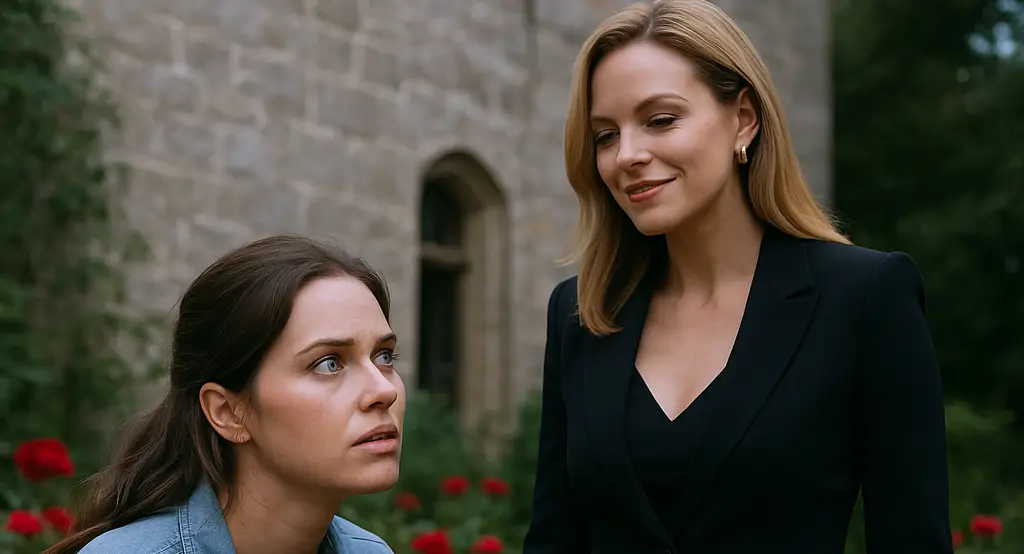
She got out, looking like she’d just stepped out of a magazine. She was wearing a cream-colored pantsuit that probably cost more than my rent, her blonde hair catching the afternoon sun. She saw me, and her face broke into a bright, fake smile.
«Audrey,» she called out, her voice unnervingly bright and cheerful, as though she had done nothing wrong. «How have you been?»
I just stood there, clutching my single bag of groceries—milk, bread, a can of soup. I felt small and pathetic under her polished gaze.
«What do you want, Beatrice?» I asked, my voice raspy from disuse.
She walked towards me, her heels clicking an arrogant rhythm on the pavement. She stopped a few feet away, her smile still perfectly in place.
«I just wanted to check on you, silly,» she said, her tone dripping with false concern. «This must be so hard for you. I want you to know, I’m here for you if you need anything.»
The audacity of it. The sheer, breathtaking nerve. It was so insulting, so deeply cruel, that it snapped something inside me. The fog of numb depression began to burn away, replaced by a hot, white-hot anger.
«You’re here for me?» I said, my voice low and shaking with a rage I didn’t know I possessed. «You stand there, in your expensive suit, after you blew up my life, and you pretend to be worried?»
Her smile tightened at the edges. «Now, Audrey, don’t be dramatic.»
«Dramatic?» I almost laughed. It was a raw, ugly sound. «What matters, Beatrice, is that you betrayed me. You betrayed your own sister. You took my husband, my home, my life, and now you have the gall to stand here and offer me your pity? Get out. Get away from me.»
For the first time, her mask slipped entirely. The fake sympathy vanished, and her eyes turned to cold, hard chips of ice. The real Beatrice was finally on display.
«Fine,» she hissed, her voice dropping its sweet pretense. «Be a martyr. Wallow in your miserable little life. But don’t you dare expect me to feel sorry for you.»
She took a step closer, her voice a venomous whisper. «You’ve always been weak, Audrey. You’re fragile. That’s why people leave you. That’s why Arthur chose me. He wanted a strong woman, not a broken little bird.»
She turned on her heel and walked back to her car, leaving me standing there on the pavement, her words hanging in the air like poison gas.
Weak. Fragile. The old insults, the old labels. But this time, they didn’t make me want to cry. They made me want to fight.
Beatrice’s cruelty was the unlikely spark that ignited a fire in me. Lying on my couch, defeated, was precisely what she wanted. It was what my parents had always expected. It was the role I had been cast in my whole life.
And in that moment, standing outside my sad little apartment, I decided I was done playing the part.
The next Monday, I showered, put on my nicest work dress, and went back to school. Walking down the hallway felt like walking a tightrope. I could feel the stares, hear the whispers stop as I passed.
My friend Carol rushed to my side, her face a mixture of relief and concern. «Audrey. Oh, thank God. Are you okay?»
I just gave her a small, tight smile. «I will be,» I said, and for the first time, I almost believed it.
That week, I made the call. I found a therapist, a woman named Dr. Evans. My first session was one of the most difficult hours of my life. I sat on her plush couch, twisting a tissue in my hands, and for the first 20 minutes, I couldn’t speak.
Then, the dam broke. I told her everything. About being the shadow twin. About my parents. About Arthur’s quiet love and his shocking betrayal. About Beatrice’s triumphant smile.
I cried until I had no tears left. Dr. Evans just listened patiently, and when I was done, she said something that stuck with me.
«Audrey, you’ve been carrying the weight of other people’s definitions of you for a very long time. Perhaps it’s time to write your own.»
It wasn’t a magic fix, but it was a start. I kept going back. We began the slow, painful work of untangling the knots of my past.
One evening, I saw a flyer at the local library for a community book club. The old me, the weak, fragile Audrey, would have crumpled it up. But the new me, the one who was tired of being afraid, took a picture of it with my phone.
The following Tuesday, I walked into that library meeting room. My heart was pounding. I sat in a chair in the corner, planning to just listen. The book was one I had loved, and as the other women started discussing it, I found myself disagreeing with one of their points.
Before I could stop myself, I spoke up. «I actually saw that character’s motivation a little differently,» I said, my voice barely a whisper.
All eyes turned to me. I explained my point, expecting them to dismiss it. But instead, a woman across the table smiled.
«That’s a really interesting take. I hadn’t thought of it that way.»
It was a small thing. A tiny victory. But it felt monumental. I was making new friends. I was finding my voice. I was slowly, painstakingly, rebuilding myself—not on the foundation of Arthur’s love or my family’s approval, but on something new. Something that was entirely my own.
Three months passed. My life found a new, quiet rhythm. It was a fragile stability, but it was mine. I was teaching, going to therapy, attending my book club. I was starting to sleep through the night again. The pain was still there, a constant, dull ache in my chest, but it no longer consumed me. I was surviving.
Then, on an ordinary Tuesday afternoon, everything was upended once again. I was in my classroom after the final bell, tidying up, when my cell phone rang. It was an unknown number with a local area code.
I almost let it go to voicemail, but something made me answer. «Hello?»
«May I speak with Ms. Audrey Carter?» The voice was a man’s, professional and somber.
«This is she,» I said, a flicker of unease stirring in me.
«Ms. Carter, my name is David Allen. I’m an attorney with the firm Allen & Associates. I apologize for the unsolicited call. I’m calling you today regarding your ex-husband, Arthur Jensen.»
My blood ran cold. I sank into my desk chair. Why would Arthur’s lawyer be calling me?
«Is everything all right?» I asked, my voice suddenly tight.
There was a pause on the other end of the line, the kind of weighted silence that precedes terrible news.
«Ms. Carter,» the lawyer said, his voice gentle but firm, «I regret to inform you that Mr. Jensen passed away suddenly last night.»
The classroom around me seemed to warp and fade. The colorful posters on the wall blurred. Passed away? Arthur? It didn’t make any sense. He was young, healthy.
«What?» I breathed the word, a puff of air. «How? What happened?»
«A heart condition, I’m told,» he explained. «It was very sudden. I am very sorry for your loss.»
My mind was a chaotic storm of disbelief and confusion. Loss? He wasn’t mine to lose anymore. But the news struck me with the force of a physical blow. Arthur was gone.
«Why… why are you calling me?» I stammered.
«Mr. Jensen updated his will a few months ago, shortly after your divorce was finalized,» Mr. Allen said. «He left very specific instructions for me to contact you directly in the event of his death. There are some legal matters to discuss. But more importantly, he left a letter. A letter he wanted to make absolutely certain would get to you.»