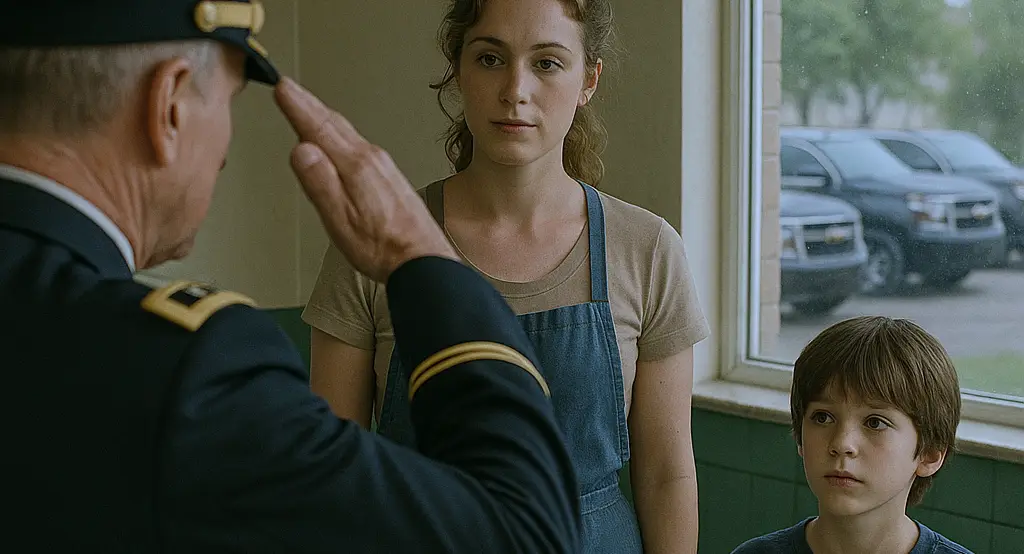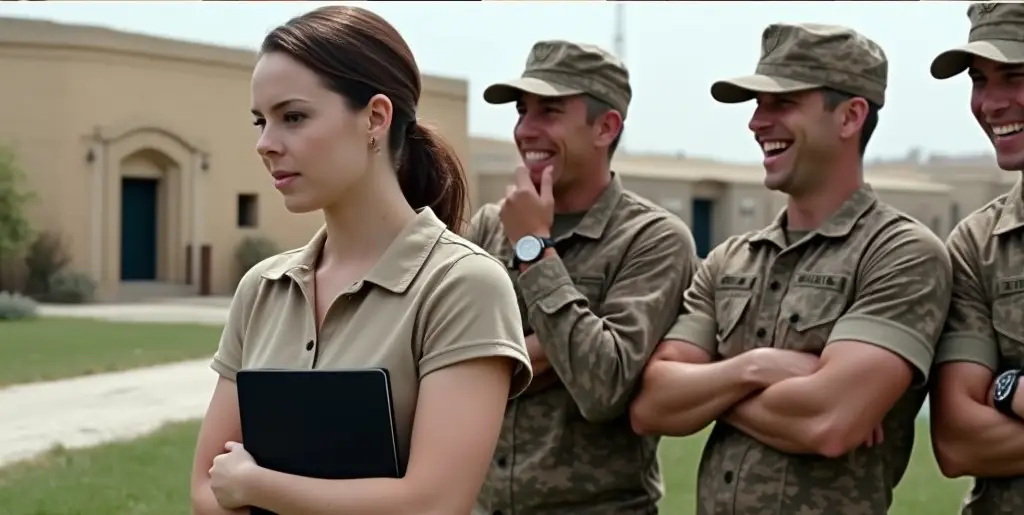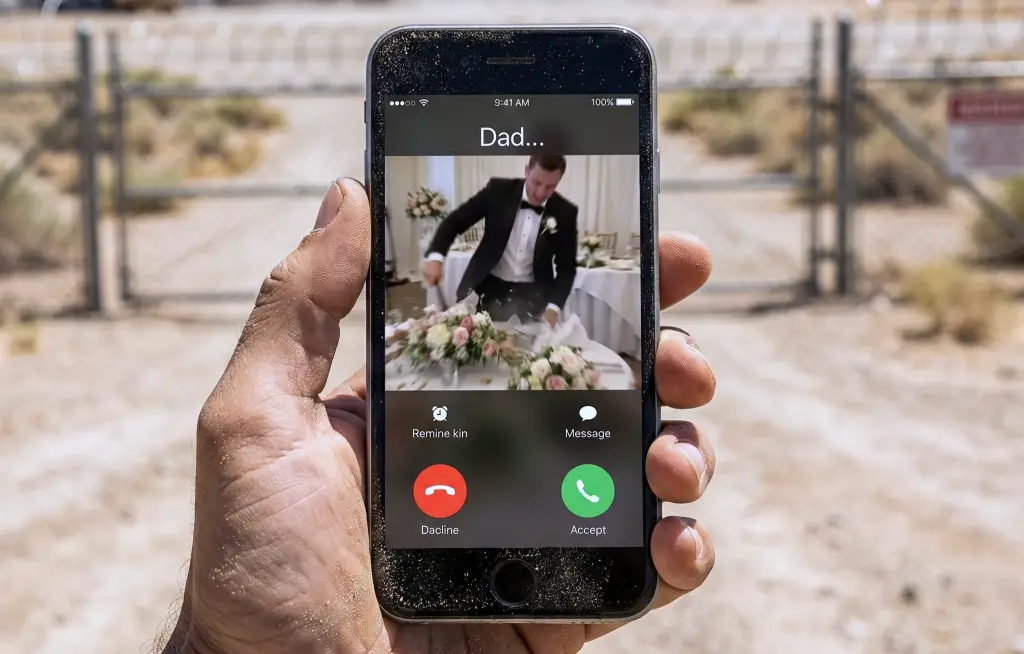
The teacher didn’t believe the boy when he mentioned his dad worked at the Pentagon — until a man in uniform walked in and said, “I’m here for my son!” The whole class went silent…
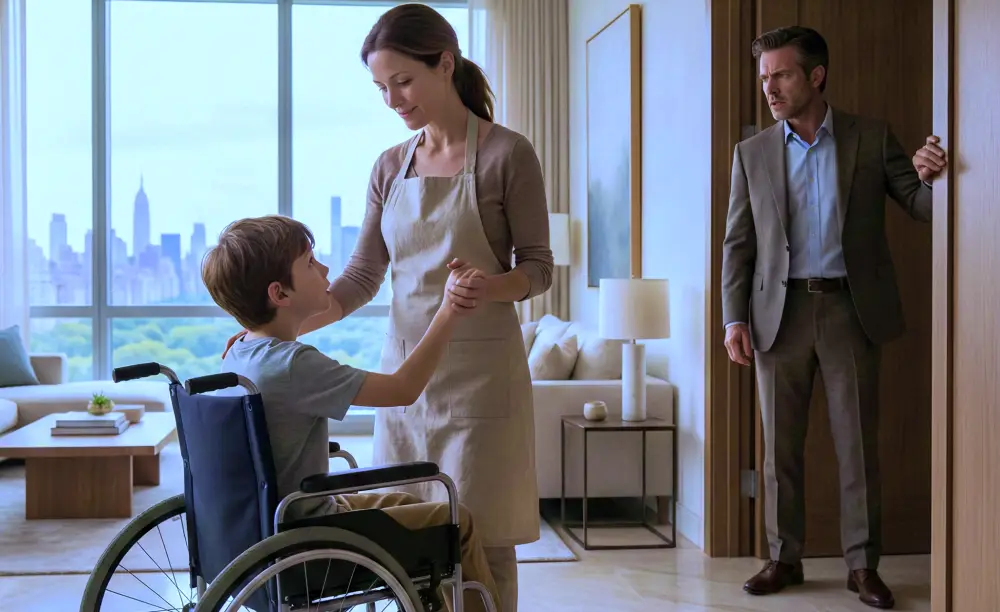
Malik grabbed his backpack and trudged into the house while his father remained in the car. Through the living room window, he could see Jonathan speaking intently into his phone, his free hand making sharp, decisive gestures in the empty air.
Later that evening, as Malik finished his math homework at the kitchen table, he heard his father’s voice drifting from the study. The door was ajar, and Jonathan’s words were tense and hushed.
— I understand the implications… No, that is not acceptable. We need to address this immediately.
Curious, Malik crept closer to the study door. His father rarely brought work home, and when he did, he usually kept his office door firmly closed.
— I’ll handle it personally, — Jonathan was saying. — Yes, first thing tomorrow.
Malik quickly retreated as he heard his father ending the call. A moment later, Jonathan emerged from the study, his face grave until he spotted Malik. Then, like flipping a switch, his expression softened into a paternal smile.
— Finished with your homework? — he asked.
— Almost, — Malik replied. — Is everything okay?
Jonathan nodded.
— Just some work stuff. Nothing for you to worry about.
Later that night, unable to sleep, Malik got up for a glass of water. As he passed by his bedroom window, a movement outside caught his eye. Looking down at the street, he saw a black SUV parked across from their house, its engine running, emitting a faint plume of exhaust. Malik watched as a man in a dark suit got out, spoke briefly into what looked like a radio on his wrist, scanned the surrounding area, and then returned to the vehicle.
Confused and a little frightened, Malik went to his father’s room and knocked softly.
— Dad? There’s a car outside. I think someone is watching our house.
Jonathan, who seemed to be still awake despite the late hour, came to the window and looked out. His face betrayed no surprise.
— Don’t worry about it, — he said, placing a reassuring hand on Malik’s shoulder. — Go back to bed.
— But who are they? Why are they outside our house?
— Malik, — Jonathan said firmly. — Some things are safer if you don’t know. Trust me on this. Now, go to sleep.
Reluctantly, Malik returned to his room, but sleep didn’t come easily. His mind kept replaying the day’s humiliation, his father’s mysterious phone call, and the black SUV keeping a silent vigil outside their home.
Morning arrived with the insistent beeping of Malik’s alarm clock. For a moment, he hoped yesterday had been just a bad dream, but the memory of Ms. Anderson’s mocking smile quickly crushed that hope. Downstairs, he found a note from his father on the kitchen counter: Had to leave early. Mrs. Thompson will drive you to school. Have a good day. — Dad.
It wasn’t unusual for his father to leave before dawn, but today it felt like one more disappointment. Malik had hoped to talk more about what had happened at school, maybe even convince his dad to speak with Ms. Anderson.
Mrs. Thompson, their elderly neighbor who sometimes helped out when Jonathan had early meetings, arrived precisely at 7:30. She drove Malik to school in her ancient Volvo, chatting about her garden and her grandchildren while Malik stared out the window, barely listening.
— Your father works too hard, — she commented as they pulled up to Jefferson Academy. — Important job, though. The country needs good men like him.
Malik perked up at this.
— You know what my dad does?
Mrs. Thompson smiled mysteriously.
— I’ve lived next door to you for six years, child. I notice things.
Before Malik could ask more questions, they had arrived at school, and the moment was lost.
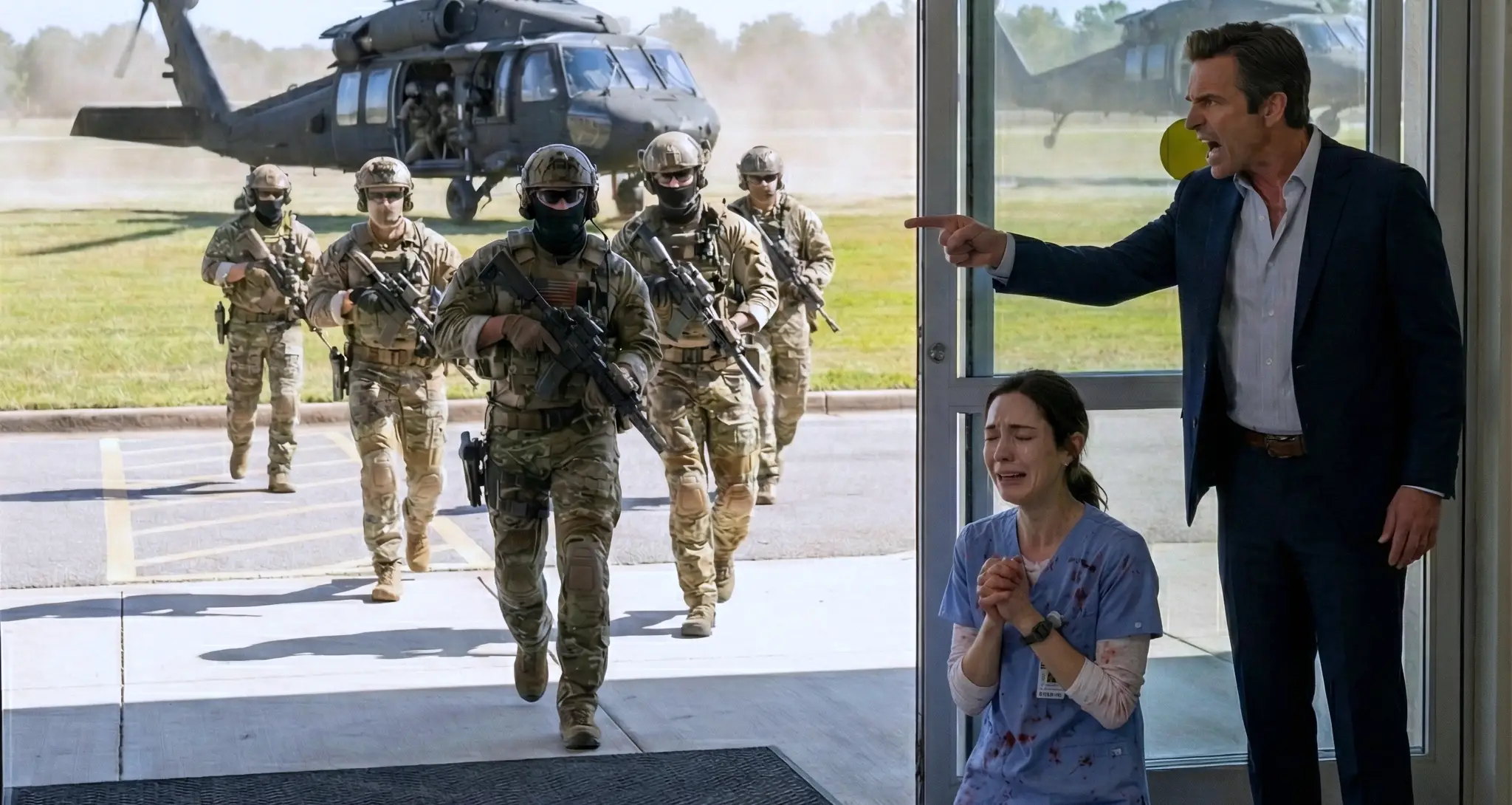
Miles away, Jonathan Carter sat in a classified meeting room deep within the Pentagon. Unlike the modest attire he wore at home, here he was dressed in a sharply tailored suit with his security badge prominently displayed. Around the table sat six other people: three military officers and three civilians in suits as expensive as his own.
— The cyber attack was sophisticated, — a woman with short gray hair was saying. — They targeted multiple systems simultaneously, but we believe their primary goal was access to the SCADA networks.
— Any idea who is behind it? — asked a Marine Colonel to Jonathan’s right.
— Not definitively, — the woman replied. — But the code signatures match previous attacks attributed to—
She was interrupted by an aide hurrying into the room. The young man leaned down to whisper something to Jonathan, whose expression immediately darkened.
— When did this happen? — Jonathan asked sharply.
— Just now, sir. The system flagged it because of your personal security protocols.
Jonathan stood abruptly.
— I need to step out. There has been an unauthorized attempt to access Jefferson Academy’s database.
The others at the table exchanged confused glances.
— Jefferson Academy? — the Marine Colonel repeated. — The private school?
— My son attends there, — Jonathan said tersely. — And someone just tried to breach their security system using the same methodology as the attacks we’ve been tracking.
Back at Jefferson Academy, Malik was trying to make himself invisible in Ms. Anderson’s class. After yesterday’s humiliation, the last thing he wanted was to draw attention to himself. Ms. Anderson was reviewing their presentations, lavishing praise on certain students while offering only cursory acknowledgments to others.
— Tyler, your father’s work in real estate development is truly shaping our city’s future, — she gushed. — And Sophia, how fascinating that your mother is involved in crafting healthcare policy at such a high level.
When she reached Malik’s presentation, her lips curved into a patronizing smile.
— Malik, while imagination is certainly a valuable quality, remember that these presentations were meant to be factual.
Several students snickered, and Malik sank lower in his seat. From across the room, Ethan shot him a sympathetic look.
After class, as they headed to lunch, Ethan tried to cheer him up.
— Don’t listen to her, Malik. She’s always picking favorites.
— Easy for you to say, — Malik muttered. — She doesn’t call you a liar in front of everyone.
Ethan fell silent for a moment.
— My dad lost his job yesterday, — he finally said, his voice small. — The factory is closing down. Mom says we might have to move if he can’t find something else soon.
Malik immediately felt ashamed of his self-pity.
— I’m sorry, Ethan. That’s terrible.
Ethan shrugged, trying to look braver than he felt.
— It’s fine. We’ll figure it out.
As they entered the cafeteria, Malik happened to glance out the window. A woman in a trench coat stood across the street, seemingly watching the school. There was something about her stance—alert, vigilant—that reminded him of his father.
— Who’s that? — he asked, pointing.
Ethan squinted through the glass.
— Dunno. Probably just waiting for someone.
But as Malik continued to watch, the woman raised what looked like a small camera and took several photos of the school building before walking away with purposeful strides.
That afternoon, as Jonathan drove him home from school, Malik found himself studying his father with new curiosity. There were things about Jonathan that had always seemed ordinary: his modest clothes, his quiet demeanor, the way he never boasted. But other things suddenly stood out as unusual: the late-night phone calls, the black SUVs, the way he carefully checked their surroundings when they were in public places.
— Dad? — Malik ventured. — What exactly do you do at the Pentagon?
Jonathan’s eyes remained fixed on the road.
— You know I work in security operations.
— But what does that mean? What do you actually do every day?
A slight smile crossed Jonathan’s face.
— Lots of meetings. Lots of reports. Not very exciting stuff.
— Then why are there people watching our house sometimes? — Malik pressed.
Jonathan’s smile faded.
— What makes you think someone is watching our house?
— I saw them last night. And sometimes there are cars parked across the street with people just sitting in them. They never get out.
After a long pause, Jonathan said:
— Some things are safer if you don’t know too much about them, Malik. That’s not just me trying to avoid your questions. It’s the truth.
— But why would it be dangerous for me to know what you do? — Malik persisted.
— I didn’t say dangerous, — Jonathan corrected gently. — I said safer. There’s a difference.
Before Malik could ask another question, his school tablet sitting on his lap suddenly lit up with an alert. A string of random characters flashed across the screen, then disappeared as quickly as it had come.
— What was that? — Jonathan asked sharply, having glimpsed the strange text.
— I don’t know, — Malik said, bewildered. — Some weird message just popped up and then vanished.
Jonathan’s hand tightened on the steering wheel.
— Let me see your tablet when we get home.
Once they arrived, Jonathan spent nearly an hour examining Malik’s tablet, running what looked like diagnostic programs from his own laptop. Finally, he handed the device back.
— Everything seems normal now, — he said, though the crease between his eyebrows suggested otherwise. — But Malik, listen to me carefully. If anything unusual happens at school—anything at all—I want you to call me immediately. Understand?
Malik nodded, increasingly confused by his father’s intensity.
— Is something wrong, Dad?
Jonathan rested his hands on Malik’s shoulders, looking him directly in the eyes.
— Probably not. But I’d rather be overly cautious than not cautious enough.
The next day at school, Ms. Anderson seemed determined to continue Malik’s humiliation. As they discussed famous government buildings in Washington D.C., she pointedly called on him when they reached the Pentagon.
— Malik, since your father supposedly works there, — she said with a smirk, — perhaps you can tell us something about the Pentagon that isn’t in our textbooks?
The class went quiet, most students grinning in anticipation of another embarrassing moment. But Malik had spent the evening reading everything he could find about the Pentagon, determined not to be caught off guard again.
— The Pentagon has twice as many bathrooms as necessary, — he said confidently. — It was built in the 1940s when Virginia was still segregated, so they had to have separate bathrooms for white and Black employees. After segregation ended, they just kept all the bathrooms.
Ms. Anderson’s smirk faltered slightly. She clearly hadn’t expected him to have an actual answer.
— Well, — she said after a moment, — that is correct, though hardly relevant to our discussion of architectural significance.
— And it has a hot dog stand in the central courtyard that Soviet missiles supposedly targeted during the Cold War, — Malik continued, warming to his subject. — They thought it was the entrance to a secret bunker because they saw high-ranking officials going there every day. But they were just getting lunch.
A few students laughed—not mockingly this time, but genuinely amused by the anecdote.
Ms. Anderson’s lips thinned.
— That’s enough, Malik. We need to move on.
But the small victory gave Malik a boost of confidence that lasted throughout the day. As the final bell rang, Ms. Anderson called him back as the other students filed out.
— Malik, — she said, her voice honey-sweet but her eyes cold. — I understand you are going through a phase where you feel the need to embellish the truth. Many children do. But continuing to insist on these Pentagon stories is becoming disruptive.
— I’m not making anything up, — Malik said firmly.
Ms. Anderson leaned forward, her smile never reaching her eyes.
— If your father really works at the Pentagon, why not bring him in to prove it? Parents’ Day is next week. That would settle everything, wouldn’t it?
The challenge in her voice was unmistakable. She was certain he would back down, admit to lying, or make excuses for why his father couldn’t attend. Instead, Malik met her gaze steadily.
— Fine. He will.
For a split second, uncertainty flickered across Ms. Anderson’s face, but she quickly masked it with a patronizing smile.
— Wonderful. I look forward to meeting him.
That evening, Malik approached his father with nervous determination. Jonathan was at the kitchen table, laptop open, frowning at something on the screen.
— Dad, — Malik began hesitantly. — There’s Parents’ Day at school next week. I really need you to come.
Jonathan looked up, his expression distracted.
— Parents’ Day? You know how difficult it is for me to commit to school events, Malik.
— I know, but… — Malik took a deep breath and explained the situation: Ms. Anderson’s continued mockery, her challenge, the way she’d made him a laughingstock among his classmates.
As Malik spoke, Jonathan’s expression gradually shifted from distracted to focused, then to something harder to read. By the time Malik finished, his father’s face had settled into a calm determination that Malik recognized from rare occasions when Jonathan was truly angry but controlling it.
— I see, — Jonathan said simply. He closed his laptop. — What day is this Parents’ Day?
— Next Friday, — Malik said hopefully. — Will you come?
Jonathan nodded once, decisively.
— Yes. I’ll be there.
— Really? — Malik couldn’t hide his surprise. His father had never agreed so quickly to a school event before.
— Really, — Jonathan confirmed. — I think it’s time I met your teacher.
Malik felt a massive weight lift from his shoulders. Finally, Ms. Anderson would see the truth.
Later that night, Jonathan made another of his mysterious phone calls from his study. This time, Malik was certain he heard his father mention «Jefferson Academy» and «security protocols» before the study door closed completely. Outside, the black SUV was back, parked in the same spot as before. But now, instead of feeling frightened by its presence, Malik found it oddly reassuring. Something was happening. Something his father wasn’t telling him about. But whatever it was, he was beginning to believe it might work in his favor. As he drifted off to sleep, Malik thought about the look on Ms. Anderson’s face when his father would walk into that classroom.