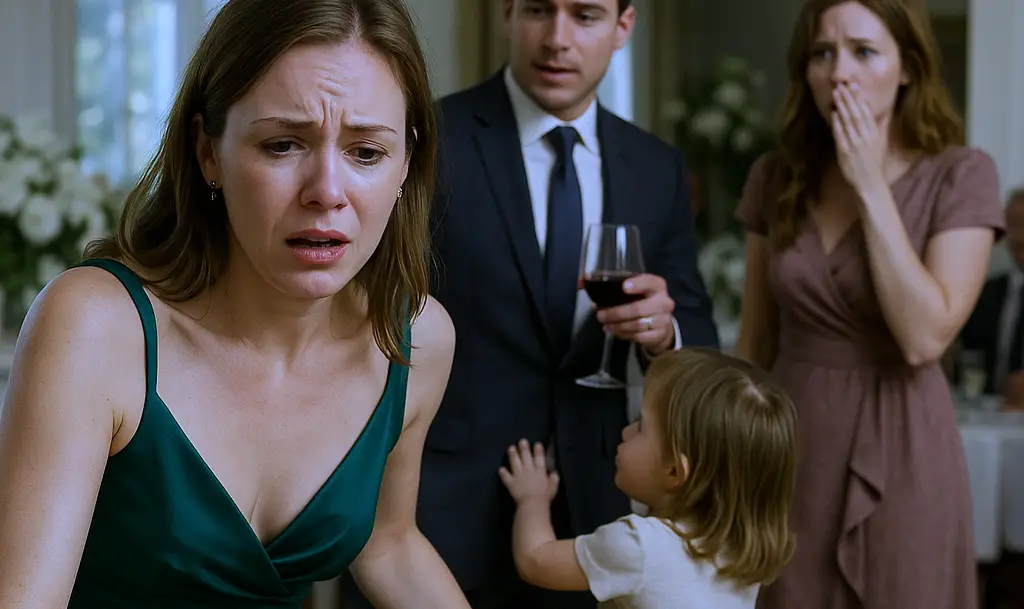
«Sir, this painting. I drew it when I was six,» I told the gallery owner. «That’s impossible,» he said
I was crying and couldn’t stop.
«She never stopped fighting for you,» the DA said gently. «I thought you should know.»
Two months later, Victor Duncan was charged with 15 counts of theft and fraud. I testified. So did Gary and the three others. We told our stories. The prosecutor presented evidence: the paintings, the forged reports, the timeline. Victor’s lawyers argued, claiming the art was abandoned property that he’d preserved. But the jury didn’t buy it.
Guilty on all counts.
Sentencing: eight years in prison, restitution to all victims, and forfeiture of all stolen works. The judge looked at Victor. «You were entrusted with the care of vulnerable children, and you exploited them for profit. There is no excuse for what you’ve done.»
Victor was led away in handcuffs. I watched him go and felt empty. Not triumphant. Just sad.
Three months later, the DA’s office returned my painting and the box of drawings my mother had kept. I sat on my apartment floor and opened the box. Dozens of drawings in crayon, marker, and watercolor—all from when I was five, six years old.
And at the bottom, letters. Letters from my mother to the court.
Please let me see my daughter. I’m doing everything you asked. I got a better job. I have stable housing. I completed the classes. Please. She’s my whole world. I miss Erin every day. I think about her constantly. Is she okay? Is she happy? Please tell her I love her.
Please tell her I’m trying. I’m sick. The doctor says I need to rest, but I can’t rest. I need to get Erin back. That’s all that matters.
The last letter was dated two weeks before she died.
I don’t think I’m going to make it. I’m too tired. But please, someone, tell Erin I loved her. Tell her I never stopped fighting. Tell her I’m sorry I couldn’t bring her home.
I held the letter and sobbed. She’d loved me. She’d fought for me. And I never knew.
Jody helped me find my mother’s grave in a small cemetery with a modest headstone: Angela Perry, 1975-2007. Beloved Mother. Someone had paid for it—maybe the state, maybe a charity.
I knelt down and set the painting against the headstone. The painting I’d made for her. The last thing I’d given her before Victor took me away.
«Hi, Mama,» I whispered. «I’m sorry it took me so long to find you. I didn’t know. I didn’t know you tried. I didn’t know you fought for me.»
The wind rustled through the trees.
«I got the painting back. The one I made for you. I wanted you to have it, like I promised.» I traced her name on the stone. «I know you loved me. I know you did everything you could. And I love you too. I always did. I just… I wish I could have told you.»
I stayed for a long time just sitting there with her, with the painting, finally feeling connected.
Six months later, the stolen artworks were returned to their creators. Gary got his dog painting back; he cried when he held it. The others got theirs. Some sold them because they needed the money. Others kept them because they needed the memory.
I kept mine. I hung it in my apartment where I could see it every day. A reminder of my mother, of the love she had for me, of the fight she fought.
Jody’s article won awards. Laws were changed, requiring more oversight and more protections. Gary and I stayed in touch. We became friends. Sometimes we met for coffee and talked about our childhoods, our mothers, and the system that failed us. And we talked about healing. Because that’s what we were doing, finally. Healing.
I don’t work in catering anymore. After the trial, the restitution from Victor’s assets was divided among the victims. My share was $80,000—enough to change my life. I went back to school and enrolled in an art therapy program. I want to work with foster kids, teach them art, and help them process trauma.
Three years ago, I walked into a gallery to serve champagne. I saw a painting. My painting. Being sold for $150,000. I could have stayed silent. Stayed invisible. But I didn’t. I walked up to one of the most powerful men in the art world and said, «Sir, this painting is mine. I drew it when I was six.»
He said it was impossible. But I proved him wrong. And in doing so, I found my mother again. Not in person—she was gone. But in the painting, in her letters, in the love she’d left behind. And that was enough. It had to be.