«Sir, this painting. I drew it when I was six,» I told the gallery owner. «That’s impossible,» he said
He left the room. I stood there, heart pounding. This was it. If my writing was on the back, he’d see it, and he’d know I was right. But would he admit it? Or would he destroy the evidence?
Victor returned with a small tool kit. He set the painting face down on the table. Carefully, he began removing the tiny nails holding the backing in place. I watched, silent, barely breathing. He peeled back the brown paper.
And there it was. The back of the original watercolor paper: faded, yellowed, but visible. In green crayon, childish handwriting: For Mama. Love, Erin.
Victor went very still. I leaned closer. «What does that say?»
He didn’t answer.
«It says, ‘For Mama. Love, Erin.’ I said. Doesn’t it?»
He looked up at me. Really looked. Recognition dawned. «You. Me. You’re the girl from the opening. The caterer.»
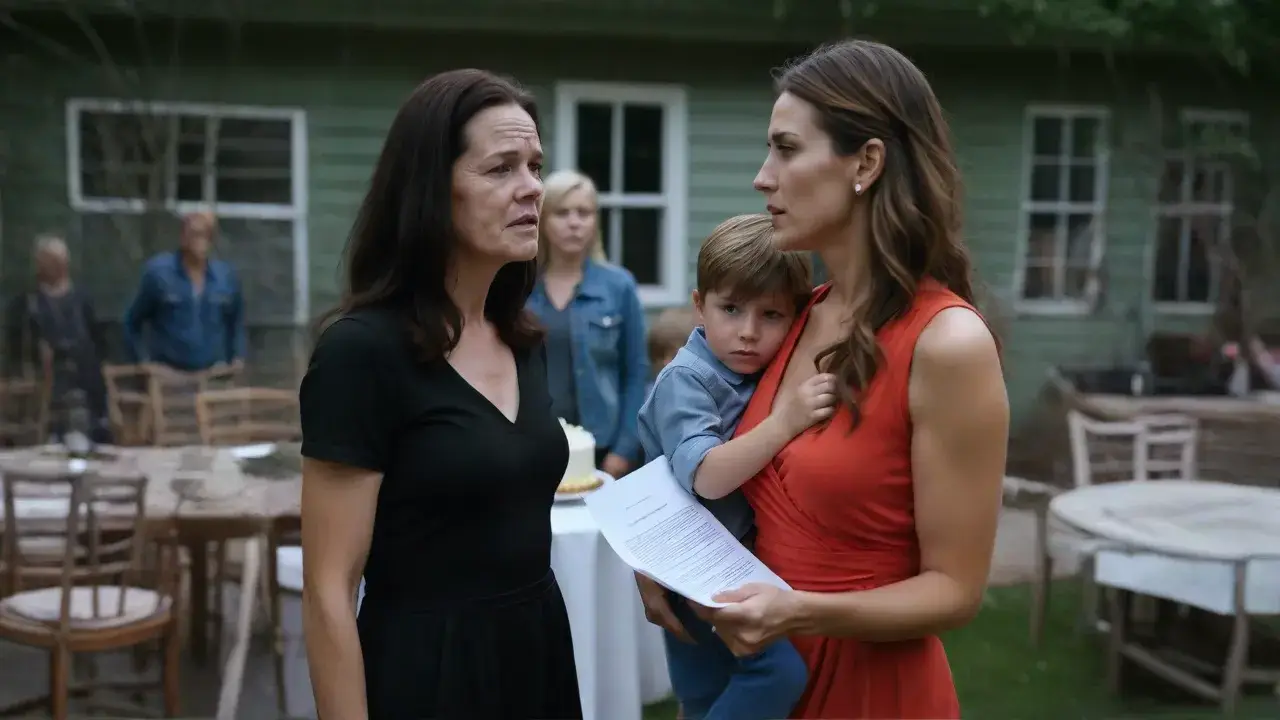
«My name is Erin Perry. And you took me from my mother twenty-two years ago. You took this painting from me. You said you’d keep it safe. And now you’re selling it for a hundred and fifty thousand dollars.»
«That’s not… This isn’t…»
«My name is on the back. ‘Love, Erin.’ That’s me. This is my painting.»
«You can’t prove that.»
«I just did. My name. Right there.»
He stood and stepped back. «Lots of children are named Erin. This could be anyone’s.»
«May 12, 2003. My sixth birthday. I made this for my mother, Angela Perry. You came to our apartment the next day. You said she wasn’t fit to take care of me. You took me, and you took this painting. I was crying. You said you’d keep it safe for me.»
His face had gone pale. «I don’t know what you’re talking about.»
«Yes, you do.»
«You need to leave.»
«I’m not leaving. That’s mine. You stole it.»
«I acquired it legally. Through proper channels.»
«You stole it from a six-year-old.»
«Get out. Or I’m calling the police.»
«Good. Call them. I’ll show them the back of the painting. My name. My mother’s name. The date. And then I’ll tell them how you were my social worker. How you took me from my mother and took this painting the same day.»
«That doesn’t prove theft.»
«It proves you lied. You said the artist was unknown, but you know exactly who the artist is. Me. And I guess you’ve been profiting off stolen work from children for years.»
«You have no proof of that.»
«Not yet. But I’ll find it.»
«Security!» The same guard from the opening appeared. Victor pointed at me. «She’s trespassing. Remove her.»
I grabbed my phone and took photos fast: of the painting, of the back, of the writing. The guard took my arm.
«I have proof now,» I said to Victor. «And I’m going to expose you.»
He said nothing, just watched as I was escorted out. But I saw it in his eyes. Fear.
That evening, I sat in my tiny apartment staring at the photos on my phone. My painting. My name. I had proof it was mine, but what now? I couldn’t afford a lawyer. I didn’t know how to fight someone like Victor Duncan.
I googled «art theft» plus «journalist.» I found a name: Jody Coleman. Investigative journalist. She specialized in art fraud, forgeries, and stolen works. I found her email and sent a message.
Ms. Coleman, my name is Erin Perry. I have evidence that Victor Duncan, owner of Duncan Gallery, has been stealing and selling artwork created by children in foster care. I can prove one of the pieces currently for sale is mine. I’d like to speak with you.
I hit send and hoped she’d respond. Three days later, Jody called.
«Erin Perry?»
«Yes?»
«This is Jody Coleman. I got your email. Tell me everything.»
I did. Start to finish. The painting, Victor taking me from my mother, the promise to keep it safe, finding it at the gallery, and the writing on the back. Jody was silent for a moment.
Then: «Do you have photos?»
«Yes. Of the painting. And the back. With my name on it.»
«Send them to me. Now.»
I did. Another pause.
«Erin, I’ve been investigating Victor Duncan for two years. Besides the overpriced items due to the story he tells, I suspected he was acquiring works unethically, but I couldn’t prove it. This… this is the proof I needed. So you believe me?»
«I do. And I think you’re not the only one. I think there are other children whose art he stole. I need to find them.»
«How?»
«Records. I’ll request documentation of every piece he’s sold. Cross-reference with foster care systems. Find the kids, now adults, and ask if they recognize their work. Will that work?»
«It might. But I’ll need your help. Are you willing to go public with this?»
«Yes.»
«It won’t be easy. He’ll fight back. He has money. Lawyers. Reputation.»
«I don’t care. He stole from me. From kids who had nothing. He needs to be stopped.»
«Okay. Let’s do this.»
Jody worked fast. Two weeks later, she found sales records from Duncan Gallery via state grants and audits. She found over 200 pieces of outsider art sold in the past 20 years. She cross-referenced and found patterns: many pieces dated from 2000-2005, when Victor was a social worker. Many were labeled «found at children’s homes» or «acquired from estate sales of former foster children.»
Jody started making calls. She found five people who recognized their childhood artwork being sold by Duncan Gallery. Five people who’d been in foster care. Five people Victor had been the caseworker for.
One of them was Gary. Jody arranged a meeting with me, her, and Gary. We met at a coffee shop. Gary was 35. He looked tired but determined.
«I saw my painting on Duncan’s website three years ago,» he said. «It was a drawing I made when I was eight. Of my dog. I loved that dog. He died right before I went into foster care. I drew him to remember.»
«Victor took it?» I asked.
«Yeah. Said he’d preserve it for me. I never saw it again until I found it online. Being sold for $80,000.»
«Did you confront him?»
«I tried. He denied it was mine. Said lots of kids draw dogs. I didn’t have proof, so I gave up.»
«We have proof now,» Jody said. «Erin’s painting has her name on it, and we’re building a case. If we all come forward together…»
«I’m in,» Gary said. «I’m tired of people like him taking from us. We were kids. We had nothing. And he stole the one thing we did have. Our memories.»
I reached across the table and shook his hand. «Thank you.»
Three weeks later, Jody published her article: Stolen Childhoods: How One Gallery Owner Profited From Foster Children’s Art. It went viral. She laid out everything: Victor’s history as a social worker, the timeline, and the five of us—me, Gary, and three others—testifying that our art had been taken and sold. She included photos of the paintings, proof of our identities, and statements from former foster care workers confirming Victor had access to children’s belongings.
The art world erupted. Duncan Gallery was flooded with calls and protests outside. Buyers demanded refunds. Victor released a statement: «These allegations are false. All works were acquired legally and ethically.»
But the evidence was overwhelming. The district attorney opened an investigation. One month later, I got a call from the DA’s office.
«Ms. Perry, we’ve gathered enough evidence to charge Victor Duncan with theft, fraud, and exploitation of minors. We’d like you to testify.»
«Yes. Absolutely.»
«There’s something else. We’ve been investigating his records. We found documentation related to your case, your removal from your mother’s care.»
My heart stopped. «What kind of documentation?»
«Reports, court filings, and records of your mother’s attempts to regain custody.»
«She tried?»
«Yes. For four years. She filed petitions, attended hearings, and completed parenting classes. Everything the court asked.»
«Why didn’t she get me back?»
«The caseworker, Victor Duncan, repeatedly filed reports claiming she was unfit, that she’d missed appointments, failed drug tests. But we found inconsistencies. Dates that don’t match. Test results that were never actually conducted.»
«He lied?»
«It appears so. We believe he fabricated reports to keep you in the system.»
«Why would he do that?»
«We don’t know for certain, but he may have profited from the foster families.»
I felt sick. «He kept me away from my mother because he received money from foster families?»
«It’s one theory we’re investigating. Not only money; we think he had access to some art you drew there, too.»
«What happened to her? My mother?»
Silence.
«Ms. Perry, your mother passed away in 2007. Pneumonia. She was hospitalized but didn’t seek treatment in time. According to medical records, she’d been suffering from severe depression.»
My world tilted. «She… she died?»
«I’m very sorry.»
I couldn’t speak.
«There’s more. Before she passed, she wrote letters to the court begging to see you. She kept every drawing you’d made before you were removed. She had them in a box. When she died, her belongings went to the state. We found the box. It’s in evidence now, but after this is over, it’s yours.»