«Sir, this painting. I drew it when I was six,» I told the gallery owner. «That’s impossible,» he said
I’ve been serving champagne at special events for three years. It’s decent money—better than retail, but worse than anything requiring a degree I don’t have. You show up, put on the black vest and white shirt, and smile politely. I circulate with trays of wine and tiny appetizers that cost more than my rent. Rich people talk around you like you’re furniture. Invisible. That’s fine; I’m good at being invisible. I’ve been doing it since I was six years old.
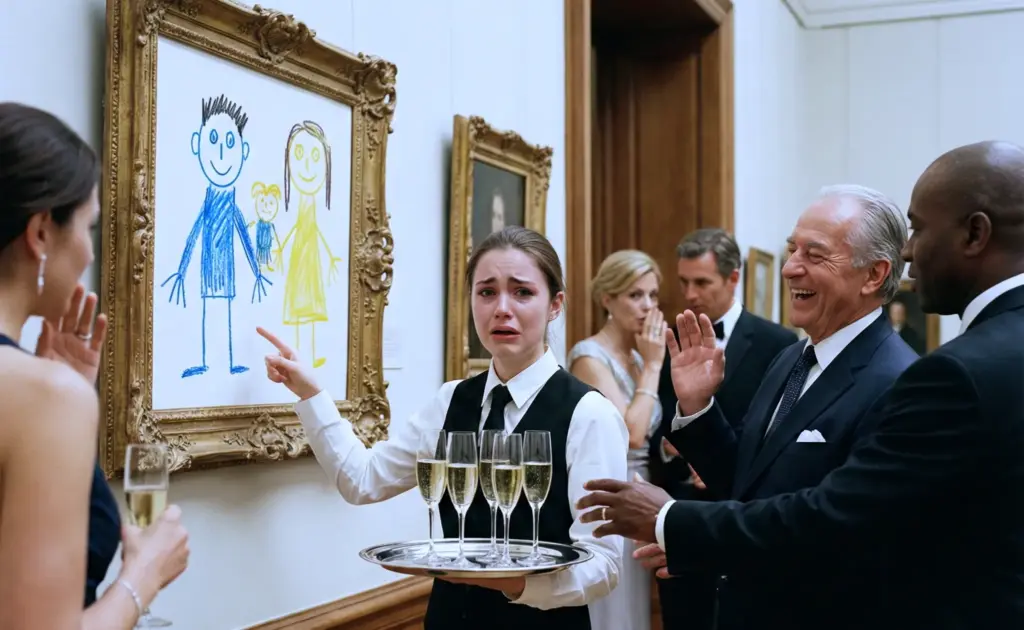
I work for elite events catering, and tonight I’m working on the opening of a new exhibition at the Duncan Gallery. It is a high-end gallery with expensive art and expensive people. It was supposed to be just another Thursday for me, except tonight I saw something that changed everything. I saw a painting I made when I was six years old being sold for $150,000. Have you ever seen something from your past you thought was lost forever? Share your thoughts in the comments.
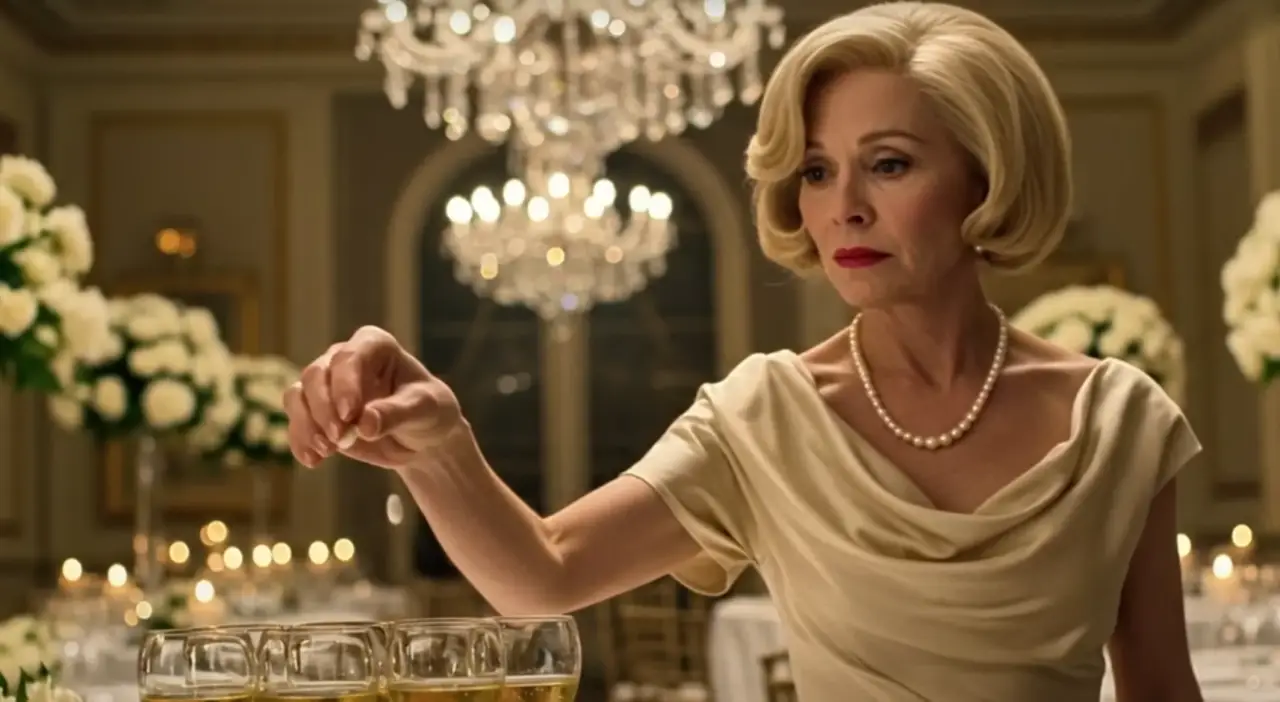
The gallery was packed for the opening night of the «Voices Unheard: Outsider Art Collection.» I’d read about it in the event brief; it featured art by unknown creators, children, homeless people, and self-taught artists. It was the kind of art rich people buy to feel cultured and compassionate. I adjusted my vest, picked up a tray of champagne flutes, and started circulating. Smile, offer drinks, move on.
A woman in a designer dress took a glass without looking at me. «This collection is extraordinary, Victor.»
Victor Duncan, the gallery owner, was sixty-something with silver hair and an expensive suit. He looked like money. «Thank you, Margo. I’ve been curating this collection for decades. Each piece tells a story. And the provenance? Verified. Each piece comes with documentation of origin: orphanages, group homes, street markets. I’ve spent years tracking down these works.»
Lies. I didn’t know that yet, but I would. I moved through the crowd, offering wine and picking up empty glasses, until I turned a corner and saw it. The painting.
I stopped and nearly dropped my tray. It was small, maybe twelve by sixteen inches, done in watercolor and crayon on paper. Framed in expensive-looking dark wood, the image was abstract with swirls of blue and yellow. There were two figures, crude and childlike: one tall, one small, holding hands or maybe just touching. It was hard to tell.
It was the kind of painting a six-year-old makes, but in the bottom right corner, barely visible, were three letters in green crayon: A-N-G. Angela, my mother’s name. And in the top left corner, a date. Faded, but there: 5-12-2003. May 12, 2003. My sixth birthday.
My vision blurred, and my hands started shaking. I made this. I made this painting for my mother. I remember the kitchen table and the watercolors she’d bought me from the dollar store. I remember the way she smiled when I showed her.
«It’s beautiful, baby. It’s us, right? You and me?»
«Yeah, Mama. Always together.»
I remember her hugging me and kissing my forehead. That was the day before they took me away. I stared at the painting and at the little placard next to it: Untitled, Mother and Child, Artist Unknown, c. 2003. Found at St. Catherine’s Children’s Home. $150,000.
My painting was being sold for $150,000, and I was serving champagne to the people admiring it. I needed to move because people were staring. I was standing still, blocking the view. I forced my feet to work, walked to the back hallway, found the staff bathroom, and locked myself inside. I sat on the closed toilet lid, put my head in my hands, and breathed.
That painting—I made that painting. I knew I did. I remembered every detail: the blue was the sky, the yellow was the sun, and the two figures were me and my mom. I’d written «Ang» because I couldn’t spell her whole name yet, and I’d written the date because she’d taught me how to write numbers. I was so proud of it.
And the next day, the social worker came. Mr. Duncan. I remember him now: thin, smiling too much. He said my mom wasn’t taking good care of me. She was; she loved me. She was just poor, alone, and working three jobs to keep us fed, but that wasn’t enough for him. He took me, put me in foster care, and he took the painting. I remember I was crying and holding the painting.
He said, «I’ll keep this safe for you, sweetheart. You’ll get it back.»
I never saw it again until tonight. I stood, washed my face, and looked in the mirror. Twenty-two years. I’d spent twenty-two years in the system, in seven different foster homes, and aged out at eighteen with nothing. And Victor Duncan had my painting and was selling it for $150,000.
I walked out of the bathroom straight to the painting. Victor was standing nearby talking to a couple, potential buyers probably. I walked up to him.
«Sir.»
He turned and looked at me. He didn’t recognize me. Why would he? I was just staff. «Yes?»
«This painting? I drew it? When I was six?»
He blinked, and the couple looked at me. «Excuse me?» Victor said.
«This painting. It’s mine. I made it. May 12th, 2003. It was my sixth birthday. I made it for my mother. Her name was Angela. That’s why I wrote ‘Ang’ in the corner.»
Victor’s face didn’t change, but his eyes did. Just a flicker of recognition? Fear? «That’s impossible,» he said smoothly. «This piece was donated anonymously from St. Catherine’s Children’s Home. The artist is unknown.»
«The artist is me, Erin Perry. And you took it from me. You were the social worker who took me from my mother. You said you’d keep the painting safe. You lied.»
The couple was staring now, and so were other guests nearby. Victor smiled patronizingly. «Miss? I think you’re confused. Perhaps you made a similar painting as a child, but this piece has been authenticated.»
«By who? You?»
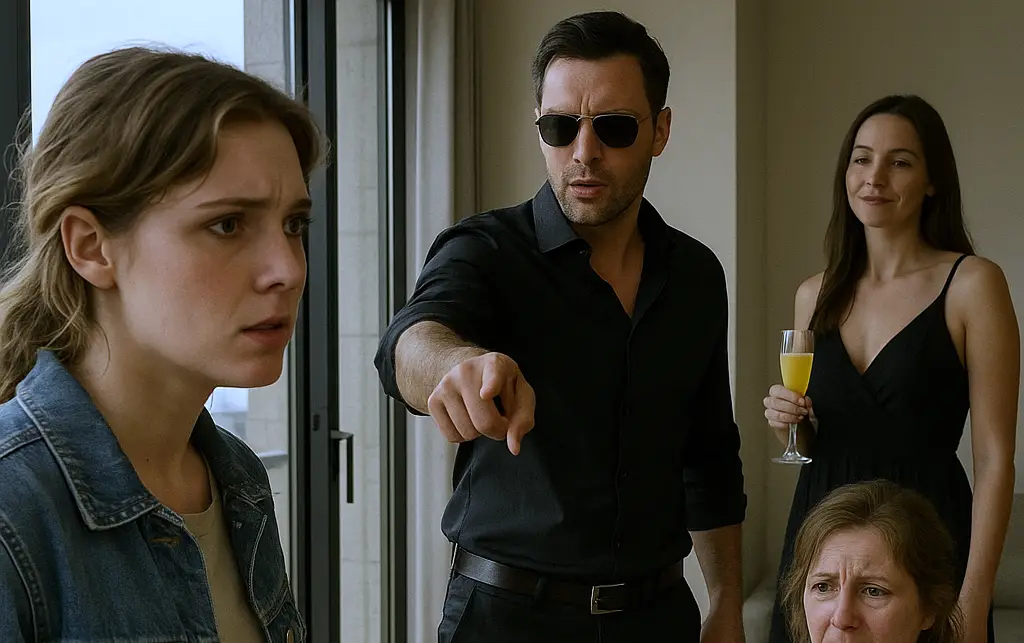
«By professionals. Now, if you’ll excuse me, you’re disrupting the event. I’ll need to ask you to leave.»
«I’m not leaving. That’s my painting.»
«Security!» A security guard appeared. He was large and intimidating. «Escort this woman out, please.»
«Wait.» The guard took my arm, firm but not rough. I looked at Victor. He was already turning away, dismissing me.
«I’ll prove it!» I said, loud enough for people to hear. «I’ll prove that painting is mine. And I’ll prove you stole it.»
He didn’t turn around. The guard walked me out, and I sat on the curb, still wearing my catering uniform. My manager, Tony, came out.
«Erin, what the hell happened?»
«I saw a painting I made when I was a kid being sold for $150,000. I confronted the owner. He had me kicked out.»
Tony sighed. «You can’t do that. You can’t confront clients.»
«He stole from me.»
«Can you prove it?»
«Not yet. But I will.»
«Well, until you do, you’re off the schedule. I can’t have you causing scenes. Tony… I’m sorry, Erin. Call me when you sort this out.»
He left. I sat there alone, jobless, and furious. But also determined. Victor Duncan stole from me, from a six-year-old, and he’d been selling stolen art from vulnerable kids for decades, probably. I was going to prove it, and I was going to destroy him.
The next morning, I went to the library and used the public computers. I searched for «Victor Duncan» plus «social worker.» I found him: licensed in New York, 1985-2005. He worked for the state Child Protective Services. Then, in 2005, he left social work and opened Duncan Gallery, specializing in outsider art. Convenient.
I kept digging and found articles: Duncan Gallery features rare collection of children’s art. Victor Duncan’s eye for undiscovered talent. How one man preserves the voices of forgotten artists. Forgotten artists? Right. Stolen artists.
I needed proof, but how? I didn’t have the original painting; he did. I didn’t have photos of me with it because we didn’t have a camera back then; we were too poor. But I had something. I had my memory, and I had details. The painting had more than just «Ang» and the date.
On the back, I’d written something in crayon. I remember. I’d written, «For Mama. Love Erin.» If that painting was really mine, that writing would still be there on the back, and Victor wouldn’t even remember it. I just needed to see it to prove it. But how?
Two days later, I called the Duncan Gallery and asked to speak to Victor.
«Receptionist? May I ask what this is regarding?»
«I’m interested in purchasing a piece from the outsider art collection. The Mother and Child Watercolor.»
«Oh, wonderful. Let me connect you to Mr. Duncan.» A pause, then: «This is Victor Duncan.»
«Mr. Duncan, my name is Claire. I’m interested in the watercolor piece, the one with the Mother and Child. I’d like to examine it before making an offer.»
«Of course. Are you a collector?»
«My family is. I’m new to this, but I have a budget of $200,000 for the right piece.»
His tone warmed. «Excellent. When would you like to come in? Tomorrow? Around 2 p.m.?»
«Perfect. I’ll have the piece ready for viewing.»
I hung up. Tomorrow I’d see the back of that painting, and I’d prove it was mine.
The next day, I stood outside Duncan Gallery. I’d borrowed clothes from my roommate: a nice blazer, dress pants, and big eccentric glasses. I looked like someone who could spend $200,000 on art. I took a breath and walked in.
The receptionist smiled. «Can I help you?»
«I have an appointment with Mr. Duncan. 2 p.m. Claire Pine.» I made up the last name on the spot.
«Of course. One moment.» She called back.
Moments later, Victor appeared. He looked at me, and for a second, I thought he’d recognize me, but he just smiled. Professional. Welcoming. «Ms. Pine. Pleasure to meet you. Thank you for seeing me.»
«Of course. You’re interested in the Mother and Child piece?»
«Yes. I’d like to examine it closely, if that’s all right.»
«Absolutely. Follow me.»
He led me to a private viewing room. It was small and well-lit, with a table in the center. The painting sat on an easel under soft lighting. My painting. My chest tightened, but I kept my face neutral.
«Beautiful, isn’t it?» Victor said. «There’s something haunting about it. The simplicity. The emotion. It’s remarkable.»
«May I?» I gestured toward the painting.
«Please.»
I approached and studied it up close: the blue and yellow swirls, the two crude figures, the letters «Ang» in the corner, and the date. «The provenance says it was found at St. Catherine’s?» I asked.
«Yes. 2003. A staff member was cleaning out old storage and found several pieces by children. This one stood out.»
Liar.
«May I see the back?»
He hesitated, just a flicker. «The back?»
«Yes. I like to see the full piece. Sometimes there are marks, signatures, things that add to the story.»
«Of course.» He carefully lifted the painting off the easel and turned it around. The back of the frame was sealed with brown paper backing. «It’s been professionally framed,» he said, «to preserve it. The backing protects the original paper.»
«I understand. But I’d like to see beneath it before I make an offer.»
«That would require removing the backing, which could damage…»
«I’ll take that risk. I’m serious about purchasing, but I need to see everything first.»
He studied me, calculating. Finally, he said, «Very well. Let me get my tools.»