General Hit the “Weak Girl” — Five Seconds Later He Was Crying for Help
It tipped. Juice spilled across the metal surface, rolling unevenly toward the floor. The sound was subtle, but everyone heard it.
It happened again. The memory of the first spill and of what followed rushed back like a cold gust across the room. General Halverson stood near the entrance, still burning from the revelation that had stripped his authority bare.
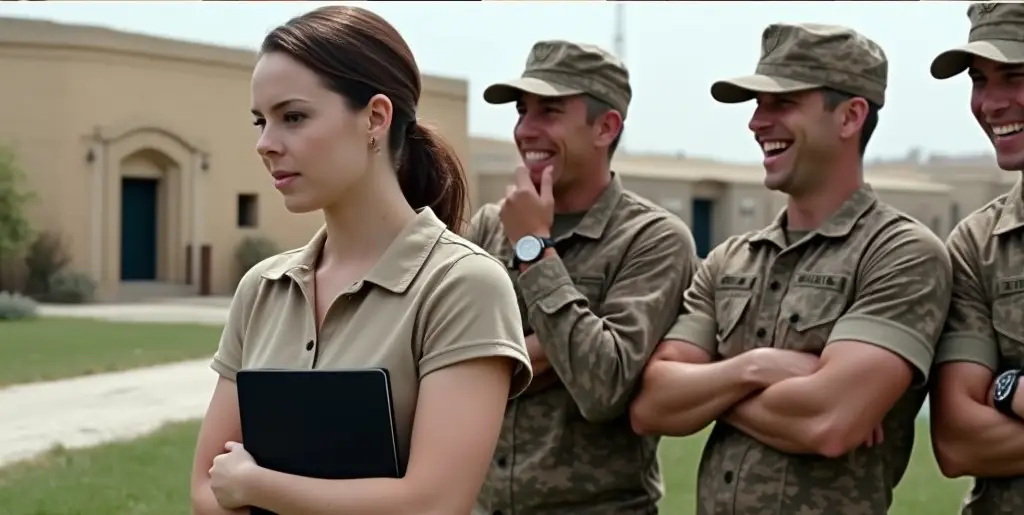
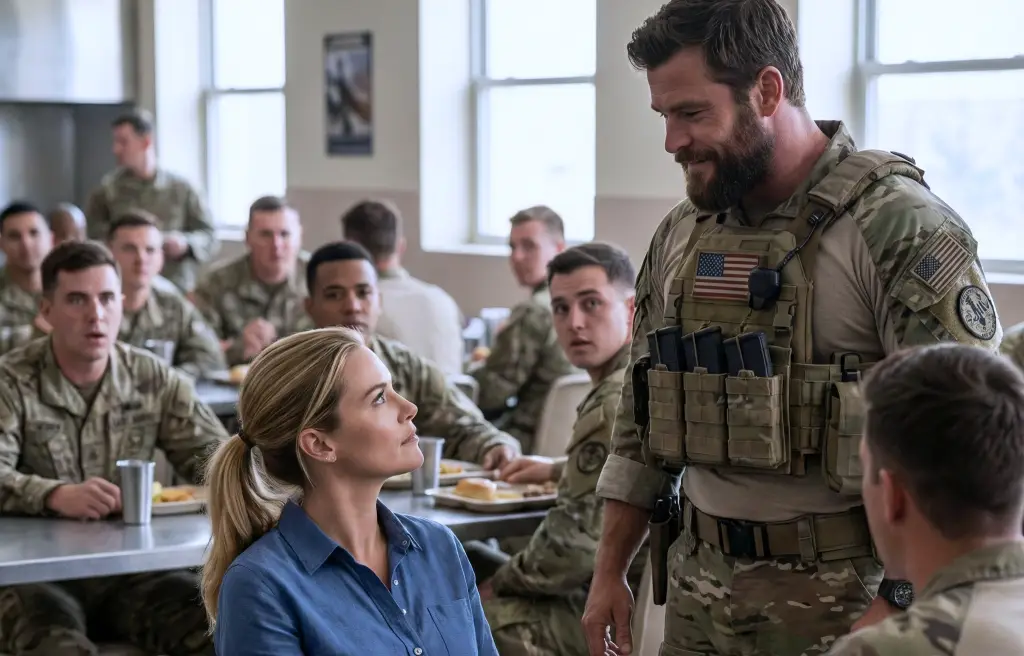
He walked toward her without hesitation. His boots struck so sharply that soldiers moved out of his path before he reached them. If he could not undo her past, he would reassert control here, in front of everyone.
He stopped at her table. «You will stand,» he ordered.
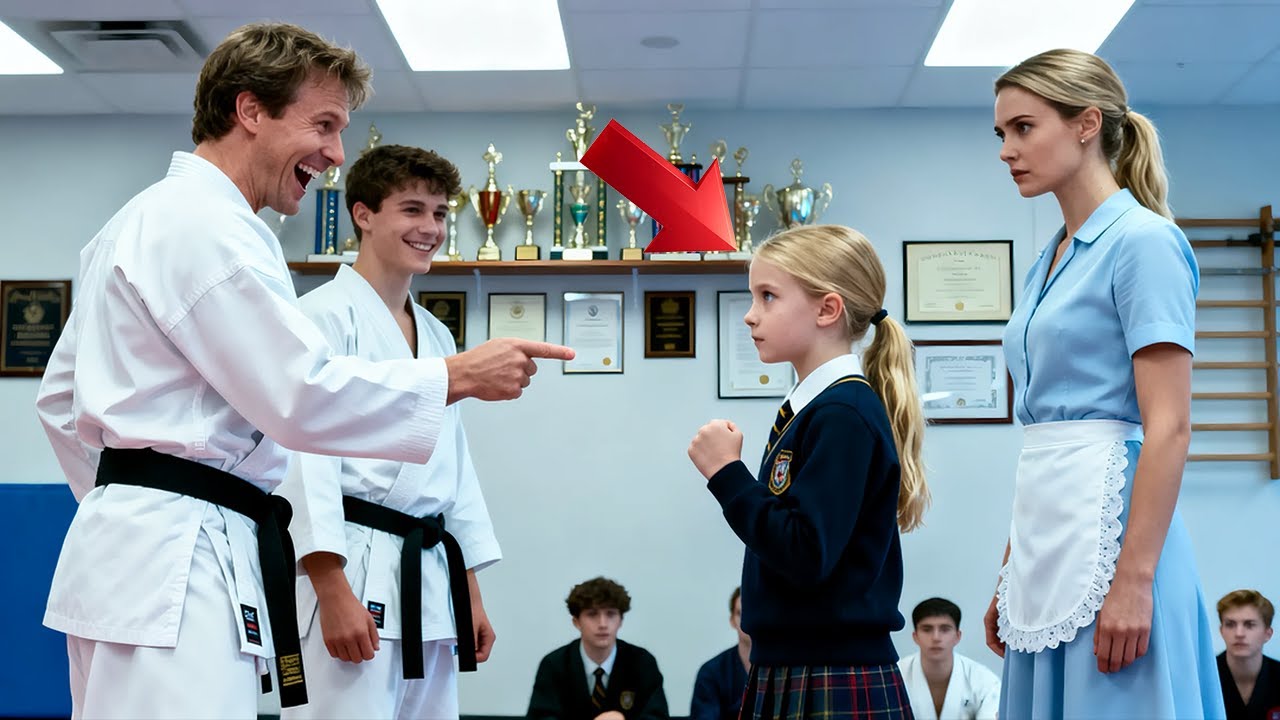
Avery rose without conflict, as if nothing inside her had changed. Her posture neutral, breathing steady, no aggression, no fear. He reached for her wrist—strong grip, intentional pressure, the act less about restraint and more about reclaiming dominance.
His hand tightened, ready to yank, ready to shove her toward humiliation again. Five seconds began.
One. Avery’s feet repositioned, not wide, not dramatic, just angled. Her stance shifted from passive formation stance to vector balance, her weight anchored through the ball of her right foot.
Two. Her free hand rose, not striking, but redirecting. She inverted his wrist with minimal effort, applying torque that folded his elbow inward. His body weight leaned forward unintentionally.
Three. Her hip rotated, not forcefully, but efficiently. She didn’t pull him. She allowed his own forward lean to accelerate, a simple leverage exchange, honed through repetition no one here had witnessed.
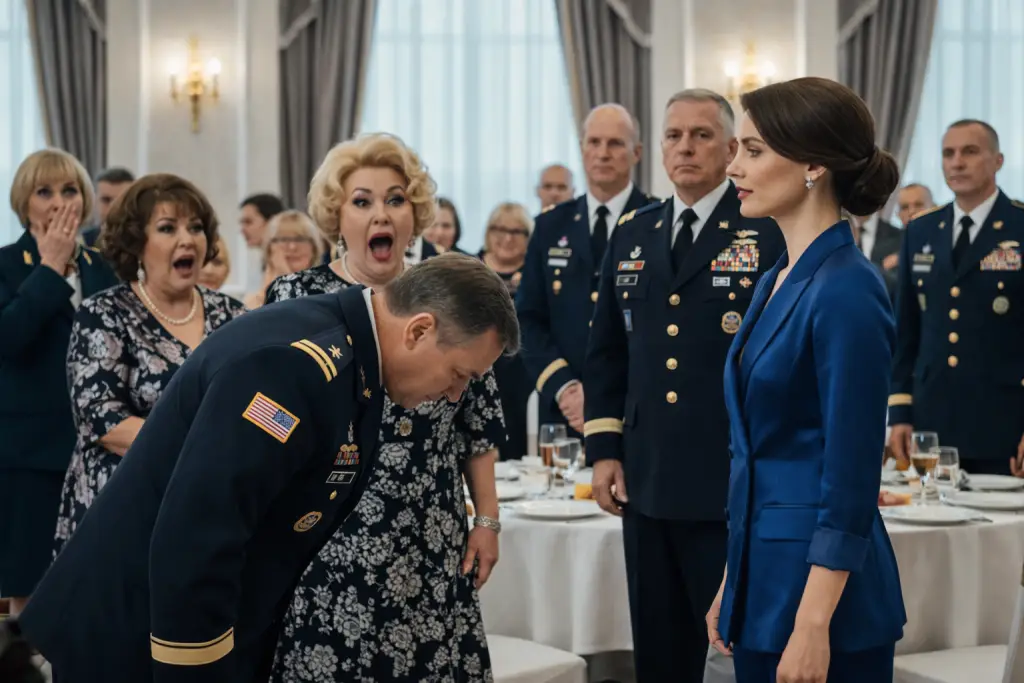
Four. His shoulder collapsed, his balance broke, and the room saw a general fall faster than anyone could process. He hit the tile floor hard, uniform folding, breath bursting from him in a painful choke.
Five. He tapped. Not in anger, not in pride, but in panic. His palm smacked the floor twice, then again.
His face flushed, jaw clenched, air cut off beneath the pressure she controlled with precision. Not enough to injure, just enough to end resistance. Captain McKinley stepped forward, not fast, not dramatic, just enough to reclaim chain-of-command clarity.
«Release him, Maddox.»
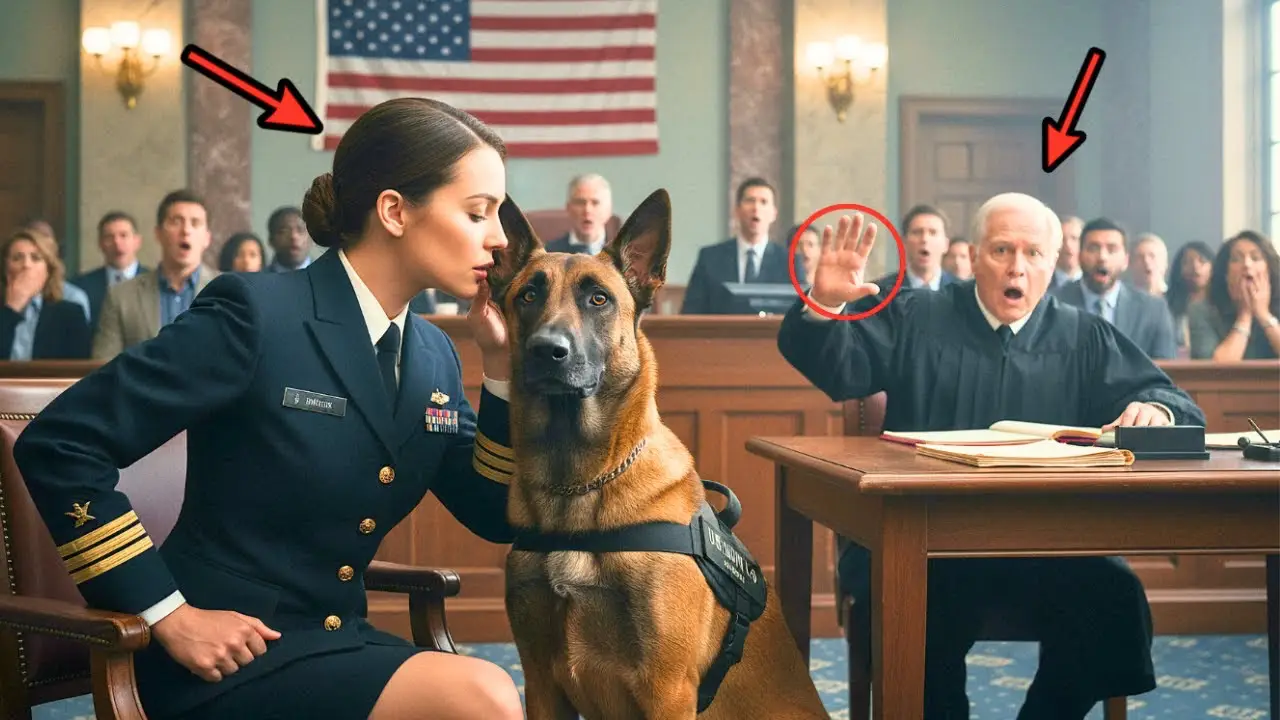
Avery disengaged instantly. She stepped back, posture neutral, arms at her sides, exact regulation stance. She didn’t gloat, didn’t glance, didn’t wait for validation.
Halverson tried to speak, but only a weak rasp came out first. He rolled to his elbow, breath trembling, unable to stand without assistance. A pair of soldiers moved forward, but then stopped, realizing they didn’t know whether touching him would make the moment worse.
Silence spread across the hall. Nobody laughed. Nobody whispered insults. Nobody exchanged smirks.
Every soldier at every table felt the same truth settle over them. This wasn’t dominance. This was restraint.
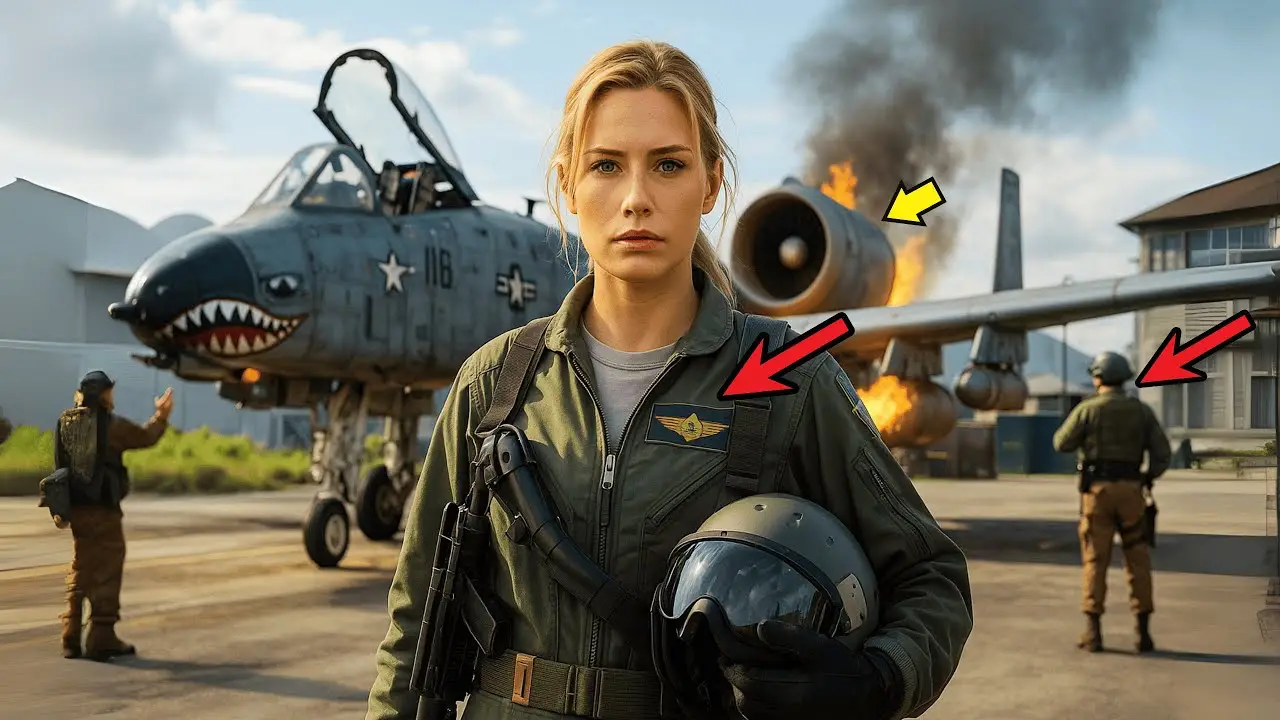
Avery could have shattered bone, dislocated a shoulder, or crushed a larynx, but she didn’t. Her control under pressure revealed experience, but her restraint revealed character. Private Ellison, the same one she saved near the scaffolding, slowly came to attention.
His right hand rose to brow level. He saluted her. Not because of rank.
Not because of protocol. But because of fact. Another soldier followed.
Then another. No command issued it. No officer endorsed it.
It was respect that emerged on its own. Halverson remained on the floor, unable to rise, watching the gesture that was no longer his to claim. The room had changed.
One moment of pure, undeniable truth had rearranged the balance of power, not through victory, but through humility. Avery returned to her seat as if nothing happened. She didn’t look at any of them.
Respect was not what she wanted. It was simply what she no longer needed to hide. Avery did not stay long after the incident.
She ate the remainder of her meal in silence, cleared her tray, and walked outside while the mess hall was still frozen in disbelief. She did not linger in the hallways or wait to see who would approach her. She did not acknowledge the salutes that quietly rose from those still stunned by what they had witnessed.
She simply returned to her barracks locker, retrieved a sealed envelope that had been waiting for authorization, and signed the necessary line. Voluntary reassignment. No protests were raised.
Nobody tried to keep her. A quiet escort arrived the next morning: a nondescript government vehicle parked outside the administration offices, no unit markings, no patches, no emblems. She stepped inside without ceremony, no bags, no speeches, no final formation to honor her departure.
She moved back toward a world unseen, where credentials weren’t spoken, names weren’t shared, and missions didn’t form on public rosters. If her skill was still useful to the country, she would serve silently. If not, she would still disappear with grace.
Fort Redwood changed without announcing that it had changed. Command issued updates to policy. Disciplinary methods would no longer rely on public humiliation.
Personnel evaluations would include screening for concealed advanced credentials. Peer review structures shifted from punishment first to capability recognition. No one linked these reforms directly to Avery.
No official memo carried her name, yet everyone knew why they existed. Inside classrooms, new soldiers were told a version of the story that always began the same way. Once there was a private everyone ignored.
Instructors recited events with measured respect: how she moved, how she didn’t react, how she never asked to be seen. None embellished the scene because no embellishment was needed. The facts alone held weight.
She didn’t attack. She didn’t retaliate. She neutralized and then released.
Those who witnessed it firsthand told the story softer each time, not as legend, but as caution. How the weakest soldier dropped the general without anger. And underneath that retelling lived a truth many had never confronted.
Strength that needs to prove itself is not strength at all. Real strength is not loud. It is not cruel.
It is not desperate to be recognized. It waits. It watches.
It carries itself like something earned, not borrowed, and when asked to stand without threat, without pride, it simply stands. Avery disappeared back into the places where no ranks are worn and no commendations are displayed, but the silence she left behind never faded. If you saw someone today who looked quiet, overlooked, unsure, what would you assume?
Salute to all who served, and those still carrying scars we never see!