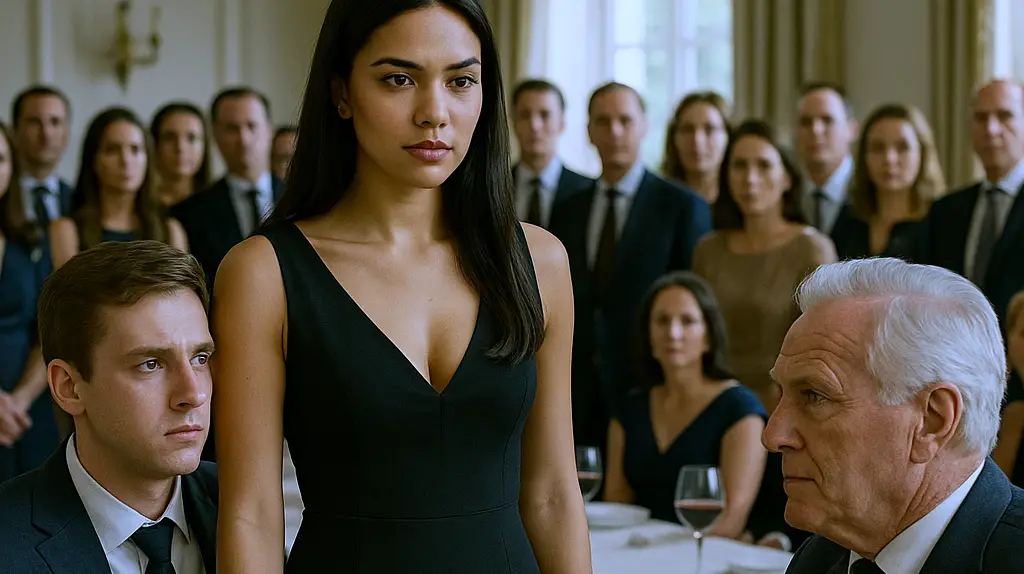
I left the country after our divorce, ready to close that chapter forever. But on the day of his extravagant wedding, everything collapsed — and suddenly his bride was calling me, her voice trembling as she begged me to listen
«I should go,» I said. «I have work tomorrow and it’s getting late here.»
«Can I call you again?» he asked. «Not about reconciling. To stay in your life somehow.»
I thought about that. Months ago I would have said yes immediately, grateful for any connection to him. But I’d learned something important here. Closure didn’t come from maintaining contact with people who’d hurt you. It came from building a life so full you didn’t need them anymore.
«I don’t think that’s a good idea,» I said. «Not now. Maybe someday we can be friendly acquaintances who check in occasionally. But right now, you need to process losing Victoria and this whole disaster without using me as your emotional support. And I need to keep building my life without being pulled back into yours.»
«That’s really it then. This is goodbye.»
«This is goodbye,» I agreed. «Take care of yourself, Silas. I mean that.»
After we hung up, I sat on my balcony for a long time watching Barcelona settle into evening. I felt lighter somehow, like I’d been carrying something heavy without realizing it and had finally set it down.
My laptop was still open on my dining table. I saw an email notification from Robert, sent about an hour ago. The subject line: Thank you. I opened it and read his message about Silas calling him earlier, asking for support about reconciling with me. About how Robert had told him that trying to come back was selfish, that I’d left to run toward myself, not away from him.
«You spent six months reclaiming your confidence and sense of self,» Robert had written. «Silas wanting you back would just start the whole cycle again. I told him that even though he’s my brother and I want him to be happy, sometimes the kindest thing you can do for someone is tell them the truth they don’t want to hear.»
I typed a response: «Thank you for that. Silas just called me, asked to visit Barcelona to try again. I said no.»
Robert replied almost immediately: «How do you feel?»
I thought about that question. Really thought about it. «Relieved,» I typed. «And guilty about feeling relieved. And then annoyed at myself for feeling guilty.»
«That’s normal. You spent nine years putting his feelings first. Give yourself permission to feel relieved without guilt.» Then he added: «My divorce will be final in about 60 days. I’m thinking of taking a trip after. Maybe Barcelona. Would that be weird?»
I smiled at my phone. «Not weird. Let me know when. Elena and I can show you around.»
The next morning I had my monthly video call with Christina. We reviewed current projects. The Amsterdam startup had loved my designs, wanted to move forward with full implementation. A new client in Copenhagen needed branding work. Everything was progressing smoothly.
Then at the end of the call, Christina said something unexpected. «The leadership team has been very impressed with your work these past few months. We’d like to offer you a permanent position instead of the contract arrangement. Better benefits, a small team to lead more interesting projects. You’d be our Mediterranean Region Creative Director.»
Mediterranean Region Creative Director. A title that would have seemed insignificant to Silas. Not impressive enough, not prestigious enough. But to me it was perfect.
«I accept,» I said. «I want to stay.»
After the call ended, I sat at my dining table looking at the finished blue door painting. Six months ago I’d arrived in Barcelona with four suitcases and a broken sense of self. Now I had a permanent job I loved. A gallery show in January. Friends I’d chosen. A life I’d built entirely for myself.
My phone buzzed with a text from Elena. «Coffee this afternoon? Want to discuss gallery plans?»
I replied, «Yes. Also, I officially accepted the permanent position at Global Reach. I’m staying.»
Her response was immediate. «I knew you would. Barcelona chose you just as much as you chose Barcelona.»
I looked around my small apartment. Not impressive by Seattle standards. Not the kind of place Silas would have considered appropriate for a senior associate’s wife. But it was mine. The paintings on the walls. The art supplies on the table. The view from the balcony. The neighborhood I’d learned to navigate. The language I was slowly learning. The life I was deliberately creating.
Silas had asked what I wanted and I’d told him. But sitting there in my Barcelona apartment with permanent employment and a gallery show and friends waiting to have coffee, I realized I’d undersold it. What I wanted wasn’t small. It was everything. It was freedom to exist without apology. To create without judgment. To build a life according to my own definition of success rather than someone else’s disappointment.
And I had it. Finally, completely, wholly, I had it.
The invitation from Carla’s gallery arrived in my email three months after I’d told Silas no.
Group Show: Thresholds and Transitions. Opening Reception: April 15th, 7pm. Featured Artists: Thea Montgomery.
Twelve watercolors of Barcelona doorways would hang on a gallery wall in Poblenou for anyone who wanted to see them. I stared at the invitation for a long time, then forwarded it to my sister Maya with a simple message: «My first real art show. Wish you could be here.»
Her response came an hour later, middle of the night in Portland. «We’re coming. All of us. Kids, Marcus, the whole family. You’re not doing this alone.»
I cried reading that text. Not sad tears. The opposite. The kind of crying that comes from realizing you’re not invisible anymore, that people see you and choose to show up.
April arrived with that particular Barcelona light I’d learned to recognize. Golden without being harsh, warm without being brutal. The kind of light that made everything look softer, more forgiving.
I spent the week before the opening finishing my last two paintings, framing all twelve pieces with Elena’s help.
«Try not to think too much about people actually looking at my work and having opinions about it,» I muttered as we hung the frames.
«They’re going to love them,» Elena said. «They’re good Thea. Really good. You see the city the way people who belong here see it.»
«What if no one comes except you and your friends?»
«Then you’ll have a small intimate show with people who care about you. That’s not failure, that’s community.»
The gallery opening was Saturday evening. Maya and her family had arrived that morning, jet-lagged but determined. My niece Emma was nine now, old enough to have opinions about art. My nephew Lucas was six and mostly interested in whether Barcelona had good playgrounds.
I met them for lunch at a café in El Born, watching Maya look around with the expression of someone trying to understand how her sister had ended up here in this life so far from everything familiar.
«It’s beautiful,» she said finally. «Not just the city. You. You look different. Lighter.»
«I feel different.»
«Mom wanted me to tell you she’s sorry she couldn’t come. Dad’s surgery is next week and she didn’t want to leave him.»
«I know. She sent me a video message. It made me cry.»
Maya reached across the table and squeezed my hand. «I’m proud of you. For leaving, for starting over, for doing this.» She gestured vaguely at Barcelona around us. «For choosing yourself.»
That evening standing outside Carla’s gallery in Poblenou, I felt my stomach flip with nerves. Through the window I could see my paintings already hung, soft lighting making the colors glow. People were starting to arrive. Elena’s architect friends, other artists from the community, some of my Global Reach colleagues who’d wanted to support me.
Robert was there too. He’d flown in from Vancouver three days earlier, staying in a small hotel in Gracia, spending his time walking the city and meeting Elena and me for coffee. His divorce had been finalized two months ago. He looked different than the last time I’d seen him on a video call. More settled, less haunted.
«Ready?» Maya asked, linking her arm through mine.
«No. But let’s go anyway.»
The opening was small but warm. Maybe thirty people throughout the evening, filtering in and out, wine glasses in hand, studying my paintings of Barcelona doorways. I watched people look at my work. Really look, taking time with each piece, and felt something expand in my chest.
Robert stood in front of the painting of the blue door in Gracia for a long time before calling me over. «This is my hotel,» he said. «I walked past this door every day this week. But I never really saw it until I saw your painting. You notice things other people miss.»
«That’s what six months of trying to disappear will do,» I said. «You start paying attention to doorways, wondering what’s on the other side.»
«And now you’re on the other side,» Robert said. «You walked through.»
Maya approached with Emma, who’d been studying each painting with serious concentration. «Aunt Thea, why did you only paint doors? Why not whole buildings?»
«Because doors are transitions,» I said. «They’re the moment between one place and another. Between who you were and who you’re becoming.»
Emma nodded like this made perfect sense. «I like the blue one best. It looks happy.»
My phone buzzed in my pocket. I almost ignored it but something made me check. A text from a number I’d deleted months ago but still recognized.
«Jenna told me about your gallery show. Congratulations. I mean that sincerely. I hope you’re happy Thea. You deserve to be. — Silas»
Texting me for the first time since our phone call three months ago. I stepped outside the gallery into the cool April evening and typed back: «Thank you. I hope you’re finding your way too.»
His response came quickly. «I’m trying. Started therapy finally. Reconnected with Robert. We had dinner last week, first time in years we actually talked. Realized how much Victoria had poisoned even before she got between us. I won’t bother you again. Just wanted you to know I’m genuinely glad you’re doing well.»
I showed the exchange to Robert when I went back inside. He read it and smiled slightly. «He’s getting there. Still has work to do but he’s trying.»
«Are you okay?» I asked. «With him texting me?»
«I’m fine. Silas is my brother. I want him to heal even if he was complicit in his own manipulation. People are complicated. They can be both victim and participant simultaneously.»
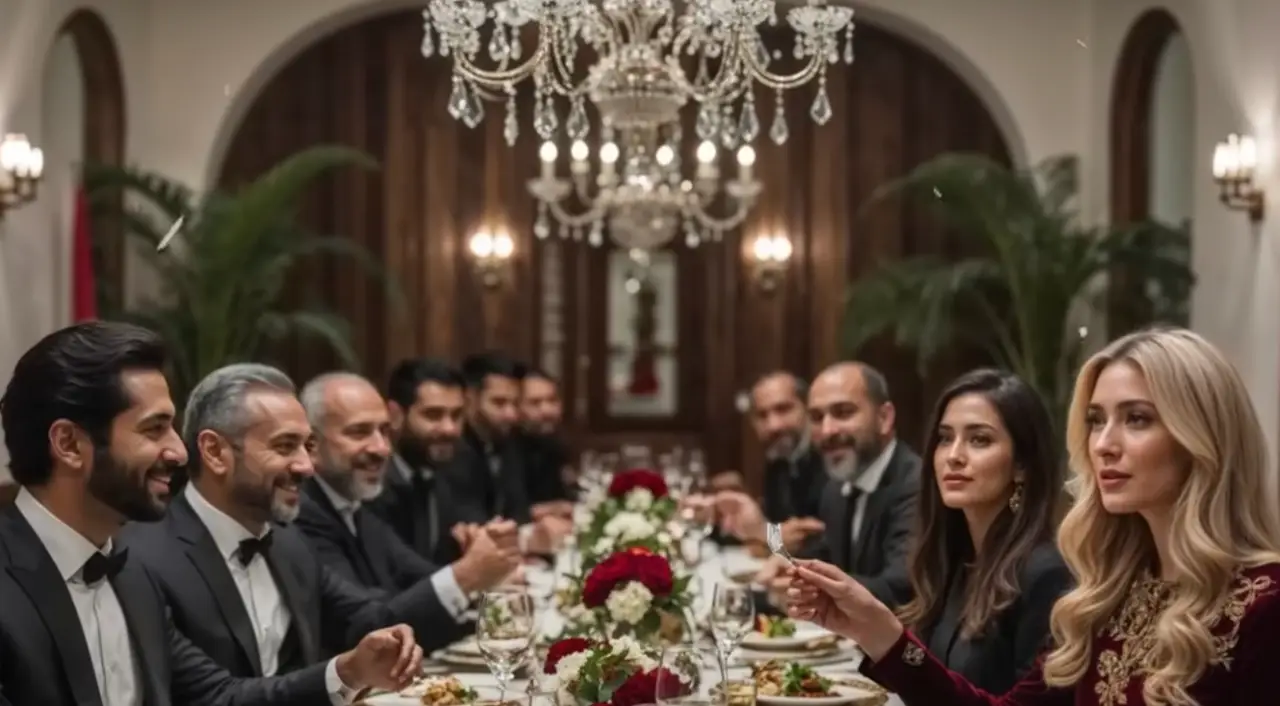
After the opening officially ended, our group walked to a nearby restaurant for dinner. We crowded around a long outdoor table. Elena and her friends, Robert, Maya and her family, my Global Reach colleagues, the gallery owner Carla who’d taken a chance on an unknown artist. The conversation flowed in multiple languages. Everyone talking and laughing, wine being poured and shared.
Elena stood up halfway through dinner, wine glass raised. «I want to make a toast,» she announced. «To Thea, whose paintings we celebrated tonight. But more importantly, to all of us who have survived people who tried to make us smaller. Who convinced us we were the problem when really they were just threatened by who we might become.» She looked at me then at Robert then at one of her architect friends who’d divorced last year. «The best revenge is not destruction. Is not watching them suffer. The best revenge is building something so beautiful that you forget they exist. To beautiful lives built from broken pieces.»
«Salud!» Everyone chorused, glasses clinking.
I looked around the table at these people who’d chosen to be here. Who’d shown up for my small gallery opening in a neighborhood most tourists never saw. Who’d made room in their lives for me when I’d arrived in Barcelona with nothing but four suitcases and a determination to figure out who I was.
Maya leaned over and whispered. «You did it. You really did it.»
«Did what?»
«Built a whole life. A real one. Better than what you had before.»
I thought about that. My tiny apartment in Gracia that I could barely afford but loved fiercely. My permanent position at Global Reach leading a small team on Mediterranean projects. My paintings hanging in a gallery. My friendships with Elena and her circle. My terrible but improving Spanish. My Saturday morning routine at the market. My favorite cafe where the barista knew my order.
«Yeah,» I said. «I think I did.»
The next morning I woke early, before Maya and her family, and walked to my usual cafe in Plaça de la Vila. The same cafe where I’d been sitting when Silas’s call had shattered my peace months ago, when the wedding disaster had pulled me briefly back into Seattle’s drama.
I ordered café con leche and sat at my usual outdoor table with my sketchbook. My phone buzzed with messages. Maya asking if I wanted to meet for breakfast. Elena checking about lunch plans. Robert requesting coffee before his afternoon flight back to Vancouver. Christina forwarding a new project from a sustainable architecture firm in Lisbon.
Each message represented a thread of the life I’d woven here. Work I’d chosen. Friends I’d made. Family who showed up. A community I’d built from nothing in a city that had welcomed me when I had nowhere else to go.
I thought about Victoria, whose career had imploded and whose name had become a cautionary tale in Seattle’s business community. About Silas, who was slowly rebuilding himself through therapy and reconnection with his brother. About Robert, who’d survived Victoria’s manipulation and come through still capable of kindness and hope.
And I realized something fundamental about revenge.
Real revenge, the kind that actually mattered, wasn’t about their suffering. It wasn’t about Victoria losing her career or Silas experiencing public humiliation or even about everyone finally seeing what Victoria had been capable of.
Revenge was this. Sitting in a Barcelona plaza on a Sunday morning, coffee warm between my hands, sketchbook open to blank pages full of possibility, surrounded by a life I’d built entirely for myself.
Revenge was remembering that months ago I’d felt broken and worthless, and now feeling whole while knowing I’d never been the problem at all. Revenge was not needing to check Silas’s social media or track Victoria’s consequences or require updates on how their lives were unraveling. Revenge was the complete and total indifference that comes from being too busy living well to measure anyone else’s suffering.
I opened my sketchbook and started drawing the scene in front of me. The old men playing dominoes at the next table, the mother sharing a croissant with her toddler, the morning light hitting the church across the plaza, the flower seller setting up his stand, the city waking up around me.
Not because anyone had commissioned it. Not because it would hang in a gallery or sell for money. Just because I wanted to. Because I could. Because this was my life now and I was finally, completely, wholly present in it.