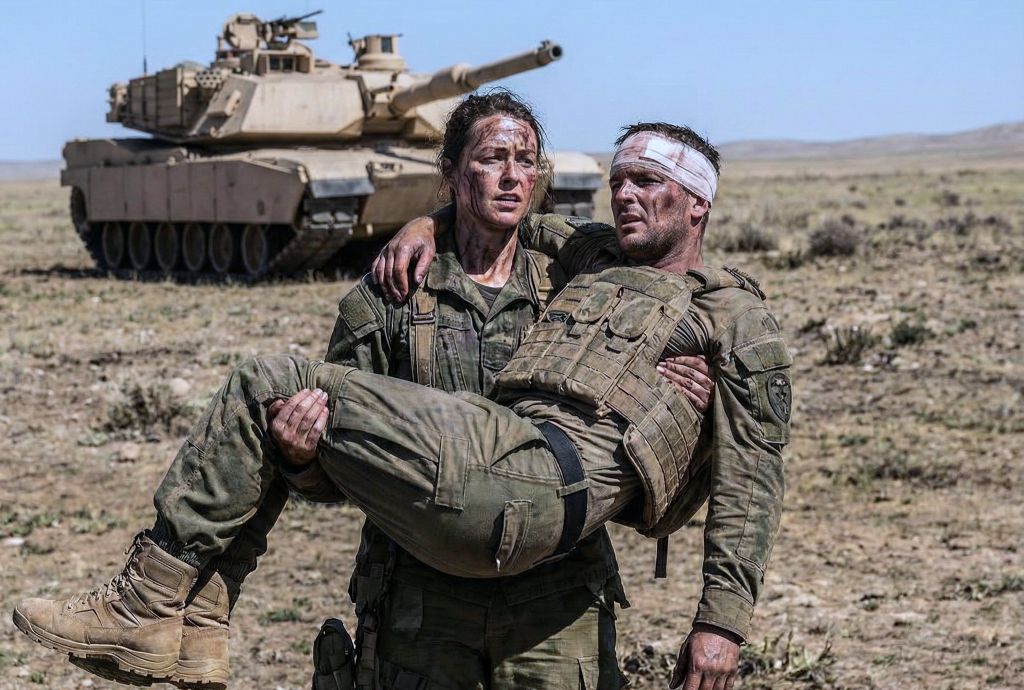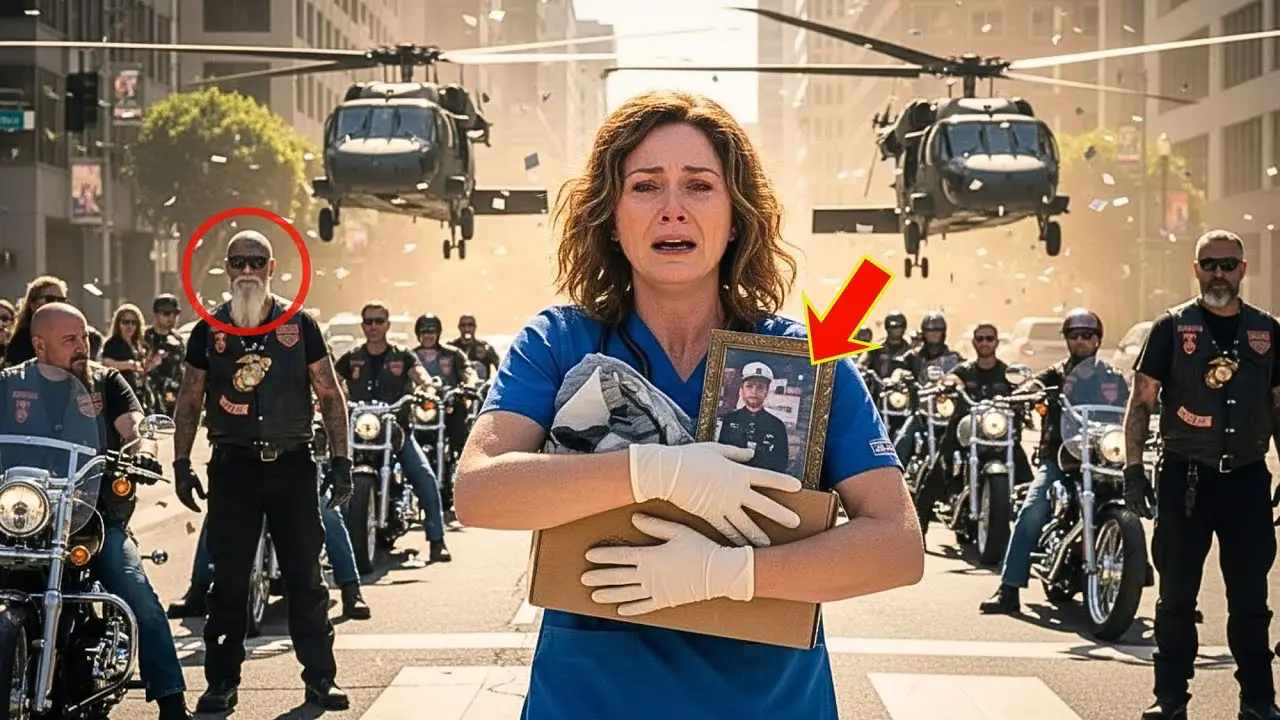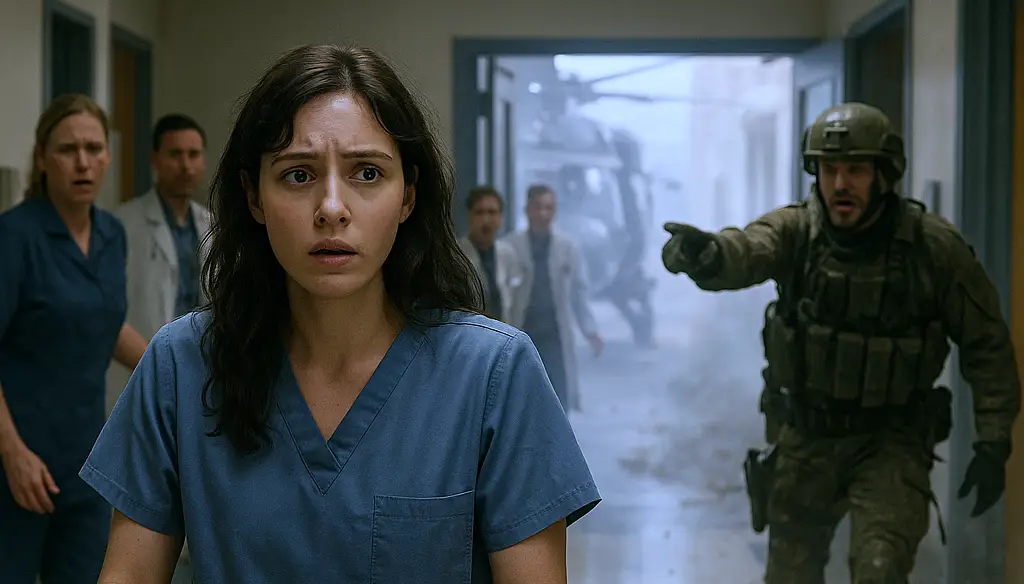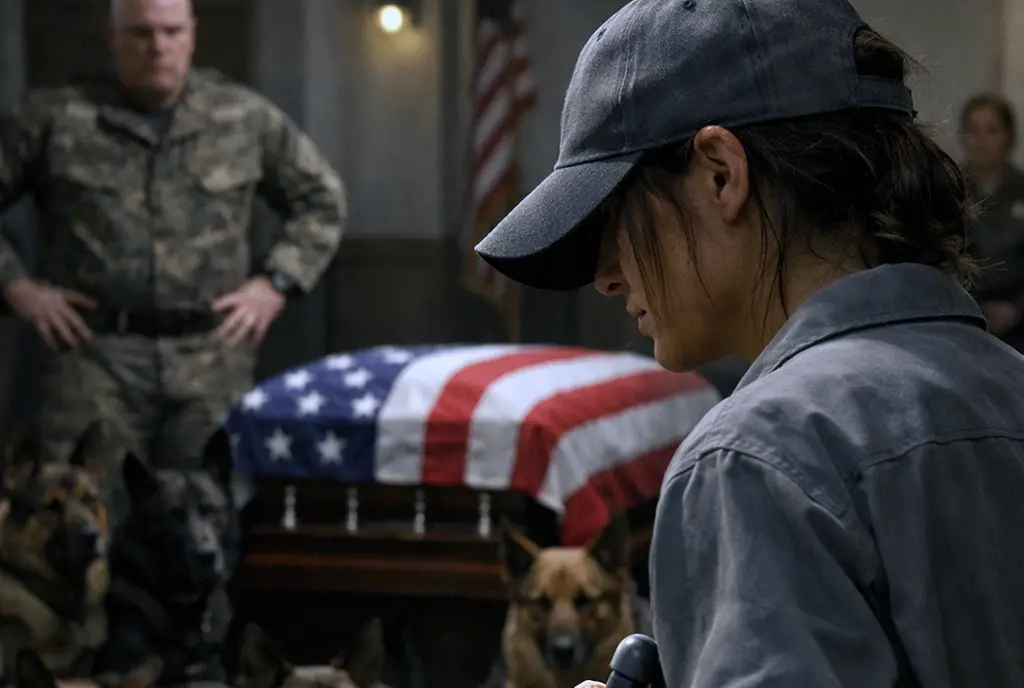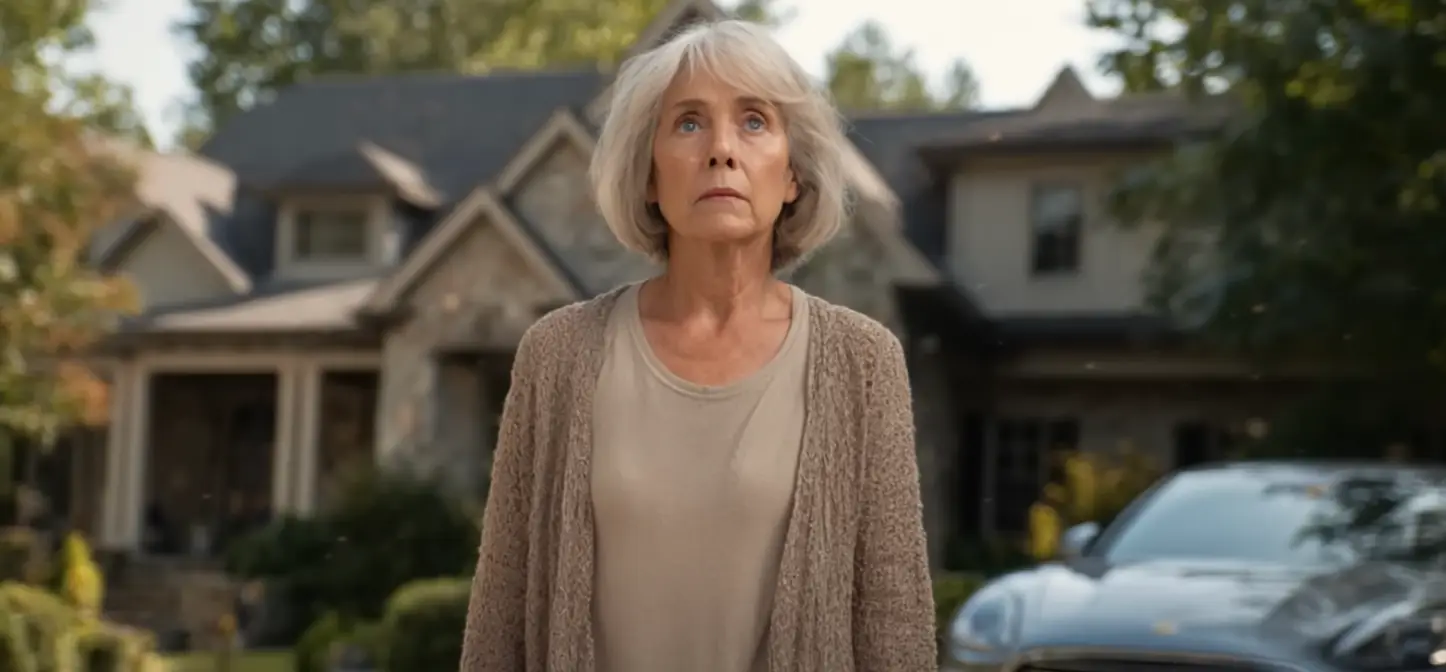
They fired her on her last shift. Minutes later, two helicopters landed outside — and the crews rushed toward her with a message that changed everything: “We’ve been looking for you!”
The operator—she could see his nametape now, Hayes—handed her a set of tactical communications gear.
«Colonel Hayes,» he said, apparently reading her confusion. «Your old commander. He specifically requested you.»
«Hayes is dead,» she said flatly. «Died in Kandahar three years ago. I read the report.»
«Reports can be wrong, ma’am.»
She processed this, adding it to the growing list of things that didn’t make sense. Hayes alive. Tsar toxin deployed against American operators. A black site emergency that required her specific expertise. The pieces were connecting in her mind, forming a picture she didn’t like.
«Where are we going?» she asked.
«Classified location designated Purgatory.»
«It’s under Catoctin Mountain,» she finished. «Zone Seven containment facility, biological research and containment.» She met his surprised look through his tactical mask. «I helped design the medical protocols six years ago, before I stopped existing.»
The tablet in her hands chimed with an incoming secure transmission. The screen filled with medical data that made her blood run cold. The toxin wasn’t just modified; it was evolving. Every 15 minutes, its molecular structure shifted just enough to defeat conventional antidotes. It was like someone had weaponized adaptation itself.
Knox’s tablet—military encrypted, quantum secured, the type special operations trust when networks fail completely—showed real-time biometric data from the affected operators. Heart rate spiking and dropping in waves. Neural activity that looked like electrical storms.
Blood chemistry that shouldn’t be possible in living humans. But they were alive. Somehow, impossibly, they were still alive.
«How many medical personnel are on site?» she asked.
«Four combat medics, two field surgeons. They’ve tried everything, and Hayes thinks I can do something they can’t?»
The operator shifted slightly, and she caught something in his body language that set off every warning instinct she had. «Colonel Hayes said you’re the only person who’s ever survived direct exposure to Tsar toxin.»
The words hit her like ice water. Survived exposure? But that was impossible. She’d never been exposed. She’d treated the victims, yes, but always with full protective equipment, always with proper containment protocols, unless…
Her hand moved unconsciously to her neck, to a scar hidden beneath the collar of her scrubs. A scar from a wound she’d gotten in that village, when a dying child had clawed at her in desperation, breaking through her protective suit with fingernails that had somehow pierced military-grade material. She’d thought it was just bad luck, equipment failure, a minor injury that had healed without incident.
But what if it hadn’t been? What if she’d been exposed, just enough to build immunity, just enough to change something fundamental in her biochemistry? What if that’s why they’d really discharged her? Not because she’d asked too many questions, but because she’d become something they couldn’t explain.
The helicopter banked hard, and through the window, she could see they were already over wilderness, the kind of dense forest that could hide anything. In the distance, a mountain loomed against the morning sky, its eastern face scarred by what looked like natural erosion but was actually carefully camouflaged ventilation systems for the facility beneath.
«Ma’am,» Hayes said, his voice cutting through her thoughts. «There’s something else you need to know. The exposure wasn’t accidental. Someone inside Purgatory deliberately released the toxin. We have a traitor in a facility that doesn’t officially exist, attacking operators who don’t officially exist, with a weapon that doesn’t officially exist.»
«And you want me to walk into that?»
«No, ma’am, we need you to walk into that. You’re the only one who can.»
She looked down at her hands, steady as always despite the turbulence, despite the revelation, despite everything. These hands had saved lives in places where life had no value. They had held pressure on wounds while rockets fell like rain. They had invented procedures that weren’t in any manual because the manual hadn’t been written for the kind of hell she’d survived.
Now, they were asking her to walk back into that hell. But this time, it wasn’t a foreign battlefield or a classified operation in some country that would deny she’d ever been there. This time, it was home. This time, it was American operators dying from American weapons in an American facility.
«There’s one more thing,» Hayes said, and something in his tone made her look up. «One of the affected operators, he asked for you specifically. Said he’s been protecting something for you. Something about a promise he made six years ago.»
«Who?»
«Garrett Knox.»
The name hit her like a physical blow. Knox, the man she’d loved before she’d learned what love cost in their world. The man who had held her after Kandahar, who’d promised to keep her secrets, who’d disappeared one night leaving only a note that said: Stay away, stay safe, forget.
Knox, who was supposed to be dead, killed in an operation that had never happened in a place that didn’t exist. Fighting enemies that nobody would acknowledge. She’d mourned him in silence, unable to even admit she’d known him, unable to claim the grief that had nearly broken her. Now he was alive, infected, asking for her.
The tablet in her hands updated with new data. «Forty-six operators are still alive.» One had died in the six minutes since they’d taken off. The clock was running, and every second she spent processing the past was a second stolen from their future.
«ETA?» she asked, her voice steady despite the storm in her chest.
«Twelve minutes.»
She nodded and turned back to the medical data, forcing herself to focus on what she could control. The toxin’s progression pattern. The symptom clusters. The way it seemed to target specific neural pathways with almost intelligent precision.
Her mind began building models, running scenarios, calculating dosages for treatments that didn’t exist yet but would have to by the time they landed. Behind her, Baltimore was disappearing into the morning haze. The hospital where she’d been fired seemed like something from another life.
A normal life, where people worried about protocols and paperwork instead of biological weapons and classified death. Ridley Vaughn was probably telling everyone how she’d always known there was something off about Waverly Thorne. Maddox was probably in his office, making phone calls to people who didn’t officially exist.
But here, 3,500 feet above the wilderness of Western Maryland, Waverly was becoming someone else. Someone she’d tried to bury. Someone the world needed even if it would never admit it. Valkyrie. The ghost surgeon. The woman who’d survived what nobody survived and saved who nobody could save.
The helicopter descended toward a landing zone that looked like natural forest until the trees parted to reveal reinforced concrete and hidden gun emplacements. As they touched down, she could see the entrance to Purgatory carved into the mountain itself. Massive blast doors that could withstand a direct nuclear strike.
Standing in front of those doors was a figure in tactical gear, waiting. Even from 50 yards away, even with his face hidden behind protective equipment, she knew that stance. That way of holding himself like he was ready to fight the world and win.
Colonel Hayes. Alive. Impossible. But there he was.
As the helicopter’s rotors began to slow, as the crew chief slid the door open, as the smell of pine and something else—something chemical and wrong—filled the cabin, Hayes raised one hand in greeting or warning. She couldn’t tell which.
«Welcome back to hell, Valkyrie,» his voice crackled through the comm system. «Hope you remember the way out. Because I sure as shit don’t.»
She unstrapped from the jump seat and grabbed her go-bag, her body already adjusting to the altitude, the temperature, the thousand small details that meant the difference between tactical awareness and death. As her boots hit the reinforced concrete of the landing pad, she felt the weight of what was coming settle on her shoulders like an old, familiar burden.
Forty-six operators were dying behind those blast doors. One of them was Knox. And somewhere in that underground maze of corridors and containment cells, a traitor was watching, waiting to see if the ghost surgeon was as good as the legends claimed. She was about to find out.
The entrance to Purgatory was exactly as she remembered it from the classified blueprints she’d studied six years ago, before her world had imploded. Twelve feet of reinforced steel and concrete, designed to contain the uncontainable. The kind of door that suggested whatever was inside was more dangerous than whatever might try to get in.
Hayes pulled off his tactical mask as she approached, and she had to stop herself from stepping back. The left side of his face was a mass of scar tissue, the kind of damage that came from proximity to something that burned hotter than fire. His left eye was clouded, probably blind, but his right eye was the same sharp brown she remembered, the eye that had watched her perform impossible procedures in impossible places.
«You look good for a dead man,» she said.
«You look good for a civilian.» He gestured at her scrubs, still stained with blood from the morning that felt like a lifetime ago. «Though I hear you just got fired for being too good at your job.»
«News travels fast.»
«Everything travels fast when you’re watching the right people.» He turned toward the blast doors, entering a code on a panel that required palm print, retinal scan, and a sequence she recognized as derivative of nuclear launch protocols. «We’ve been monitoring you since you left. Every surgery, every save, every time you push the boundaries of what conventional medicine says is possible.»
«That’s illegal.»
«So is Purgatory.» The doors began to open with a hydraulic hiss that sounded like the mountain itself was exhaling. «So is Tsar Toxin. So is what we’re about to ask you to do.»
The smell hit her first, antiseptic trying to cover something else, something organic and wrong. The kind of smell that triggered primitive fear responses, that made the body want to run before the mind understood why. She’d smelled it before, in that village, in the moments before everything went wrong.
The entrance corridor was lined with decontamination chambers, but Hayes walked past them without stopping.
«Won’t help,» he said, reading her look. «Whatever this is, it doesn’t respond to standard decon. We’ve tried everything: chemical showers, UV bombardment, even controlled burning of contaminated materials. Nothing works.»
«Then how are you not infected?»
«Who says I’m not?» He held up his hand, and she could see the slight tremor, the kind of neural dysfunction that suggested early-stage exposure. «We’ve all got it. Everyone who’s been inside for more than an hour. It’s just hitting some faster than others. The operators who went in first, Alpha Team, they’re the worst. They’re…»
He paused, choosing his words carefully. «They’re changing.»
«Changing how?»
«You’ll see.»
They passed through another set of security doors into what had once been a medical receiving area. Now, it looked like a battlefield triage center. Gurneys lined the walls, each one holding an operator in various stages of distress. IV stands created a forest of plastic tubing and medication bags. Monitors beeped their electronic panic in overlapping rhythms that created a symphony of medical emergency.
But it was the operators themselves that made her stop walking. They were conscious. All of them. Despite vital signs that suggested they should be comatose or dead, they were awake, aware, tracking her movement with eyes that reflected light like a cat’s. Their muscles were visibly spasming beneath their skin, creating patterns that looked almost like something was moving inside them.
And they were silent. 46 trained killers in agony, and not one of them was making a sound.
«When did the silence start?» she asked.
«Four hours ago. They all stopped screaming at exactly the same moment, like someone flipped a switch.»
She moved to the nearest gurney, where a young operator—his nametape read Beckett—lay with his hands clenched so tight his fingernails had drawn blood from his palms. His eyes fixed on her with an intensity that felt like being targeted by a laser designator.
«Can you hear me?» she asked.
He nodded once, a motion so small she almost missed it.
«Are you in pain?»
Another nod.
«Can you speak?»
This time he opened his mouth, and she could see his throat working, muscles contracting in the right sequence, but no sound emerged. His lips formed a word she recognized anyway: Help.
She pulled on surgical gloves from her go-bag, the special ones she’d had made after Kandahar with reinforced fingertips and chemical-resistant coating. As her hands got close to Beckett’s neck to check his lymph nodes, he jerked back so violently the gurney shifted.
«No touch,» Hayes said quickly. «They can’t tolerate physical contact. We learned that the hard way. The medic tried to intubate one of them,» he gestured to a corner where a medic sat with both arms in restraints, his hands wrapped in enough bandages to hide whatever damage had been done. «They attacked him. He attacked himself. The moment he made contact with the patient, he started clawing at his own skin. Took four of us to restrain him.»
Waverly studied the operators more carefully now, noting the isolation each maintained despite the crowded space. They were arranged to avoid any possibility of accidental contact, creating negative space between their suffering. Whatever the toxin was doing, it was rewriting fundamental human responses, turning touch into torture.
«Show me the lab data,» she said.
Hayes handed her a tablet, not the ruggedized military version from the helicopter, but a medical-grade system with enough processing power to run complex molecular simulations. The blood work made her stomach drop. White cell counts that shouldn’t be survivable. Neurotransmitter levels that defied understanding.
And something else. Something in the genetic markers that looked almost like…
«This is editing their DNA,» she breathed. «In real time. The toxin isn’t just poisoning them; it’s rewriting them.»
«Into what?»
Before she could answer, an alarm started blaring. Not the medical alarm she’d grown accustomed to, but something deeper, more urgent. A containment breach alarm.
«Alpha Team!» someone shouted from deeper in the facility. «They’re moving!»
Hayes was already running, and Waverly followed, her body remembering how to move in a tactical environment, how to process threats while maintaining medical awareness. They passed through three more security checkpoints, each one showing increasing signs of struggle. Scratch marks on the walls. Blood on the floor. A door that had been bent outward from the inside by something with impossible strength.
The containment ward was at the heart of Purgatory, a series of cells designed to hold biological weapons in human form. Each cell had three-inch-thick polycarbonate walls that could stop a .50 caliber round. Alpha Team, six operators, had been placed in separate cells when they had become too dangerous for standard medical treatment.
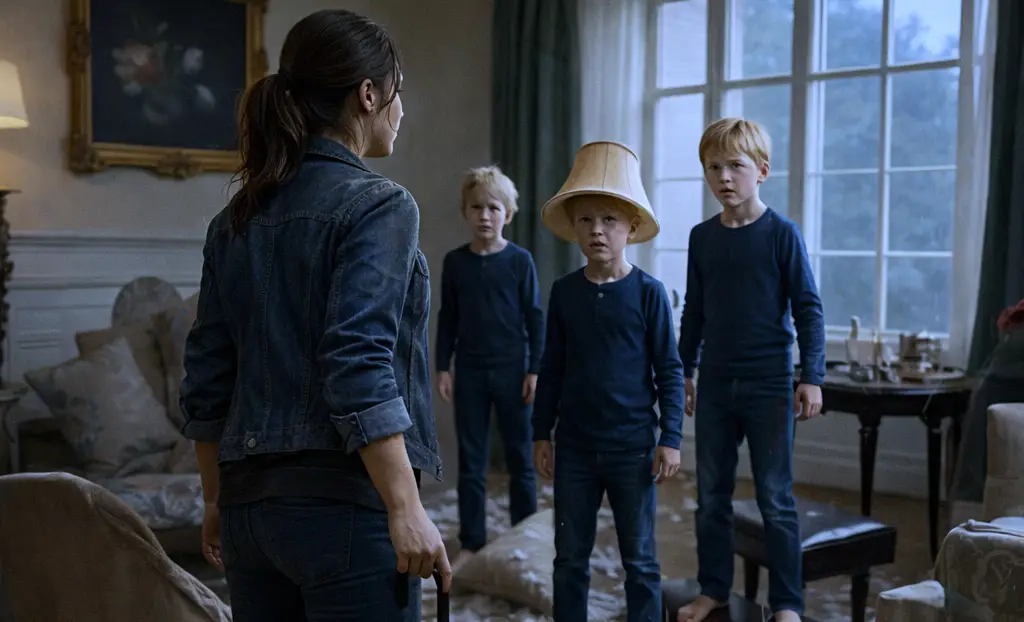
They weren’t in the cells anymore. They were standing in the corridor, perfectly still, arranged in a tactical formation that looked almost like they were waiting for orders. But their eyes were wrong. The irises had changed color, shifting from human brown and blue and green to something that looked like oil on water, rainbow patterns that moved independently of light.