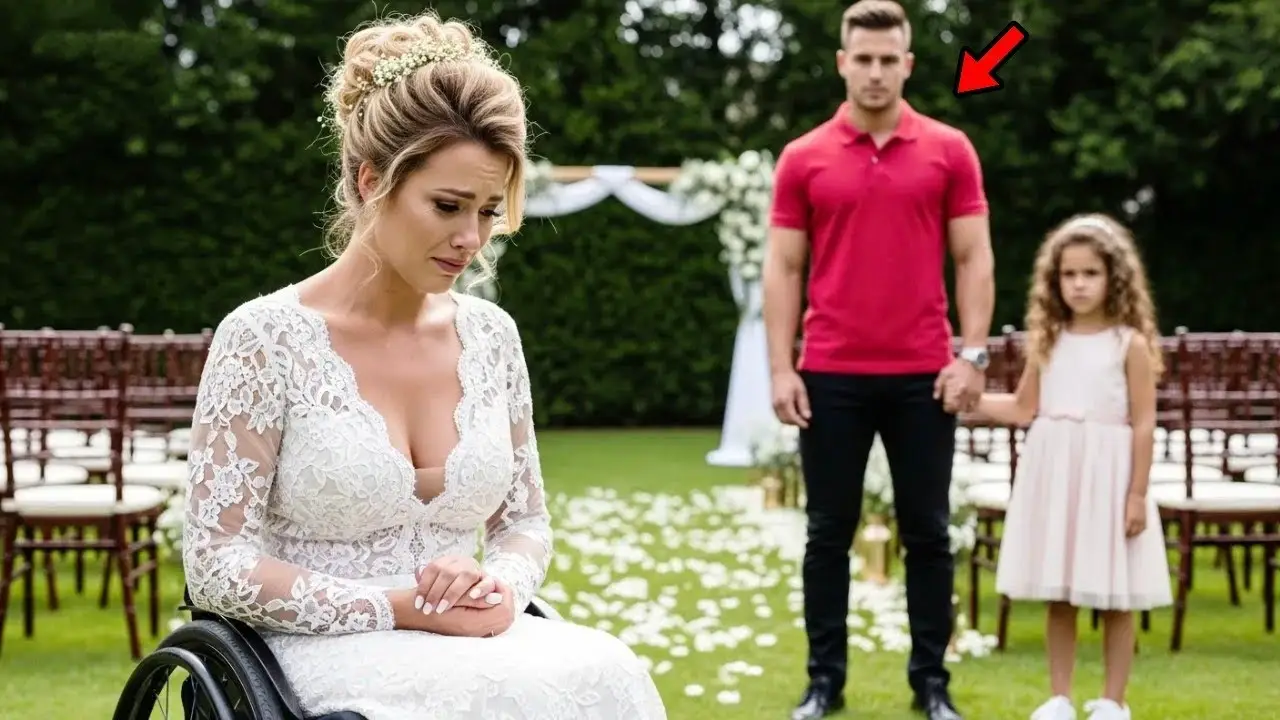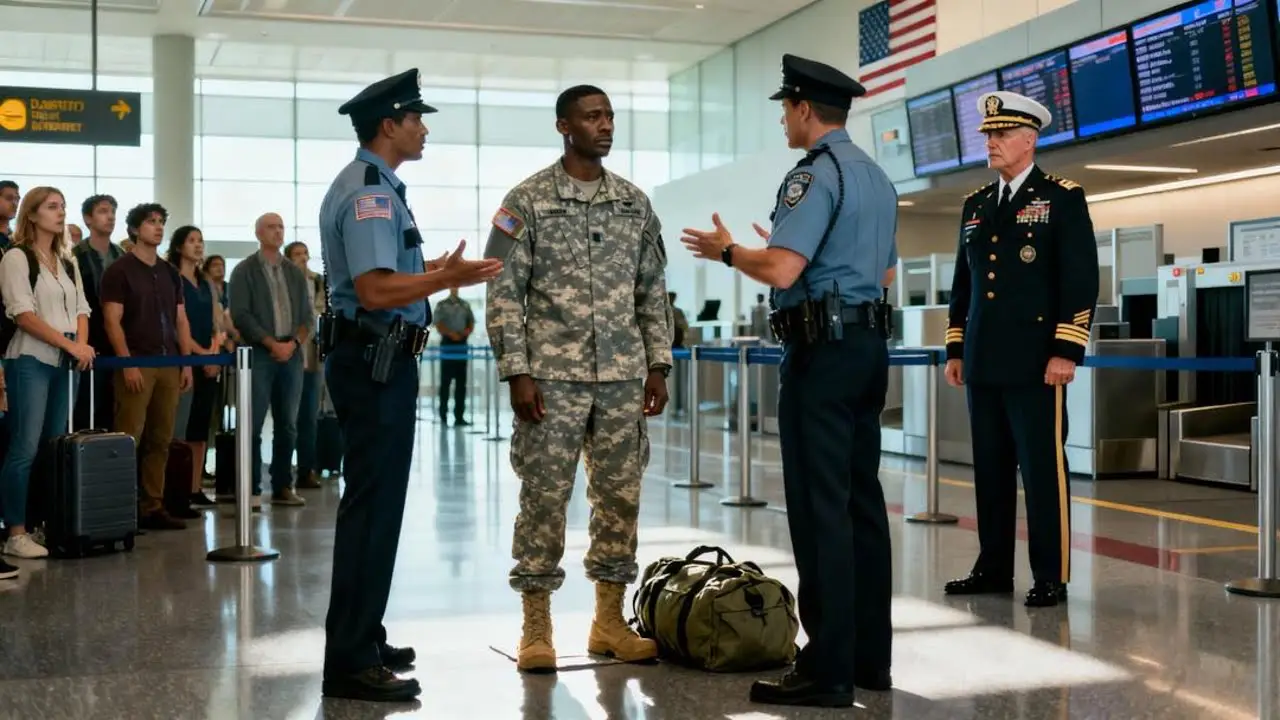
I came home in a wheelchair, hoping my family would be glad I was alive! Instead, their first question was about money… and what happened next changed our relationship forever
The next morning, the calls began.
First from Dad. Then Mom. Then my brother. Then the bank. Then a mortgage officer confused why I’d rescinded my signatures. I let them all go to voicemail.
Word traveled fast in small towns. By noon, one of my cousins texted: «Your dad is losing it. They said you abandoned them.»
Abandoned. The same word they’d thrown at me years ago when I enlisted.
I typed one sentence back: «I didn’t abandon anyone. I saved myself.»
Then I put the phone down and breathed. Really breathed. For the first time since Afghanistan, my lungs filled all the way. I wasn’t running away. I was reclaiming my life. And if my family couldn’t see the difference, that was on them.
I found out they were coming before the knock ever landed on my door.
It was late afternoon, the sun dipping behind the apartment building next door, throwing long stripes of light across my living room. I was assembling a small bookshelf I’d ordered online—one of those simple ones with particle board and too many screws—when I heard voices in the hallway. Loud ones. Familiar ones.
My parents.
My brother’s footsteps thudded like he owned the place. A moment later, there was a frantic pounding on my door.
«Kate! Open up!» Dad barked.
My stomach tightened, but not with fear. More with anticipation. Like the moment before a mission briefing when you know the next hour could change everything. I rolled toward the door—deliberately, not slow, not fast—and unlocked it.
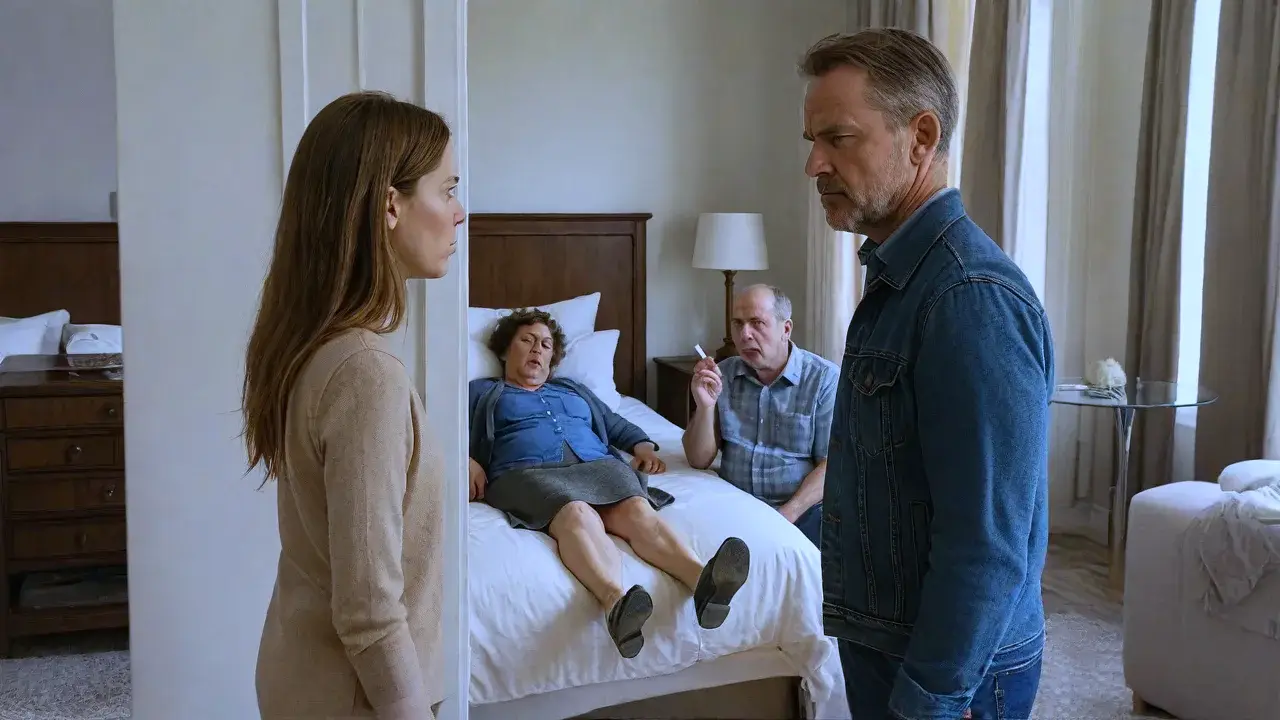
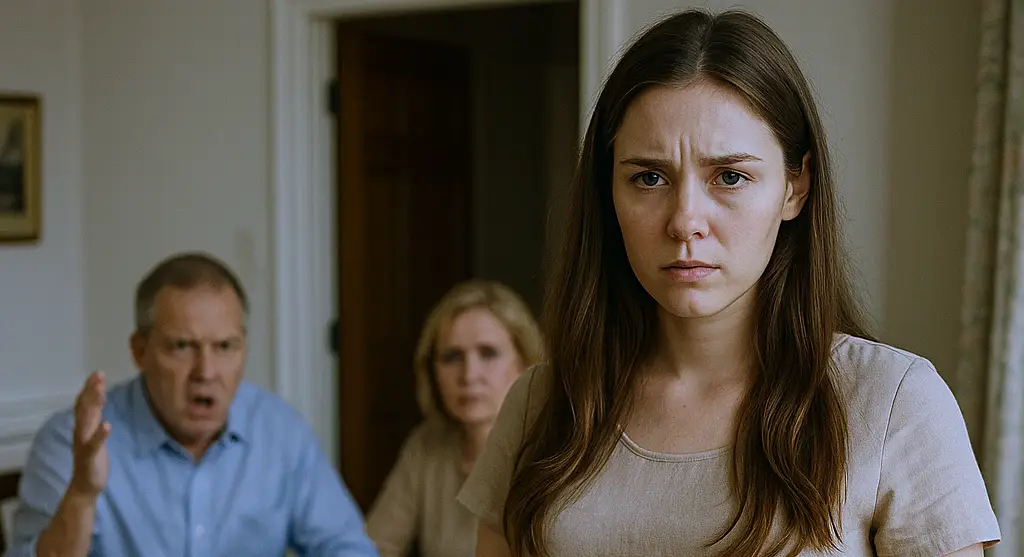
Dad pushed his way inside before I could even say hello. Mom followed, breathless, hair wild like she’d rushed out of the house. My brother brought up the rear, arms crossed, face twisted into something between annoyance and panic.
«What,» Dad demanded, «did you do?»
No greeting. No How are you? Just an accusation fired like a bullet.
I stayed calm. «I’m not sure what you’re referring to.»
«Don’t play games,» Mom snapped. «The bank called. The mortgage is suspended. They said your signature wasn’t valid anymore.»
I folded my hands in my lap. «Correct. Because I rescinded it.»
Dad’s face reddened the way it always did when he didn’t have control. «You can’t just… just opt out!»
«I can,» I said quietly. «And I did.»
Mom took a step closer, her voice dropping into that pleading tone older parents use when they want something but don’t want to ask outright. «Katie. Honey. Think this through. We’re family.»
Family. It was a word I used to hold close to my chest. A word I wore like a badge of honor. A word I thought meant warmth, safety, belonging. But sometimes, «family» is just a label people hide behind to avoid accountability.
«I have thought it through,» I replied.
Dad jabbed a finger toward me. «You’re ruining us. Do you understand?»
«Ruining us,» Oh for God’s sake,» my brother muttered. «You can’t just leave us hanging. This isn’t fair.»
Fair. I almost laughed. After everything, that was the word he reached for.
Mom began pacing, hands wringing. «Why are you doing this? We’re your parents. We’ve done everything for you.»
«Everything?» I repeated, quietly enough that they all had to stop moving to hear me.
Dad narrowed his eyes. «Don’t start.»
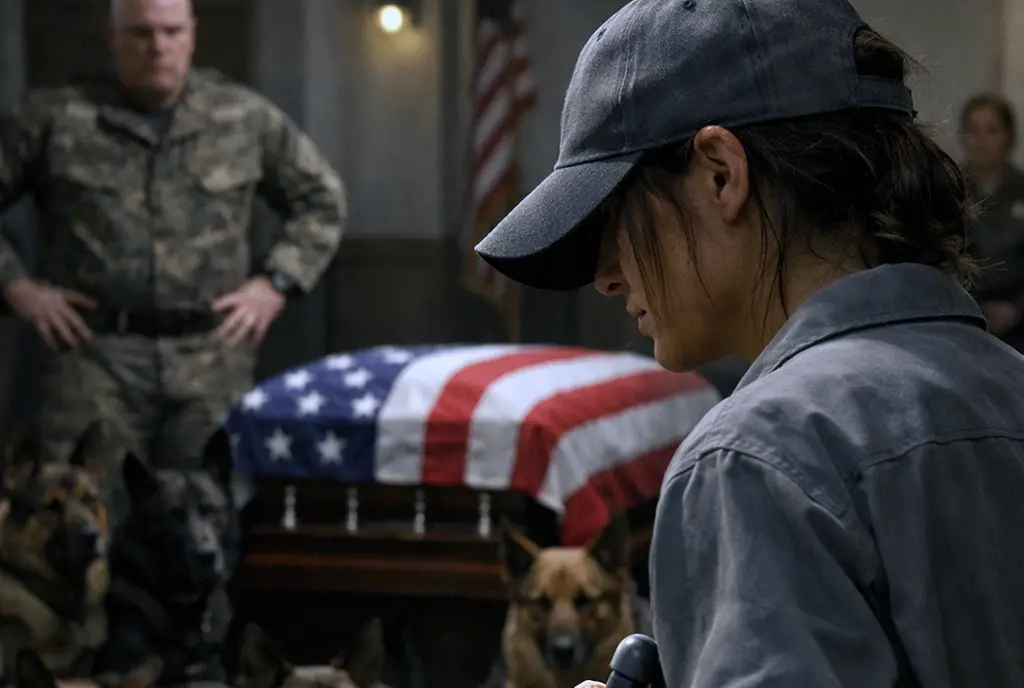
«But I did,» I said. «Where were you? When I graduated BUD/S? When I earned my Trident? When I shipped out? When I came back from the blast? When I learned to push myself in a wheelchair? Where were you when I sent that picture from the hospital?»
No one answered. I looked at them each in turn.
«That’s right. You weren’t there. You didn’t call. You didn’t check on me. You didn’t ask if I was alive, or scared, or hurting. You only asked if I still had money.»
Mom flinched. Dad’s jaw clicked. My brother’s eyes darted to the floor.
I continued, voice steady but firm. «You didn’t lose me because I moved out. You lost me the moment you decided I was more valuable as a signature than as a daughter.»
A thick silence filled the room. But Dad wasn’t done.
«You owe us,» he said again, more quietly this time. «We sacrificed for you.»
I met his eyes. «You didn’t sacrifice. You invested. And you expected a return.»
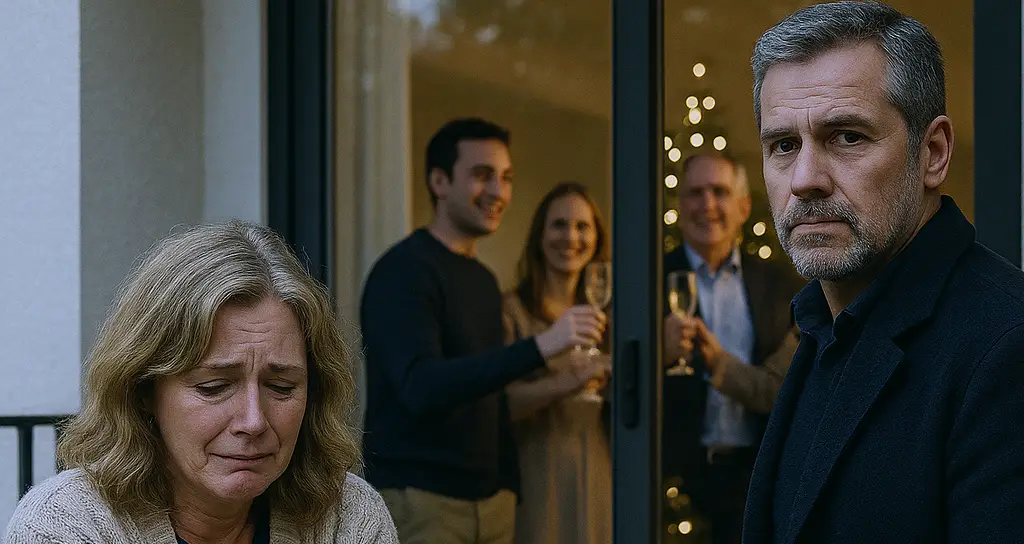
That hit him harder than shouting ever would have. Mom broke down first. The tears came quickly, spilling over, turning her voice into something shrill and desperate. «We’re old, Kate. We can’t work like we used to. We need this house. We need your help.»
«You need,» I corrected, «to take responsibility for choices you made. Choices I had nothing to do with.»
Dad stepped forward, and for a split second, I felt the old childhood fear rise—the look he got when he was about to yell, when he used to tower over us like a storm. But I wasn’t a kid anymore. And I wasn’t standing.
«You’re coming home,» he said. «We’ll make room. We’ll figure things out. But you’re signing those papers.»
«No,» I said.
He moved closer, looming over me.
«I said no,» I repeated, louder this time. «And if you come here again to threaten me or try to force my hand, I’ll file a report.»
Dad froze. «A report?»
«Yes,» I said. «Veteran exploitation. Fraud. Harassment. I have everything documented.»
My brother scoffed. «You wouldn’t.»
«I would,» I said calmly. «And you know why? Because for once in my life, I’m choosing me.»
Mom’s breathing hitched. Dad stepped back. My brother ran a hand over his face in frustration. They weren’t angry now. They were scared. Not scared of me—scared of losing the last lifeline they’d been clinging to.
«Kate,» Mom said weakly, «what are we supposed to do?»
The question hung in the air like smoke after a gunshot.
I let out a slow breath. «Get help. Talk to a counselor. Work with the bank. Sell the house if you have to. But stop expecting me to fix everything you broke.»
Dad sank onto my thrift-store sofa, head in his hands. Mom stood stiffly, arms wrapped around herself. My brother paced, muttering.
For the first time in my life, I saw them not as giants, not as authority, not as people I needed anything from. Just people. Flawed, frightened humans. And I felt something unexpected. Something small, something fragile but real.
Compassion.
Not enough to go back. Not enough to sign anything. But enough to speak plainly, gently.
«I don’t want you homeless,» I said. «I don’t want you suffering. I’ll help you find resources. I’ll connect you with people who can guide you. But I won’t be your crutch.»
They stared at me. And I added, «I won’t hate you. That’s the only thing I can give right now.»
The room softened. The storm had finally broken. Dad looked up, eyes red. Mom wiped her face. My brother stopped pacing.
For the first time since Afghanistan, I felt the weight lift—not because they changed, but because I had. Because choosing myself wasn’t betrayal. It was survival. And maybe, even if they didn’t know it yet, it was the first step toward something better.
The day after my family’s visit, the apartment felt heavier than usual—not in a suffocating way, but in the way a room feels right after a storm passes. Everything was still, damp, quiet, waiting.
I brewed a cup of coffee in the tiny kitchen, rolling back and forth to reach the mug, then the sugar, then the fridge. Every movement was deliberate. Every reach a reminder that this life—this small, simple life—was mine now. Not borrowed, not dependent, not anyone’s leverage. Just mine.
I spent the morning tidying up, rearranging books, wiping down the counters. These little routines had become a kind of therapy. When you lose the use of your legs, you learn to appreciate the control you still have—your hands, your breath, your choices.
Around lunchtime, my phone lit up again. Not calls this time. Messages.
From Dad. From Mom. Even from my brother.
I didn’t open them right away. I just stared at the names. Three people who had once been my whole world, and then had become ghosts I lived in fear of, and now… now they were something else. Something I hadn’t expected.