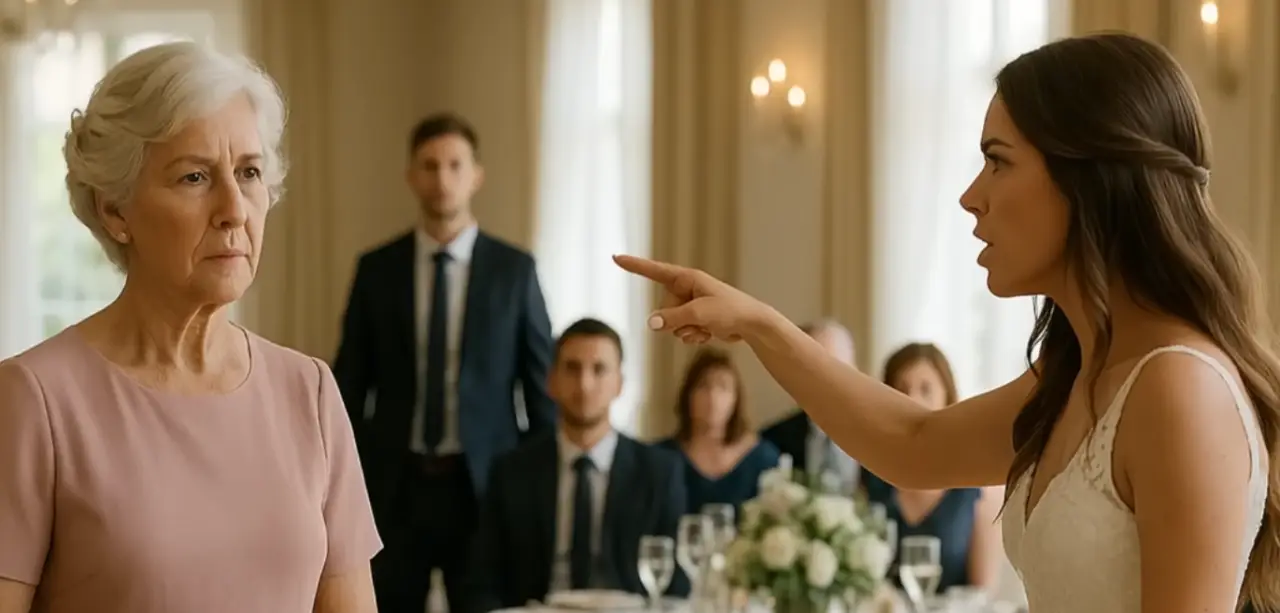
My Parents Said: “Apologize Or You’re Banned From The Wedding”! So I Cut Off Every Dollar They Had
Even small details etched into my memory. Mom’s eyes following Olivia across a room, her voice rising with enthusiasm whenever Olivia spoke. But when I tried to share something, anything, her gaze would slide past me as if I hadn’t opened my mouth at all.
As a child, I didn’t have the words for it, but I felt the weight of invisibility. I would lie in bed at night, staring at the glow-in-the-dark stars stuck on my ceiling, whispering the spelling words I’d memorized, clutching the ribbon I had won. I’d imagine a world where someone looked at me the way my parents looked at Olivia.
By high school, I stopped expecting their attention. Olivia had volleyball games, cheer competitions, debates where Dad wore his suit and Mom waved a camcorder. My science fair projects, my choir solos, came and went with barely a nod.
I’d walk off stage, scanning the crowd for their faces, only to see them turned toward Olivia, adjusting her hair for another photo. At 16, I came home from an honors ceremony with a certificate tucked under my arm. Mom was busy ironing Olivia’s prom dress in the dining room.
I held up the paper, but she only smiled politely before saying, «Honey, put that on the fridge. We need to focus on getting Olivia’s dress altered before Saturday.» I pressed the magnet against the paper in silence, watching it disappear beneath layers of Olivia’s college brochures and invitations.
The memory that still stings most came later that summer. I overheard Mom talking to a neighbor on the porch. «Olivia is our pride and joy. She’s so talented, so full of promise.»
«Rachel’s sweet, of course, but Olivia, she’s special.» I froze in the hallway, the words searing into me. Sweet.
That was my role. Sweet and dependable. Not brilliant, not dazzling, not unfriendly.
I grew up surrounded by noise. Applause, congratulations, constant praise. But it was never for me.
Each overlooked achievement carved a little deeper, teaching me to stay quiet, to play the part of the reliable background figure. Sitting in my apartment years later, hearing Mom’s voice banish me from Olivia’s wedding, those childhood moments rushed back in sharp detail. They weren’t isolated slights.
They were a pattern, a lifetime of being pushed aside. I realized then that I hadn’t just been forgotten. I had been trained over decades to believe my place was always at the edge of the frame, never in the center.
And deep inside, that belief had settled like stone. I was nothing more than a shadow beside my sister’s light. That night, I lay in bed staring at the ceiling fan spinning slowly, the city sounds drifting through the cracked window.
I thought of the girl clutching her spelling ribbon in the dark, praying for her parents’ eyes to find her. Somewhere along the way, she had learned the truth. Attention wasn’t coming.
And the wound she carried was no longer a scratch. It was a scar. I turned on my side, pulled the blanket over my shoulder, and closed my eyes, letting the memories fade into the steady hum of the city outside.
The scar was still there, pulsing faintly, but now I understood exactly where it had begun. After college, I stopped expecting anyone else to catch me if I fell. I worked double shifts at a campus cafe during my last year at the University of Illinois, just to keep up with tuition and my student loans.
By the time I graduated, I had already grown used to covering myself, pinching every dollar, eating cheap takeout when I was too exhausted to cook. There was never extra. Somehow, when the family needed me, I always found a way to scrape something together.
In the spring of 2019, Dad had a heart attack. I was on the night shift at Horizon Logistics, pulling overtime, when my phone rang. Mom’s voice was ragged, barely holding back sobs.
«Your father, they’re admitting him for surgery. The insurance won’t cover everything. Rachel, what are we going to do?»
The number came a few days later. Fourteen thousand dollars. Insurance would cover about half.
That left seven thousand, hanging over their heads like a storm cloud. I remember staring at my bank app, knowing exactly what my balance was. Just a little over eight thousand, saved after years of saying no to myself.
I wired the money that same night, sitting in the glow of my desk lamp, my hands trembling as I typed in the numbers. No one asked me how long it had taken to save that much. No one asked what I would have used it for.
Mom just whispered, «Thank God, thank you,» and hung up to get back to the hospital. I sat there in my empty apartment, the hum of the refrigerator in the background feeling hollow. I told myself it was what family did.
You step up. You sacrifice. That sacrifice didn’t end there.
After Dad came home, bills kept showing up late. Mom called one afternoon, explaining they’d missed another payment. «It would be easier if everything was under your name,» she suggested.
«You’re better with numbers, more organized.» That’s how I ended up holding the family’s utility accounts. Electricity, water, internet.
All charged to my card each month. The total averaged around two hundred and thirty dollars, sometimes more when the winter dragged on and the heat never seemed to shut off. For four years, those payments stacked up over eleven thousand dollars.
Not once did Mom or Dad take back the responsibility. It was as if they’d quietly decided I would be the safety net forever. And then there was Olivia.
She had a knack for calling right at the worst times, always when I was budgeting, always when I had just barely balanced my own accounts. «Rach, can you help me out? Just five hundred, I swear I’ll pay you back next week.»
«The rent’s due and I’m short.» The first time, I wired the money, clinging to the hope she’d keep her word. The next week came and went.
No repayment. Instead, she called again, panicked about a maxed-out credit card. «Seven hundred this time. You’re the only one I can ask,» she said, her voice trembling, but her Instagram feed still full of rooftop cocktails and manicures.
Another month, it was three hundred and fifty for a last-minute flight to Florida. «I have to be there for work,» she insisted. Though the photos that followed were of sandy beaches and fruity drinks.
Each time, the promise was the same: next week I’ll pay you back. Each time, I swallowed my frustration and transferred the money. By the time I finally sat down and added it all up, Olivia’s debts to me—a loan—totaled sixteen thousand three hundred and seventy-five dollars.
I remember the night clearly. I was at my kitchen table, receipts and bank statements scattered around me, a calculator blinking in the dim light. My chest tightened as the numbers stacked higher and higher.
Seven thousand for Dad’s surgery. Eleven thousand five hundred for utilities. Sixteen thousand three hundred seventy-five for Olivia’s endless emergencies.
The final number glared up at me. Forty-one thousand eight hundred and seventy-five dollars. I leaned back in my chair, the edges of the paper cutting into my fingers.
My breath came short, like someone had punched me. Nearly forty-two thousand dollars. Money that could have paid off my student loans, money that could have been a down payment on a small condo, money that could have bought me freedom.
Instead, it had evaporated into hospital bills, light bills, credit card bills, and my sister’s getaways. I wanted to scream. I wanted to pick up the phone and demand they see me, really see me for the sacrifices I’d made.
But when I pictured it, I knew exactly how it would go. Mom would say, «Don’t make such a big deal. Family helps family.»
Dad would retreat into silence. Olivia would roll her eyes and laugh. «God, you’re so dramatic.»
So I closed my laptop, stacked the papers, and sat there in the stillness of my apartment, my heart hammering. For the first time, I admitted to myself that I wasn’t just being generous. I was being used.
And the worst part was no one seemed to notice. Or care. I pressed my palms flat against the table, staring at the total one last time before sliding the papers into a folder.
My hands shook as I tucked it away, as if hiding it could dull the sting. But the number burned in my mind. 41,875.
That was the price of my silence. That was the cost of being invisible. I sat there for a long time, listening to the hum of the heater, until finally I turned off the light and left the folder on the table.
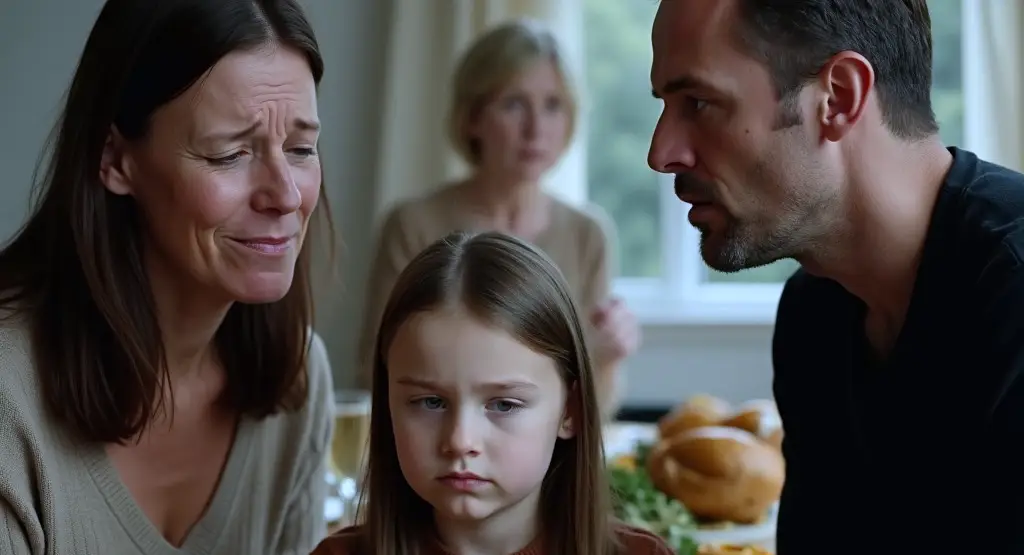
It was still there the next morning, waiting like a wound that hadn’t begun to heal. Thanksgiving that year felt like a stage play I had no lines in. I pulled into my parents’ driveway in Naperville, behind the wheel of my old Honda Civic.
Its muffler rattling as I shifted into park. The car had nearly 140,000 miles on it. The seats worn thin, but it was mine, and it got me from the city to the suburbs.
As I stepped out with the pie I’d bought from a bakery on Halstead, headlights swept across the driveway. A silver Lexus rolled up, sleek and spotless, Olivia at the wheel with Daniel beside her. The moment they got out, voices rose in excitement.
«Look at that car,» one uncle whistled. «Daniel, you really treat her right.» Mom hurried down the front steps, arms wide, nearly tripping over herself to greet them.
I stood there with my pie balanced in my hands, invisible while the family clustered around the shiny new arrival. Inside, the dining room table stretched the length of the room, covered in a cream tablecloth. Candles flickering in the center.
Plates and silverware glinted under the chandelier. At one end, Olivia’s seat had been decorated with a bouquet of small yellow flowers tied to the chair back. A little flourish Mom must have added.
My chair further down was bare, the cushion slightly torn at the seam. As we settled in, conversation spun in the same direction it always did. «Olivia, tell us about the wedding plans.»
Aunt Susan leaned across the table, her pearls catching the light. «Where are you going for the honeymoon? Have you decided on the colors?»