My CEO Husband Suspended Me Before the Whole Office—By Morning, I Owned His Company
My inbox immediately flooded with responses. Congratulations from colleagues. Questions from department heads.
Meeting requests from people who’d barely acknowledged my existence a week ago. I answered the important ones and ignored the rest. Rachel knocked on my open door, eyes wide.
«It’s official then. You’re really on the board.» «I’m really on the board,» I confirmed.
She stepped inside, closing the door behind her. «Can I ask you something?» «Of course.»
«How long have you been planning this?» I considered the question.
«I wasn’t planning it. I was protecting myself. There’s a difference.»
«Still.» She sat down across from me. «You knew exactly what to do when he suspended you.
You had that clause ready. You had documentation going back years. That’s not just protection.
That’s strategy.» I smiled faintly. «Let’s call it defensive strategy.»
She laughed. «Whatever you call it, half the company is terrified of you now.» «Good,» I said.
«Fear breeds respect. Eventually.» That Friday, I attended my first board meeting.
The conference room was on the top floor. Windows overlooking the city. A massive mahogany table that probably cost more than my first car.
Leather chairs that whispered wealth and power. Nathan sat at the head of the table, same as always. But something was different.
His shoulders were tighter. His smile was forced. The easy confidence that usually filled the room like expensive cologne was gone.
I sat three seats down on the left side. Margaret sat beside me, her laptop open and ready. The other board members trickled in.
Robert Chin, the venture capitalist who’d led our series B. Sandra Ellis, a tech industry veteran with 30 years of experience. Michael Torres, our CFO.
And two others I recognized but hadn’t worked with directly. Nathan started the meeting with the standard opening remarks. But his voice lacked conviction.
He stumbled slightly over the agenda items, had to check his notes twice, kept clearing his throat. When he reached the Caldwell merger discussion, he fumbled the projections, mixing up revenue forecasts and security audit timelines. Sandra frowned.
«Nathan, can you clarify the security integration timeline? The buyer needs assurance that.» «I can address that,» I said smoothly, opening my tablet.
Everyone turned toward me. I pulled up the updated security assurance documentation. The work I’d completed after rebuilding Vanessa’s disaster.
And walked them through the integration timeline, the redundancy protocols, the third-party audit results. The room was silent except for my voice. When I finished, Robert leaned forward.
«This is excellent work, Laura. Thorough, detailed, exactly what we need.» He glanced at Nathan, then back to me.
«Why haven’t we heard more from you in these meetings before?» I met his gaze calmly. «Good question.»
Nathan shifted uncomfortably. Sandra’s expression was carefully neutral. I saw something shift in her eyes.
A new calculation being made. The meeting continued. The board approved the merger unanimously.
When Nathan called for adjournment, people gathered their things quickly, clearly ready to escape the tension. Robert caught up with me at the door. «Laura, do you have a minute?» We stepped into an empty hallway alcove.
«I want to apologize,» he said quietly. «We should have made you board director years ago. Nathan’s been protective of the leadership structure.
He wanted to maintain a certain image.» He paused. «We let him.»
«You did,» I agreed. He had the grace to look uncomfortable. «That was a mistake.
You’ve been carrying this company technically for a long time.» «Yes,» I said simply. «I have.
It won’t happen again,» he said. «You have my word.» I nodded.
«I appreciate that.» He smiled slightly. «For what it’s worth, you scared the hell out of Nathan this week.
That clause was brilliant.» «It was necessary,» I corrected. «Even better,» he said.
That evening, Nathan came home after nine. I was on the couch in our condo, reviewing vendor contracts for a new project. A glass of red wine on the side table.
I’d changed into comfortable clothes. Yoga pants and an old college sweatshirt. But I was still working.
He stood in the doorway for a long moment, just looking at me. «Happy now,» he finally asked, his voice heavy with bitterness. I looked up from the contract.
«I’m satisfied. There’s a difference.» He walked to the armchair across from me and sat down heavily, loosening his tie.
He looked exhausted. Defeated. «I underestimated you,» he said quietly.
«Yes,» I said simply. «You did.» We sat in silence for a while.
The city hummed beyond our windows. A siren wailed somewhere distant. «Is this how it’s going to be now?» He asked.
«You at the board meetings, me.» «What?» «Reporting to you.» «You report to the board,» I said.
«Same as always. I’m just part of that board now.» «That’s not what I mean.»
I set the contract aside. «Then what do you mean, Nathan?» He ran his hands through his hair.
«I mean us. This marriage. Is there anything left?» I took a sip of wine, considering my answer carefully.
«That depends,» I said finally. «Can you treat me like a partner instead of an employee?» He was silent for a long time.
The seconds stretched into minutes. Finally, he said, «I don’t know.» I nodded slowly.
«Then we have nothing left to discuss.» He stood, walked toward the bedroom and closed the door behind him. I stayed on the couch, staring out at the city lights blinking in the darkness.
Something between us had broken. Something fundamental and irreparable. And for the first time in seven years, I was completely okay with that.
The bedroom door stayed closed that night. And the next night. And the one after that.
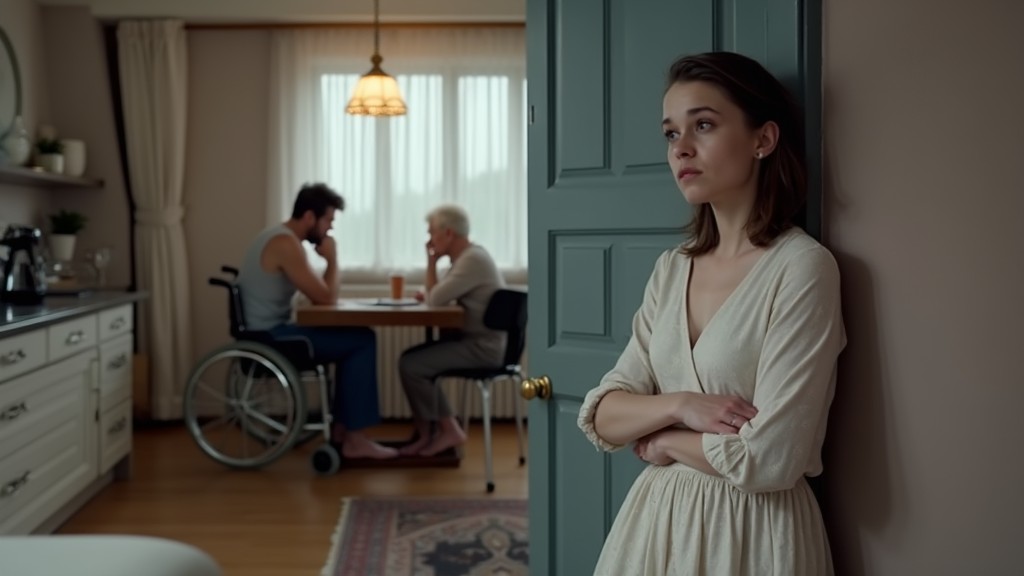
Nathan moved into the guest room without discussion, taking only his pillow and a change of clothes. We passed each other in the mornings like roommates who’d signed a lease together by accident. Polite, distant, careful not to make eye contact too long.
I told myself it was temporary. That we needed space. That maybe after some time we could figure out how to exist in the same home again.
But two weeks later I knew the truth. We were already living separate lives. We just hadn’t made it official yet.
On a Tuesday morning, exactly 16 days after I’d taken my seat on the board, I called Diana Frost. Diana was a divorce attorney who’d been recommended by Margaret. «If you ever need to untangle a complicated marriage,» Margaret had said carefully, «she’s the best. Discreet, strategic, and she doesn’t lose.»
Diana’s office was in a sleek high-rise downtown. All glass and steel and minimalist furniture that cost more than it looked. She was in her early 50s, with silver-streaked hair cut in a sharp bob and glasses that made her look like a librarian who moonlighted as a corporate assassin.
«Tell me what you need,» she said after we’d exchanged pleasantries and she’d poured us both coffee from an expensive-looking French press. I laid it out simply. «I want a divorce. My husband and I co-own a tech company.
I have 40% equity. He’s the CEO. I’m CTO and board director.
It’s complicated, but I want it clean.» Diana made notes on a legal pad, her handwriting precise and angular. «How complicated?»
«We started the company together seven years ago. I built all the proprietary technology. He handled business development.
Recently, things deteriorated. He publicly humiliated me, suspended me without cause, and I had to leverage an IP reversion clause to get my position back.» Diana looked up sharply.
«You have an IP reversion clause in your operating agreement?» «I do.» «And it held up?» «Completely.»
She smiled. The kind of smile a chess player gives when they realize their opponent just made a fatal mistake. «Then you have significant leverage. He can’t push you out.
He can’t buy you out without your consent. You own the foundation the company is built on.» «I know,» I said.
«But I don’t want to destroy him. I just want what’s fair.» Diana set down her pen.
«Fair is exactly what we’ll get. But Laura, in my experience, fair often looks like victory to the person who’s been underestimated for too long. Are you prepared for that?» I thought about it.
About Nathan’s face when he’d realized what I’d done. About Vanessa being escorted out by security. About sitting at the board table and finally being heard.
«Yes,» I said. «I’m prepared.» Nathan received the divorce papers on a Thursday.
I was in my office reviewing vendor contracts when Rachel buzzed me. «Nathan’s here. He doesn’t have an appointment but he’s asking to see you.»
I glanced at my calendar. I had 20 minutes before my next meeting. «Send him in.»
Nathan walked through the door looking like he hadn’t slept in days. His tie was loosened, his shirt wrinkled, his eyes red-rimmed. He closed the door behind him carefully, like he was afraid it might shatter.
«Laura.» His voice was hoarse. «Please.
Can we talk about this?» I gestured to the chair across from my desk. «Sit.» He sat and suddenly he looked smaller than I’d ever seen him.
Diminished. The confident CEO who’d commanded boardrooms and charmed investors was gone, replaced by someone who looked lost. «I know I screwed up,» he said quietly.
«The meeting, Vanessa, all of it. But we can fix this. We can go to counseling.
I can change. Just don’t do this.» I folded my hands on my desk.
«Nathan, I’m not doing this to punish you.» «Then why?» «Because somewhere along the way you stopped seeing me as your equal. You stopped introducing me as your partner and started treating me like an employee you could discipline when I didn’t perform to your expectations.»
He flinched. «I never meant.» «It doesn’t matter what you meant,» I interrupted gently.
«It matters what you did. For years you let Vanessa undermine me. You stood by while investors ignored me.
You took credit for work I did and acted like my contributions were just expected. Like I was supposed to build the infrastructure while you collected the accolades.» «I didn’t see it that way.»
«I know,» I said. «That’s the problem.» He was silent for a long moment, staring at his hands.
«What do you want from me?» «A clean split,» I said. «You keep the CEO title. I keep my equity and full control of the tech division.
We remain co-owners but we work independently. We don’t have to be enemies, Nathan. We just can’t be married anymore.»
His voice was barely a whisper. «Is there anything I can do to change your mind?» I thought about that question. Really thought about it.
«Can you honestly tell me you see me as your equal?» I asked. «Not as my wife. Not as the person who built the tech.
As your equal partner in every sense of the word.» He opened his mouth. Closed it.
Looked away. That was answer enough. «I didn’t think so,» I said softly.
He stood slowly like his joints hurt. «I’ll have my lawyer contact Diana.» «Thank you.»
He walked to the door then paused with his hand on the handle. «For what it’s worth I really did love you.» «I know,» I said.
«But love isn’t enough when there’s no respect.» He left without another word. The divorce was finalized three months later.
It was surprisingly amicable as far as high asset divorces go. Nathan didn’t fight me on the equity split or the tech division control. He didn’t drag it out with endless motions and counter motions.
Diana suspected he knew he couldn’t win. «He’s smart enough to recognize when he’s outmatched,» she said during one of our final meetings. «And honestly, I think part of him knows you’re right.
That makes it easier.» We divided our assets with surgical precision. I kept the downtown condo.
The two-bedroom with the balcony overlooking the city that I’d always loved. Nathan kept the house in the suburbs, the four-bedroom colonial with the yard and the garage he’d insisted we needed for the future. We sold the vacation property in Vermont.
The cabin we’d bought three years ago with dreams of weekend getaways that never happened because Nathan was always too busy with investor meetings. We split the proceeds down the middle. The retirement accounts, the investment portfolios, the art collection, all of it divided with mathematical fairness.
On the day we signed the final papers, we met in a conference room at Diana’s office. Nathan’s lawyer was there too, a quiet man named Steven who mostly just reviewed documents and nodded. The notary walked us through the signatures, her voice professionally neutral.
«Sign here. Initial here. Date here.»
Twenty-three pages of legal jargon reducing seven years of marriage to bullet points and asset divisions. When it was done, Nathan looked at me across the polished conference table. His eyes were sad but clear.
«I really did love you, you know.» I met his gaze. «I know.
But love isn’t enough when there’s no respect.» He nodded slowly, understanding finally settling into his expression. «I’m sorry it took me this long to see that.»
«Me too.» We shook hands, formal final. The notary witnessed it like it was just another business transaction.
And maybe that’s all it was anymore. The first month after the divorce was strange. I’d lived with Nathan for seven years, first in the cramped Brooklyn apartment, then in progressively nicer places as the company grew.
I’d gotten used to the sound of him moving through our space, the way he left coffee cups on the counter, the particular rhythm of his breathing when he slept. Coming home to silence was disorienting at first. But slowly I started to reclaim the space as mine.
I rearranged the furniture, moving the couch away from the wall so it faced the windows instead of the TV. I painted the bedroom walls a soft gray-blue that Nathan had always vetoed as too cold. I hung art I’d bought years ago but never displayed because he’d called it too abstract or too modern.
I bought new sheets, soft white linen that felt like sleeping in a cloud. I replaced his heavy blackout curtains with sheer ones that let the morning light filter through. Little by little the condo stopped feeling like our space and started feeling like my space.
At work, I threw myself into leading the tech division with a clarity I hadn’t felt in years. I hired three new senior developers. I launched two projects that had been stuck in committee for months.
I reorganized the team structure to reward innovation instead of seniority. Employees who’d once avoided me in the hallways now stopped to ask questions, to pitch ideas, to seek my input on decisions. Rachel became my right hand, managing schedules and priorities with fierce efficiency.
«You’re different now,» she said one afternoon as we reviewed project timelines. «More, I don’t know, present.» «I’m not carrying as much weight,» I said.
«The divorce.» «Among other things.» She nodded.
«For what it’s worth, I think you made the right call. You seem happier.» I considered that.
«I think I am.» One evening about six weeks after the divorce was finalized, I stood on my balcony with a glass of wine, watching the sun set over the city. The sky was painted in shades of orange and pink, the buildings silhouetted against the fading light.
For the first time in years, maybe for the first time since Nathan and I had gotten married, I felt light. Not happy exactly. Not yet.
But light. Free. Like I’d been carrying a weight so long I’d forgotten it was there, and now someone had lifted it off my shoulders.
I was alone. But I wasn’t lonely. I was whole.
And that, I realized, was worth more than any marriage certificate. The balcony became my thinking space. Every evening after work, I’d stand there with a glass of wine or a cup of tea, watching the city transition from day to night.
The office buildings would light up one by one, like stars appearing in an urban sky. I’d watch the traffic patterns shift, the rush hour chaos giving way to the quieter rhythm of evening. It was during one of these moments about six months after the divorce was finalized that I realized something had fundamentally changed.
I wasn’t just surviving anymore. I was building. The tech division had become the crown jewel of Winters Tech Solutions.
In the six months since I’d taken full control, we’d grown from 32 employees to 57. I’d hired aggressively, not the safe, credentialed candidates that HR usually pushed, but young, hungry developers with unconventional backgrounds. The kid who’d taught himself to code in high school and never bothered with college.
The woman who’d left a PhD program because she wanted to build things instead of theorize about them. The former gaming developer who saw security vulnerabilities the way chess masters see checkmates three moves ahead. They were brilliant, ambitious, and they trusted me in a way they’d never trusted Nathan.