On the Third Night After Her Son Vanished, a Wild Bobcat Knocked on Her Window — and Led Her to a Cabin Where a Stranger’s Old Photo Had Her Face
Part 3
Luke moved in front of Rachel so quickly his shoulder struck her collarbone.
The older man did not flinch. Behind him, a tent flap shifted, and Rachel sensed other people watching from the dark. The bobcat had reappeared near the fire ring, rain stippling its back. It sat beside the man’s boot as if the long run had been nothing.
“How do you know my wife’s name?” Luke asked.
The man kept his eyes on Rachel. “Because I knew her grandmother’s face before I knew hers.”
Rachel stepped around Luke. Fear had carried her this far, but anger rose now, clean and bright. “Where is my son?”
The man’s expression changed at the word son. Not enough to calm her, but enough to prove he was not untouched by it.
“My name is Jonah Whitcomb,” he said. “Arthur was my grandfather.”
Luke’s hand tightened around the flashlight. “That doesn’t answer her question.”
“No,” Jonah said. “It doesn’t.”
From the second tent, a woman came out wearing a rain jacket over a fleece pullover, her dark hair tucked under a knit cap. She looked about Rachel’s age, maybe younger, and carried herself with the steady alertness of someone used to being useful in emergencies. A medical kit hung from one shoulder.
“Dad,” she said quietly.
Jonah did not look away from the Porters. “Leah, not yet.”
Rachel heard the name and turned to her. “You know where he is.”
Leah’s face tightened. “I found him.”
The clearing seemed to contract around those three words. Luke took one step forward before Rachel caught his sleeve.
“Found him where?” he demanded. “When?”
“Tuesday evening, near the north ravine.” Leah’s voice stayed even, but her hands were not still. One thumb kept rubbing the strap of the medical kit. “He had fallen. His ankle was twisted, and he was scared. He told me his name was Eli Porter.”
Rachel’s mouth opened, but no sound came. She had imagined a hundred versions of finding Eli. Hurt. Cold. Silent. Calling for her. She had not imagined standing in a hidden camp while a stranger described him in the past tense.
“Is he alive?” Luke asked.
Leah looked stricken. “Yes.”
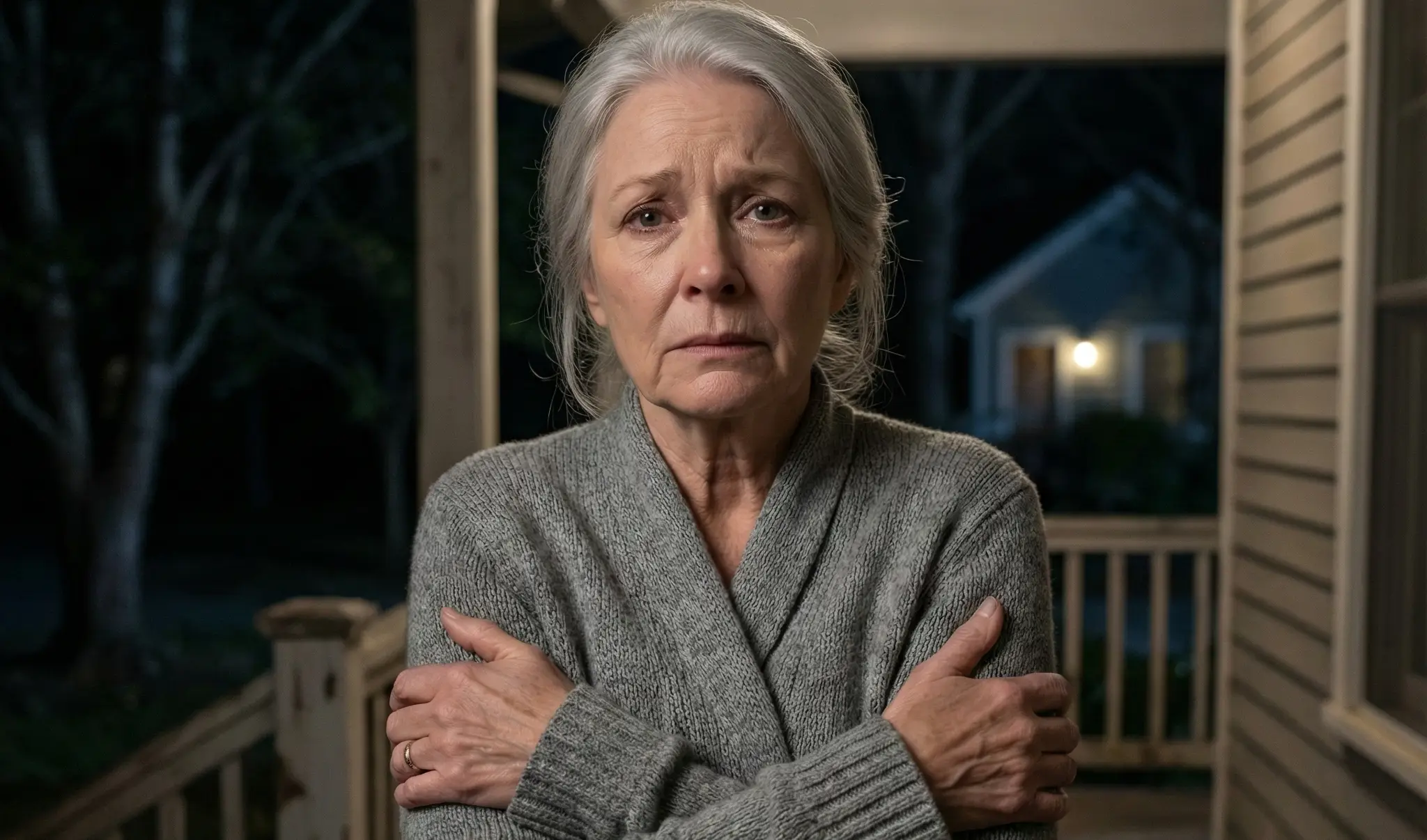
Rachel’s knees weakened. Luke caught her, and for a second they leaned into each other in the rain, not relieved enough to stop being terrified.
“Where?” Rachel whispered. “Take me to him.”
Leah glanced at Jonah. The look between them lasted only a second, but Rachel saw history inside it: argument, loyalty, fear, and something like shame.
Jonah exhaled through his nose. “We were bringing him out.”
Luke gave a short, disbelieving laugh. “It’s been three days.”
“Four,” Rachel said, and the word hurt her throat.
Leah stepped forward. “I wanted to call it in right away. There’s no cell signal in this bowl, but I could have taken him to the ridge road. I said that from the first night.”
“Then why didn’t you?” Luke asked.
A younger boy, maybe ten or eleven, peeked from behind Leah’s tent. Someone inside pulled him back gently.
Jonah’s face hardened, but his voice did not. “Because our presence here is not simple. Because some of this land is tied up in old claims and conservation agreements people would love to untangle for profit. Because outsiders have never come into this place without deciding they own what they can name.”
“My child is not your land dispute,” Rachel said.
“No,” Leah said before Jonah could answer. “He isn’t. And I’m sorry.”
The apology did not soften Rachel. Not yet. She stood with Eli’s cap pressed to her chest and looked from Leah to Jonah to the quiet tents. “You let the town search while you kept him here.”
Leah took the accusation without looking away. “I treated his ankle. I kept him warm. I sat with him when he cried. He had a fever the first night, not high, but enough that moving him in the rain with that swelling felt wrong. I’m an EMT in Baker Creek. I knew how to monitor him.”
“You’re an EMT?” Luke said.
“Part-time. Next county over. My certification is current.”
Luke looked as if that almost made it worse. “Then you knew exactly what his parents were going through.”
“Yes,” Leah said. Her voice cracked on the edge of the word. “I did.”
The bobcat rose and paced once around the fire ring. Jonah watched it with a weary expression.
“Briar found your house,” he said. “We didn’t expect her to go that far the first night. When she came back, I understood what she’d done. After that, I sent her again.”
“You sent a bobcat,” Luke said, each word flat with disbelief.
“Briar isn’t a pet,” Leah said. “But she knows us. Her mother was orphaned near the old logging road years ago. My grandfather kept her alive long enough for her to return to the wild, and every generation since has chosen how close to come. Briar is closer than most.”
“Close enough to knock on windows?” Luke asked.
Jonah looked toward the animal. “Close enough to know when we are slow to do the right thing.”
For the first time, Rachel saw something like pain in him.
The rain softened. Drops slid from the cedar boughs and hissed into the fire. Somewhere behind the tents, a child laughed, then went quiet as if reminded to listen.
Rachel turned toward the sound.
Leah followed her gaze. “He’s in my tent. He’s been asking when he can go home.”
Rachel walked before anyone gave permission.
Jonah stepped into her path. Luke’s body tensed beside her, but the older man only reached into his coat and pulled out a folded strip of red fabric. For one impossible second Rachel thought it was another piece of Eli’s clothing. Then she saw it was a bandanna, clean but old, tied around a small smooth stone with a natural hole through its center.
“I need you to understand something before you leave,” Jonah said.
Rachel stared at him. “No. You need to move.”
Leah touched her father’s arm. “Dad.”
Jonah looked at his daughter for a long moment, and whatever argument had held this place together finally gave way. He stepped aside.
Leah led them across the clearing to a smaller tent tucked between two cedars. Warm lantern light glowed through the canvas. Rachel could hear voices inside now: a boy speaking low, another boy answering, cards slapping softly on a crate.
Her hand trembled so badly she could not lift the flap.
Luke reached past her and opened it.
Inside, Eli sat on a cot with one socked foot propped on a rolled blanket, his ankle wrapped in a careful bandage. A bowl of stew rested beside him, forgotten. Across from him, the older boy held a fan of playing cards.
Eli looked up.
For a heartbeat, he only stared, as if he did not trust the shape of his parents in the doorway.
Then his face crumpled.
“Mom?”